Some links below are affiliate links. If you book through them, Japan Trove may earn a small commission at no extra cost to you.
Osaka is Japan’s kitchen and its friendliest big city — louder, funnier, and hungrier than Tokyo. Most visitors only see Dotonbori, but there’s a lot more. Here’s what to do, eat, and where to look beyond the neon.
The must-sees
- Dotonbori — yes, do it: the giant signs, the Glico runner, and street food at night.
- Kuromon Ichiba Market — a fresh-food market; go in the morning for seafood and fruit.
- Osaka Castle — the park is lovely, especially in cherry blossom season.
- Umeda Sky Building — a striking floating-garden observatory.
Beyond Dotonbori (the local side)
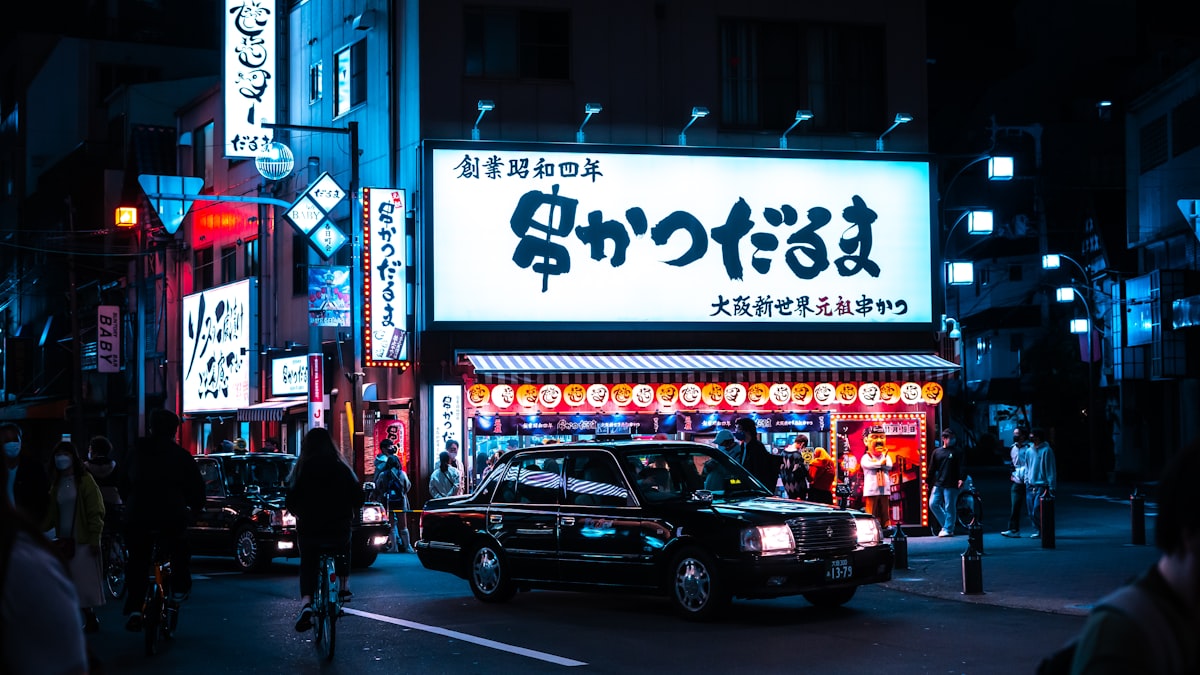
- Shinsekai & Tsutenkaku — retro, gritty, and full of kushikatsu (deep-fried skewers).
- Nakazakicho — a hipster pocket of indie cafés and vintage shops.
- Hozenji Yokocho — a tiny lantern-lit alley just off the chaos of Dotonbori.
Eat like an Osakan
- Takoyaki (octopus balls) and okonomiyaki (savory pancake) — Osaka’s signatures.
- Kushikatsu in Shinsekai — remember: no double-dipping the sauce.
- Kitsune udon — Osaka claims it as its own.
Day trips from Osaka
Osaka is a great base for the Kansai region: Nara (bowing deer and a giant Buddha), Kobe (beef and port views), and of course Kyoto — see where to stay in Kyoto if you split your nights. Book tours easily on Klook .
Practical tips
- Kansai has its own regional passes — often better value than the nationwide one; see the JR Pass guide.
- Grab an IC card and an eSIM on arrival.
Osaka usually closes out our 7-day Japan itinerary — a tasty way to end the trip.
What things typically cost
- Kuromon Ichiba Market street food runs JPY 300-1,500 per item, with premium seafood skewers (like grilled scallop or a small portion of wagyu) at the higher end of that range.
- Osaka Castle’s main tower entry costs JPY 600, though the surrounding park and moat views are free and arguably just as photogenic, especially during cherry blossom season.
- Kushikatsu in Shinsekai runs JPY 100-300 per skewer, with a satisfying meal of 8-10 skewers plus a drink costing JPY 1,500-2,500.
Common mistakes to avoid
- Double-dipping kushikatsu skewers in the shared sauce — this is one of the most commonly cited etiquette slips in Osaka specifically; use the provided cabbage to scoop extra sauce instead of re-dipping a bitten skewer.
- Only visiting Dotonbori and missing Shinsekai — the retro, slightly gritty neighborhood around Tsutenkaku Tower offers a genuinely different, less polished side of Osaka that many visitors find more memorable than the more famous neon strip.
- Visiting Kuromon Ichiba Market in the late afternoon — like most fresh food markets, the best selection and liveliest atmosphere are in the morning; many stalls wind down or close by mid-afternoon.
Osaka as a food-first city break
Osaka rewards visitors who prioritize eating over sightseeing checklists — a day built around Kuromon Ichiba Market breakfast, a Dotonbori street food crawl, and a Shinsekai kushikatsu dinner covers more of what makes the city special than trying to fit in every landmark on a tight schedule.
Combining Osaka with a wider Kansai loop
Osaka’s central position makes it a genuinely practical base for day trips beyond Nara, Kobe, and Kyoto — Wakayama’s Koyasan and Himeji Castle are both within a comfortable day-trip radius, meaning a longer Osaka stay can anchor an entire Kansai region exploration rather than just the city itself.