Some links below are affiliate links. If you book or buy through them, Japan Trove may earn a small commission at no extra cost to you. We only recommend things we’d use ourselves.
Planning your first trip to Japan and staring at a blank map? This is the itinerary we give friends: seven days that hit Tokyo, Kyoto, and Osaka without rushing, using the fast trains that make Japan so easy to cross. It’s built for first-timers who want the highlights plus a few local corners the tour buses skip.
The 7-day plan at a glance
- Days 1–3 — Tokyo: Shibuya & Shinjuku, Asakusa & the old town, a day trip to Hakone or Nikko.
- Day 4 — Travel + Kyoto: Morning Shinkansen to Kyoto, afternoon in Higashiyama.
- Days 5–6 — Kyoto: Fushimi Inari at dawn, Arashiyama, plus one hidden temple most visitors miss.
- Day 7 — Osaka: Street food in Dotonbori and Kuromon Market before you fly home.
Days 1–3: Tokyo
Base yourself somewhere on the Yamanote loop line so you can hop on and off easily — Shinjuku, Shibuya, or Tokyo Station areas all work. (We break down the exact neighborhoods in our guide to where to stay in Tokyo.)
Day 1 is for the neon: the Shibuya Scramble Crossing, Harajuku’s Takeshita Street, and a sunset from a free observation deck at the Tokyo Metropolitan Government Building. Day 2, go old-town: Senso-ji temple in Asakusa in the early morning before the crowds, then the kitchenware shops of Kappabashi. Day 3 is a day trip — Hakone for hot springs and Mt. Fuji views, or Nikko for shrines in the mountains. Both are easy round trips, and you can book skip-the-line passes and tours in English on Klook .
Day 4: Tokyo → Kyoto by Shinkansen
The bullet train covers Tokyo to Kyoto in about 2 hours 15 minutes. Reserve a seat on the right-hand side (seat E) and you’ll get a Mt. Fuji view on a clear day. Before you buy any rail ticket, do the quick math in our guide to whether the JR Pass is worth it in 2026 — after the price change, a single round trip often costs less than the nationwide pass.
Days 5–6: Kyoto
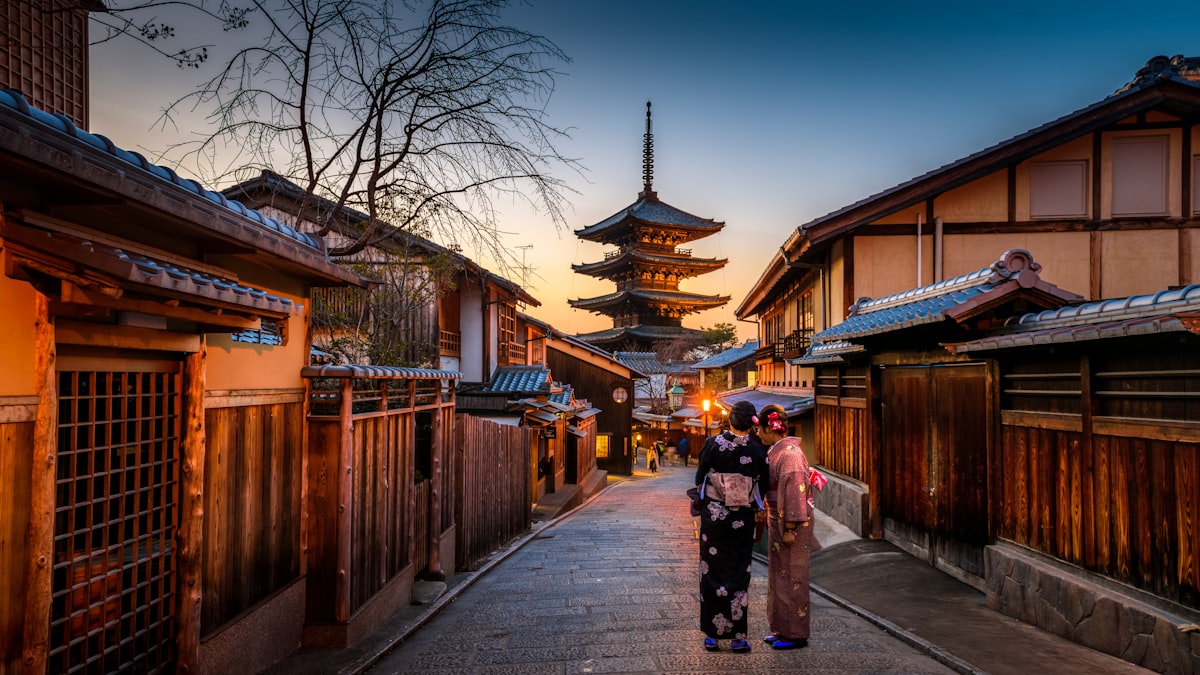
Kyoto rewards early risers. Get to Fushimi Inari at sunrise to walk the red torii gates almost alone. Spend an afternoon in Arashiyama (bamboo grove plus the monkey park above it), and give yourself one slow morning in the Higashiyama lanes around Kiyomizu-dera. For a hidden corner, the moss garden temples of northern Kyoto stay quiet even in peak season.
Day 7: Osaka
Osaka is 15 minutes from Kyoto by rapid train and is all about food. Do Dotonbori at night for the giant signs and takoyaki, and Kuromon Ichiba market in the morning for fresh seafood. Both Kansai and Itami airports are an easy ride out.
Before you go: the three things to sort early
- Data. Get an eSIM so your phone works the moment you land — compare options in our best eSIM for Japan guide.
- Trains. Decide on a rail pass (or not) using the JR Pass guide.
- Beds. Book central hotels early; the best-value places in Kyoto sell out months ahead. We use Booking.com and Agoda for Japan.
That’s the whole week. Save this page, and when you’re ready to fine-tune, follow the linked guides above for the money-saving details.
What this 7-day trip typically costs
- A mid-range budget for the full week (hotels, food, local transport, a handful of paid attractions, excluding flights) runs roughly JPY 150,000-220,000 per person — see our fuller Japan budget guide for budget and splurge variations on this same route.
- The single Tokyo-Kyoto shinkansen leg runs about JPY 14,000 one-way in an unreserved seat — with only one long-distance leg in this itinerary, single tickets beat the nationwide JR Pass for nearly everyone following this exact route.
- Luggage forwarding between Tokyo and Kyoto (roughly JPY 2,000-3,000 per bag) is worth the cost on Day 4’s transfer, letting you enjoy Higashiyama that afternoon without hauling suitcases around.
Common mistakes to avoid on this route
- Scheduling the Hakone or Nikko day trip for Day 3 right before a travel day — if the day trip runs long or weather disrupts plans, it eats into your Tokyo-Kyoto transfer buffer; treat Day 3 as flexible and build in slack rather than a tight back-to-back schedule.
- Trying to add a fourth city (commonly Hiroshima or Nara as a full extra base, not a day trip) into this exact 7-day frame — it’s the single most common way this itinerary gets overstuffed; if a fourth city matters to you, our 10-day itinerary handles it with proper breathing room.
- Visiting Fushimi Inari or Arashiyama outside the early-morning window recommended above — both are dramatically more crowded by mid-morning, and this is the single easiest schedule tweak to protect the quality of your Kyoto days.
Adjusting the pace for your travel style
This route assumes a first-timer wanting a taste of all three cities; if you’d rather go deeper into fewer places, consider dropping the Day 3 side trip in favor of a fourth Tokyo day, or trimming Osaka to a half-day and adding that time to Kyoto instead — the itinerary’s structure flexes easily around whichever city interests you most.