Some links below are affiliate links. If you book through them, Japan Trove may earn a small commission at no extra cost to you.
Kyoto’s sights are spread out, so where you sleep really matters. Pick the right base and you’ll walk to temples in the morning and reach the train easily. Here’s a first-timer’s guide to Kyoto’s best neighborhoods and what to book.
Best areas to stay
Near Kyoto Station — most convenient
Best for easy arrivals/departures (the Shinkansen stops here), buses to everywhere, and a wide range of hotels. Less atmospheric but the most practical base, especially for short stays.
Downtown (Kawaramachi / Gion) — central & atmospheric
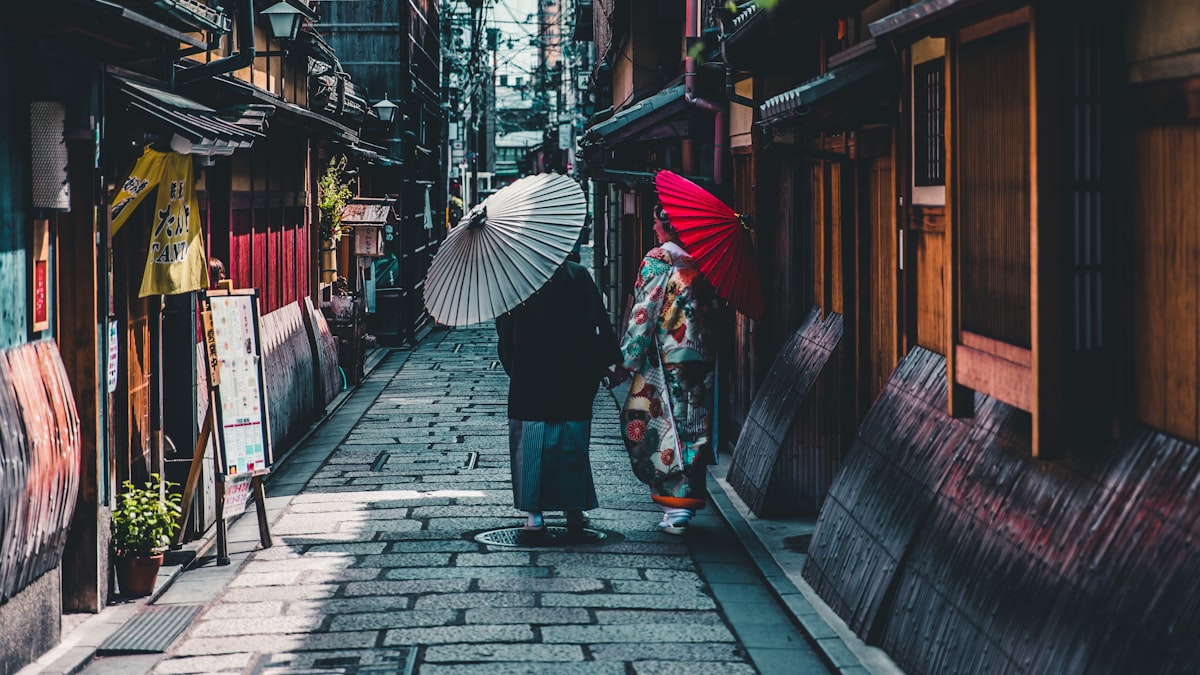
Walkable to shopping, restaurants, the Nishiki food market, and the geisha district of Gion. The best all-round location if you want to stroll in the evening. Pricier.
Higashiyama — traditional & scenic
Steps from Kiyomizu-dera and the old lanes. Quieter at night and full of character; ideal for early temple mornings.
Arashiyama — nature retreat
The bamboo grove and riverside. Beautiful and calm, but further from the center — great for a night, less ideal for your whole stay.
Stay in a ryokan at least once
Kyoto is the place to try a ryokan (traditional inn) with tatami rooms, a kaiseki dinner, and sometimes a private onsen. Even one night is memorable. Filter for ryokan and machiya (townhouse) stays on Booking.com and Agoda .
Booking tips
- Book very early. Kyoto sells out first in cherry blossom and autumn seasons.
- Mind the buses. Kyoto relies on buses; staying central saves a lot of transit time.
- One-night ryokan + central hotel is a great combo: splurge once, stay practical otherwise.
Coming from Tokyo? See whether the JR Pass is worth it, and slot Kyoto into your 7-day itinerary. Staying in Tokyo too? Here’s where to stay in Tokyo.
What accommodation typically costs
- Business hotels near Kyoto Station run JPY 8,000-15,000/night for a comfortable double, while the same quality in Downtown Kawaramachi/Gion runs JPY 12,000-20,000 given the more central, atmospheric location.
- A ryokan or machiya townhouse stay runs JPY 20,000-50,000+ per person with dinner and breakfast, with Higashiyama-area properties commanding a premium for their proximity to the famous temple lanes.
- Arashiyama accommodation, being further from the center, often prices slightly lower than downtown for comparable quality, a reasonable trade-off if you’re prioritizing a quiet, scenic night over central convenience.
Common mistakes to avoid
- Choosing Kyoto Station for a longer, exploration-focused stay — it’s genuinely the most convenient area for arrivals and departures, but staying there for multiple nights while exploring Higashiyama and Gion means longer daily bus or train rides than a more central base would require.
- Underestimating how much Kyoto relies on buses rather than a dense subway network — unlike Tokyo, getting around Kyoto efficiently depends more on bus routes, and staying somewhere with easy bus access matters more here than in most other Japanese cities.
- Booking a Higashiyama ryokan without confirming late check-in flexibility — some traditional properties have earlier check-in windows than standard hotels; if your arrival time is uncertain, confirm this before booking a traditional-style stay.
A practical two-base strategy
Splitting a Kyoto stay between one night at a special ryokan in Higashiyama and the remaining nights at a practical, well-located hotel downtown gives you both the memorable traditional experience and the convenience needed for day-to-day sightseeing and transit, without paying ryokan prices for every night of a longer stay.
Booking timing for peak seasons
Kyoto’s cherry blossom and autumn leaf seasons see hotels and ryokan booked out 2-3 months ahead for the best properties, sometimes longer for particularly famous ryokan — if your travel dates fall in either window, treat accommodation booking as the very first task on your planning list, before flights or a detailed itinerary.