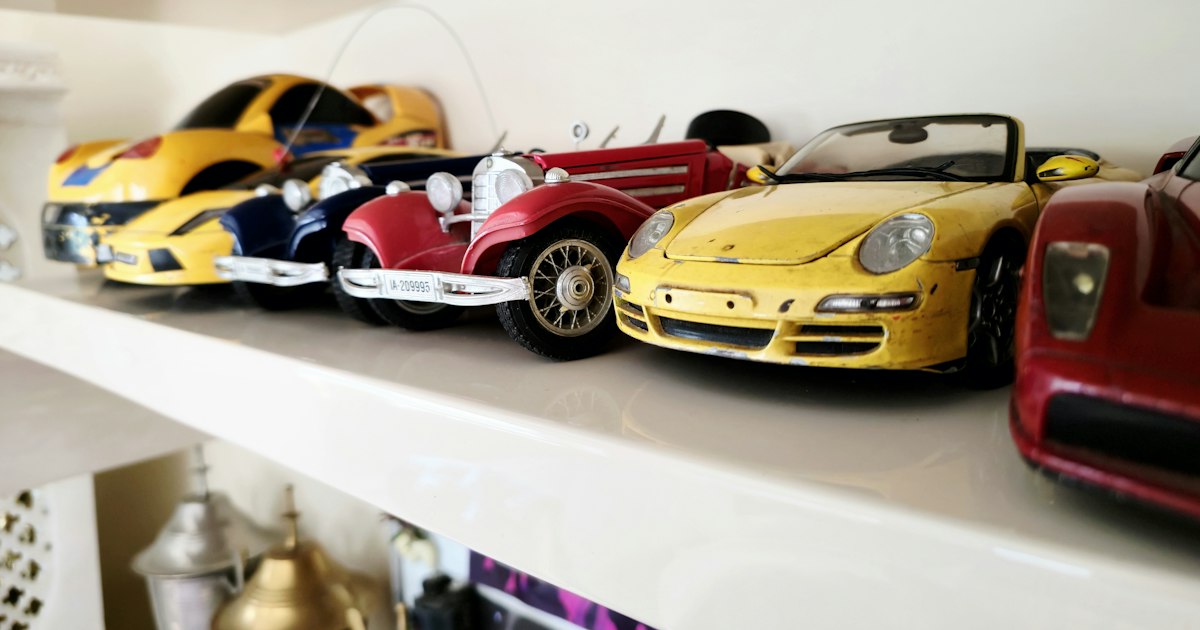
Photo by Zoshua Colah on Unsplash
If you’ve ever stood in a Japanese toy aisle and wondered why grown adults are quietly scanning rows of tiny cars like they’re shopping for wine, you’ve found Tomica. Pair it with Plarail, the toy railway line from the same company, and you’ve got two of Japan’s longest-running, most collected toy franchises — accessible to a five-year-old with ¥600 in their pocket, and deep enough to have grown adults flying in just for a limited-run reissue. Here’s how to shop for both without wasting a trip.
What Tomica and Plarail Actually Are
Tomica is Takara Tomy’s die-cast miniature vehicle line, launched in 1970. Unlike Hot Wheels, which plays loose with proportions for speed and style, Tomica models are built to represent real Japanese (and some international) vehicles — kei trucks, fire engines, Shinkansen support vehicles, taxis, even convenience store delivery vans — at a scale chosen so the finished model fits a standard box, usually somewhere between 1/50 and 1/67 depending on the real car’s size. Plarail, which actually predates Tomica (it started in 1959), is a simple snap-together plastic track and battery-powered train system, heavily themed around real Japanese rail lines: Shinkansen (N700S, E5 Hayabusa, E6 Komachi), JR commuter trains, and private railways. The two product lines cross over constantly — Tomica makes train-station playsets, Plarail makes Tomica-compatible road crossings — so most serious young collectors in Japan end up with both.
Where to Buy in Tokyo
For breadth and atmosphere, the single best stop is the official Tomica Shop inside DiverCity Tokyo Plaza in Odaiba (2F), roughly a 5-minute walk from Tokyo Teleport Station on the Rinkai Line. It stocks the full current lineup plus Odaiba-exclusive repaints you won’t find elsewhere, and is open daily, typically 10:00–21:00. For general toy shopping, Kiddy Land Harajuku carries a curated Tomica and Plarail selection alongside other character goods (hours roughly 11:00–20:00), and Yodobashi Camera Akiba near Akihabara Station has a large, reliably stocked toy floor open until around 22:00. Don Quijote branches nationwide stock the basic Tomica line too, often at slightly lower prices than specialty toy shops. If you’re also hunting for other small, giftable Japanese toy crazes while you’re out, the kendama scene is worth a browse — see our guide to kendama and where to buy them. To get between Akihabara, Harajuku, and Odaiba efficiently in one day, check whether a Tokyo Subway Ticket or Tono Furii Kippu day pass works out cheaper than paying fares individually — Odaiba’s Rinkai Line isn’t covered by either, so budget a separate fare for that leg.
What to Buy and What It Costs
Regular-line Tomica cars are the entry point: roughly ¥500–¥700 each (prices have crept up in recent years due to materials costs), sold individually in small window boxes. Takara Tomy retires and rotates a handful of regular models every few months, which is part of why completionists keep checking back. Above that sits Tomica Premium and Tomica Limited Vintage (TLV) — these are aimed squarely at adult collectors, with sharper tooling, opening doors or hoods, and nostalgic 1960s–80s Japanese car models. Expect ¥2,500–¥6,000+ depending on the model and rarity, sold mainly through hobby shops, Takara Tomy Mall online, and specialty retailers rather than general toy aisles. Plarail starter sets (a loop of track, one powered train, a station piece) run about ¥2,000–¥4,000; expansion packs and realistic Shinkansen models with sound/light features sit in the ¥3,000–¥5,000 range. Budget option: a single regular Tomica car as a cheap, packable souvenir. Mid-range: a Plarail starter set themed to a train your traveling companion has actually ridden (E5 Hayabusa is a reliable crowd-pleaser). Splurge: a boxed Tomica Limited Vintage model of a car most visitors will recognize, like a vintage Toyota or Nissan — genuinely display-worthy, and light enough to fly home in a carry-on.
Timing Your Visit
There’s no strict seasonal reason to time a Tomica/Plarail shopping trip — stock turns over through the year rather than peaking at one holiday — but two things matter in practice. First, new regular-line releases typically land early in the month, so shops are best stocked for current models in the first couple of weeks after a release wave. Second, avoid Japanese school holiday periods (late December–early January, Golden Week in late April–early May, and the summer break from late July through August) if you want a calm, unhurried browse at Odaiba’s Tomica Shop — it’s a family destination and gets genuinely crowded with kids during those windows. Weekday mornings right at opening are the quietest time to shop anywhere in this category.
Common Mistakes
The biggest one: assuming all Tomica are built to the same scale. They aren’t — scale is adjusted per model to keep the finished toy within a standard box size, so a Tomica Kei car and a Tomica dump truck aren’t proportionally comparable side by side, which disappoints buyers expecting a uniform diorama scale like 1/64 Hot Wheels. Second mistake: opening the blister pack before deciding whether you want it as a display piece — opened-box Tomica and Plarail lose significant resale value to Japanese collectors, who prize factory-sealed “mint in box” condition. Third: buying Plarail track expecting Lego or other third-party rail compatibility — the connector system is proprietary to Takara Tomy, so mixed-brand setups don’t work. Finally, don’t assume every branch of a chain stocks the same thing; Limited Vintage and Premium lines are allocated unevenly, so if you have one specific model in mind, it’s worth calling ahead or checking Takara Tomy Mall’s stock listing online before trekking across town.
Packing Them Home
Die-cast Tomica are heavy for their size — a dozen cars adds real weight to a suitcase, so if you’re buying in bulk for gifts, consider shipping a box home rather than hand-carrying, or distribute them across checked and carry-on luggage to avoid overage fees. Plarail boxes are bulky but light; the track snaps apart flat for packing, though printed boxes (which matter to collectors) crush easily, so wrap boxed sets in clothing rather than letting them float loose in a duffel. If your trip includes a long-haul flight home right after a big toy-shopping day, it’s also a good moment to double check your travel insurance covers checked baggage and personal effects, since collectible die-cast and boxed toys can add up in declared value faster than people expect.