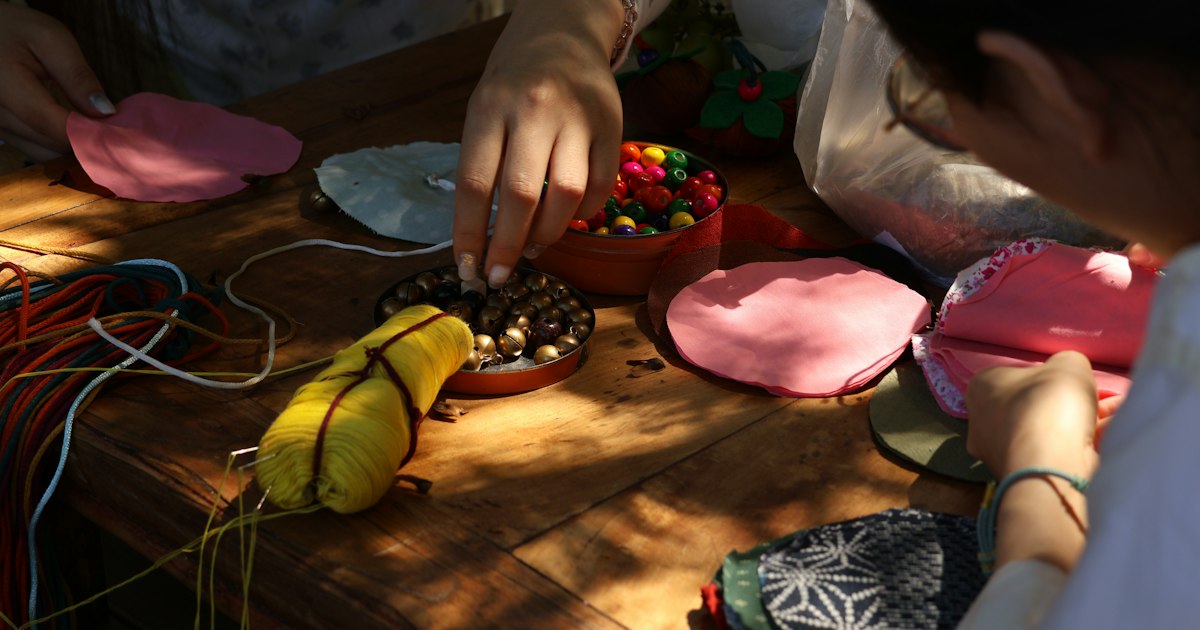
Photo by Yanhao Fang on Unsplash
Long before cat cafes and capsule toys, Japanese children were tossing fabric beanbags into the air while singing counting songs — a game called otedama (お手玉). It’s one of those quietly charming traditions that most visitors walk right past, because otedama sets don’t shout for attention in a souvenir shop the way a Hello Kitty keychain does. But track one down and you’ll come home with something genuinely rooted in Japanese craft history, usually for less than the price of a coffee. Here’s what otedama actually is, how to play it, and exactly where to buy a set depending on your budget.
What Is Otedama, Exactly?
Otedama are small cloth pouches, usually 4-6cm across, filled with azuki beans, rice, or (in modern versions) plastic pellets, and stitched from cotton or chirimen — the crinkled silk crepe also used in traditional kimono accessories and furoshiki wrapping cloth. The game itself is a juggling and tossing exercise: a player keeps two, three, or more beanbags moving between hand and air in rhythm, often while reciting a children’s song (otedama uta). It dates back centuries, with real popularity during the Edo and Meiji periods, and was a common pastime for girls well into the Showa era before manufactured toys took over.
It’s easy to confuse otedama with temari, the embroidered thread balls also sold in Japanese craft shops — they’re related in spirit (both are traditional handmade “ball” toys) but temari are decorative, stuffed, and meant to be displayed or bounced gently, while otedama are functional, lightweight, and built to be thrown and caught repeatedly. If a shop clerk shows you something stiff and elaborately embroidered, you’ve found temari, not otedama.
How the Game Is Actually Played
The simplest version: hold one beanbag, toss it up, catch it, repeat in rhythm with a song. The classic multi-bag version has a player keep two or three beanbags cycling — toss one, catch another, toss again — similar to basic juggling patterns but played low and close to the body rather than high and wide. A popular format used in schools and at grandparents’ houses pits players against each other to see who can keep bags airborne longest, or who can complete a set routine (tossing behind the back, under the knee, into a sleeve) without dropping one. If you want to try it with kids, start with a single beanbag and a basic up-catch rhythm before introducing a second — most adults drop everything the first few tries, which is half the fun.
Where to Buy a Set: Budget to Splurge
Otedama sets are sold at wildly different price points depending on how traditional and handmade you want them.
Budget (¥110-¥550): Daiso and other 100-yen shops carry simple three-pack otedama sets in the toy or seasonal-games aisle, usually made from printed cotton with plastic bead filling. They’re not elegant, but they’re real otedama and perfect for kids or casual practice. Look in the same section as koma (spinning tops) and hanetsuki paddles.
Mid-range (¥1,000-¥3,000): Traditional toy and craft shops sell handmade sets using chirimen fabric scraps, often in sets of 3-5 beanbags inside a small drawstring pouch. In Tokyo, the toy shops lining Nakamise-dori in Asakusa (the pedestrian street leading to Sensoji Temple from Asakusa Station, exit 1 on the Tokyo Metro Ginza Line) stock these alongside kendama and other Edo-era toys; most shops are open roughly 9:00am-6:00pm and close on no fixed day, though a few individual stalls take irregular days off. In Kyoto, Nishiki Market and the nearby Teramachi covered arcade (a short walk from Kyoto Shiyakusho-mae Station or Shijo Station) have craft stalls selling similar chirimen-fabric otedama, often bundled with other small textile goods.
Splurge (¥4,000-¥8,000+): Vintage or craftsman-made sets using genuine antique kimono silk turn up at flea and antique markets — the monthly Oedo Antique Market at Tokyo International Forum (near Yurakucho/Tokyo Station) is a reliable hunting ground for older, hand-stitched otedama sold individually or in small lots by collectors; check the current month’s schedule before going, since it runs on selected Sundays rather than every week. These older pieces are worth seeking out specifically for the fabric — many were cut from obi or kimono remnants decades ago and carry patterns you won’t find reproduced today.
Secondhand Kimono Shops Are an Underrated Source
Because otedama are traditionally sewn from leftover kimono fabric, secondhand kimono shops are one of the best places to find both finished sets and raw material. Recycle-kimono chains occasionally stock handmade otedama as small accessory items near the register, and even when they don’t, the fabric scrap bins are a goldmine if you or someone you know sews. For a fuller rundown of where these shops are and how to navigate them, see our guide to used kimono shops beyond the flea market — Tansu-ya locations in particular are worth a look if you’re building a beanbag set from real antique silk rather than buying one ready-made.
Best Time to Buy and Common Mistakes
Otedama sets are sold year-round, but New Year (Oshogatsu, roughly January 1-3) is the traditional high season — shrine fairs and New Year markets, including the stalls around Sensoji in Asakusa, sell otedama alongside hanetsuki and koma specifically because these are classic New Year games for children. If you want the fullest selection and the most festive atmosphere, time a visit around then.
- Mistake 1 — buying temari thinking it’s otedama. Check that the item is a soft, flat beanbag you can toss and catch, not a round, firmly embroidered ball meant for display.
- Mistake 2 — assuming every toy shop stocks them. Modern toy stores skew heavily toward anime and character merchandise; you’ll have better luck at shops specifically selling traditional or Edo-period toys, craft markets, or antique fairs than at a general toy retailer.
- Mistake 3 — overpaying for “handmade” sets with no provenance. Some tourist-area shops mark up basic machine-sewn sets as artisan work. If the fabric looks printed rather than pieced from genuine kimono remnants, it’s likely a mid-range mass-made item — fine to buy, just don’t pay splurge prices for it.
- Mistake 4 — packing bean-filled sets without checking customs rules. Older or handmade otedama sometimes use real dried azuki beans as filling. This is rarely an issue for most countries in small quantities, but if you’re traveling onward to a country with strict agricultural import rules, ask the shop whether the set uses beans or synthetic pellets before buying.
Bringing It Home
A set of otedama packs flat, weighs almost nothing, and makes a genuinely distinctive gift — it’s a toy with centuries of history behind it rather than a mass-produced souvenir, and it photographs beautifully if you’ve picked up pieces with old kimono patterns. If you’re already building a small collection of Japanese folk crafts or toys during your trip, it pairs naturally with other collectible-hunting detours — our guides to randoseru charm collecting and hunting tokusatsu merch cover two very different but equally rewarding corners of Japan’s collectible culture, from mini backpack charms to classic hero-show figures. Whichever direction you go, otedama is one of the cheapest, lightest, and most genuinely traditional finds you can bring home from a Japan trip.