If you build Gunpla, military scale kits, or garage resin figures, Japan isn’t just a nice place to visit — it’s the source. This is where Mr. Color was born, where the shelves run three meters deep in numbered paint bottles, and where a Tuesday afternoon in a hobby shop can turn into three hours you didn’t plan for. Here’s what to actually buy, where to find it, and the mistakes that trip up first-time visitors.
What Mr. Color Is and Why Modelers Build Around It
Mr. Color is the flagship lacquer-based paint line from GSI Creos, sold under the “Mr. Hobby” brand. It’s the default choice for a huge share of Japanese scale modelers because it dries fast, levels smoothly through an airbrush, and bonds hard enough to survive panel-lining and weathering without lifting. The core range runs past 300 numbered colors in small 10ml glass bottles, typically ¥150–250 each, with premium sub-lines like Mr. Color GX (high-gloss, higher pigment load, ¥350–450) and Super Metallic 2 (¥500 and up) for show-quality metallic finishes. GSI Creos also sells a water-based “Aqueous Hobby Color” line that’s milder to work with indoors and far easier to travel with.
Tamiya is the other major name on the same shelves — mostly acrylic (Tamiya Color) and its own lacquer line — and Gaianotes (Gaia Color) sits above both as the premium, modeler-favorite brand for airbrush-only painters. Expect shop staff to assume you know the difference; the numbering systems between Tamiya and Mr. Color don’t correspond to each other, so cross-referencing a color by name rather than number is the safer habit.
Akihabara: Still the First Stop
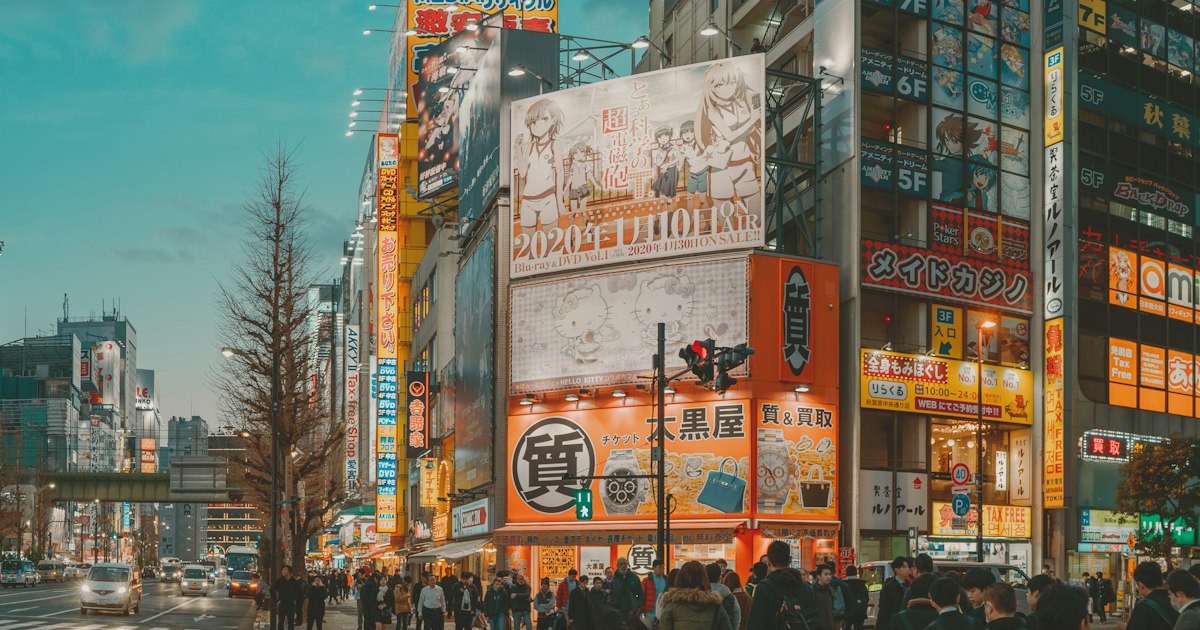
Tokyo’s Akihabara (reachable directly on the JR Yamanote, Keihin-Tohoku, and Sobu lines, or the Hibiya and Tsukuba Express subway lines) remains the easiest single district to cover. Yodobashi Camera Akiba has a full hobby floor with a paint wall that covers Mr. Color, Tamiya, and Gaianotes side by side, plus kits, tools, and display cases — useful because you can compare brands under one roof before committing. Volks’ Akihabara store specializes in garage kits and figure-modeling supplies, including specialty resins and putties you won’t find in general hobby shops. Mandarake’s Akihabara complex is worth a browse for secondhand and out-of-production kits at a discount, and smaller shops like Yellow Submarine and Tam Tam fill in niche tools and limited releases. Most of these shops open around 10:00–11:00 and close between 20:00 and 21:00; Yodobashi tends to stay open later, closer to 22:00.
Hobby SQUARE G: Buying From the Source
GSI Creos runs its own retail showroom in Tokyo called Hobby SQUARE G, where the company displays sample builds and sells its full current paint catalog plus limited and discontinued colors that regular retailers have stopped restocking. It’s a genuinely different experience from a general hobby shop — closer to a brand flagship store — but hours and the exact location have shifted over the years as GSI Creos has moved offices, so check the current address and opening days on GSI Creos’ official site before planning a special trip there. If you only have time for one stop, Akihabara’s general shops will cover 90% of what you need; Hobby SQUARE G is for hunting specific or retired colors.
Building an Airbrush Setup: What It Actually Costs
A workable airbrush setup is the real investment, not the paint. Mr. Hobby’s own compressor line (the Linear Compressor series) and double-action airbrushes like the Procon Boy PS-289 are the standard entry points Japanese modelers reach for. Rough budget tiers:
- Budget (¥3,000–8,000): A basic single-action airbrush, no compressor — paired with a cheap aquarium-style pump if you already have one, or hand-brushing with Tamiya acrylics using tools picked up at a 100-yen shop (tweezers, cutting mat, panel-line accessories cost next to nothing there).
- Mid-range (¥15,000–25,000): A proper double-action airbrush plus a small dedicated compressor, a handful of Mr. Color bottles, and Mr. Color Leveling Thinner. This is where most serious hobbyists land.
- Splurge (¥50,000+): A larger twin-piston compressor with a moisture trap, two or three airbrushes for different nozzle sizes, and full GX/Super Metallic paint sets for competition-level finishes.
Whatever tier you’re at, budget separately for thinner, surface primer, and topcoat — paint alone isn’t a finished system, and shops assume you already know to buy all three together.
Beyond Tokyo: Osaka’s Den Den Town and Tamiya’s Hometown
Osaka’s Nipponbashi district, known as Den Den Town, mirrors Akihabara on a smaller scale — a cluster of electronics, anime, and hobby shops within a few blocks, including a Yodobashi and regional hobby chains carrying the same Mr. Color and Gaianotes lineup. If you’re coming through Kansai anyway, it’s worth an afternoon rather than a dedicated trip.
Shizuoka City is Tamiya’s hometown and the site of the Shizuoka Hobby Show, held each spring (usually May) at Twin Messe Shizuoka — Japan’s largest static model trade show, with manufacturer booths, event-exclusive kits, and the chance to see upcoming releases before general retail. If your trip timing lines up, it’s a far deeper dive into the hobby than any single shop visit.
Timing, and the Mistake That Catches Everyone
Outside the Shizuoka show in spring, the other major date is the All Japan Model Hobby Show at Makuhari Messe near Tokyo, typically held in October — both events are good anchors if you want your trip to coincide with new releases and show-exclusive paint sets. Shops themselves don’t have strong seasonality; stock turns over steadily year-round.
The mistake that catches almost every visiting modeler: Mr. Color and its thinner are lacquer-based and classified as flammable liquids, which means they cannot go in carry-on or checked luggage on a flight under IATA dangerous goods rules, and most Japanese shops won’t ship them internationally either. If you’re flying home, either switch your shopping list to the water-based Aqueous Hobby Color line and acrylics (which travel far more easily, though you should still declare them and check your airline’s specific policy), or accept that your lacquer paint stays behind and buy the local equivalent once you’re home. Planning this before you shop saves a frustrating conversation at airport security.
A Quick Shopping Checklist
Before you leave a shop, make sure you’ve actually got a working kit, not just paint: thinner, a primer (surface conditioner), topcoat (flat or gloss), a cutting mat, and basic tweezers. If you’re also hunting other specialist retail in Japan — secondhand optics, used sporting goods — the shopping patterns are similar to what you’ll find in Tokyo’s specialist optics shops or Japan’s secondhand golf club superstores: dense product walls, staff who assume baseline knowledge, and real bargains if you know what you’re looking at before you walk in.