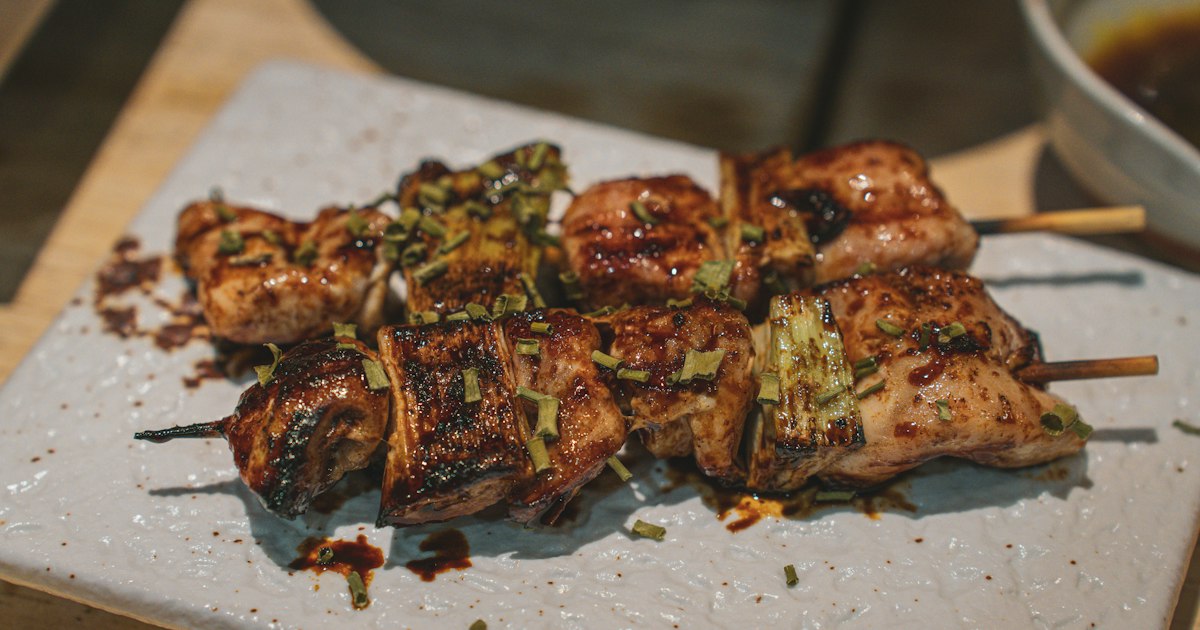
Photo by Dennis Zhang on Unsplash
Walk past any yakitori counter in Japan and you’ll see it: a small, boxy grill glowing orange underneath skewers of chicken, leek, and chewy skin. That grill is a shichirin — a portable charcoal brazier that’s been a fixture of Japanese cooking for over a century. You can buy one yourself, bring it home, and recreate that smoky, slightly charred flavor in your own kitchen or balcony. This guide covers what a shichirin actually is, where to buy one at every budget, what charcoal to use, and the safety mistake that matters more than any other.
What Exactly Is a Shichirin?
A shichirin (七輪) is a small, single-burner charcoal stove, traditionally cylindrical or box-shaped, with a grate on top and a vent at the bottom to control airflow. The name is said to come from the idea that you could once cook a full meal for the cost of “seven rin” — a tiny old coin denomination — because the grill is so fuel-efficient. Unlike a Western barbecue, it’s designed for close, direct, intense heat over a small surface area, which is exactly why it’s the tool of choice for yakitori, grilled fish, mochi, and tableside dishes like Omi beef at a restaurant table.
Traditional shichirin are made from diatomaceous earth (keisōdo), a lightweight volcanic sediment that insulates heat extremely well while staying light enough to carry. The most famous source is Suzu, on Ishikawa’s Noto Peninsula — though the January 2024 Noto earthquake badly damaged the quarries and workshops there, so authentic Suzu-yaki shichirin have become harder to find and noticeably pricier since. Cheaper modern versions use ceramic or ceramic-fiber composites instead.
Charcoal Matters: Binchotan vs. Ogatan
The grill is only half the equation — the charcoal determines the flavor. Yakitori restaurants almost universally use binchotan (備長炭), a white charcoal made from ubame oak that burns incredibly hot, lasts a long time, and produces very little smoke or odor, letting the meat’s own fat drippings do the flavoring. It’s not cheap: expect around ¥1,000–2,000 per kilogram at kitchenware shops or online.
The budget alternative is ogatan, a compressed charcoal briquette made from charcoal dust. It’s easier to light, burns a bit less evenly, and costs roughly ¥500–800 for a 3kg bag at home centers like Cainz, Komeri, or DCM, or in supermarket seasonal aisles during summer BBQ season. For a first-timer, ogatan is the forgiving choice; once you’re hooked, upgrade to binchotan.
Where to Buy a Shichirin in Japan
- Budget (¥500–3,000): Mini ceramic shichirin turn up at Daiso and other ¥100-and-up shops for around ¥500–1,100, good for a single skewer or two. Nitori stocks slightly larger, sturdier round grills in the ¥1,500–3,000 range — a sensible middle ground if you’re furnishing a kitchen from scratch anyway.
- Mid-range (¥5,000–15,000): Kappabashi Dougu Gai in Asakusa, Tokyo’s wholesale kitchenware district, is the best place to see real diatomaceous-earth shichirin in person. Most shops open around 9:00–10:00 and close by 17:00–18:00, with many closed on Sundays, so plan a weekday visit. It’s a 5–7 minute walk from Tsukuba Express Asakusa Station (exit A1) or Tokyo Metro Ginza Line Tawaramachi Station (exit 3).
- Splurge (¥20,000–40,000+): Hand-carved Suzu-yaki shichirin, often stamped with the maker’s name, are sold through specialty kitchenware retailers and department stores. Given the post-earthquake supply crunch, genuine pieces are increasingly collectible — closer to an artisan purchase than a kitchen tool.
Lighting It Safely — and the One Mistake That Matters Most
Light charcoal with a chimney starter (¥1,000–2,000 at home centers) or firestarter cubes (mokutan tsukeki) placed under a few pieces of charcoal in the shichirin’s firebox; expect 15–20 minutes before the coals ash over and are ready to cook on.
Here’s the mistake that actually matters: never use a shichirin indoors in a closed room. Burning charcoal produces carbon monoxide, and Japan sees genuine CO poisoning incidents almost every year from people using charcoal grills inside during power outages, camping trips, or simply cold weather. Use yours on a balcony with the window open, in a well-ventilated genkan area, or outdoors entirely — and if you’re in an apartment, check your building’s rules first, since many manshon fire codes restrict open flame on balconies.
Setting Up Your Home Yakitori Night
Once you’ve got the grill and charcoal sorted, the rest is easy. Bamboo skewers (kushi) are sold in bulk at ¥100 shops; classic combinations are negima (chicken and leek), tsukune (chicken meatballs), and kawa (crispy skin). If you want to splurge on the protein itself, a well-marbled cut of Omi beef grills beautifully over binchotan in thin slices.
For seating, Japanese households often gather around a low table for grill nights, which means floor seating — a set of zabuton floor cushions makes a tatami-style setup far more comfortable for a couple of hours of grilling and eating. And no yakitori night is complete without a drink — a Japanese highball is the standard pairing at yakitori counters nationwide, cutting through the char and fat between skewers.
Best Season and Where to Use It
Shichirin grilling works year-round outdoors, but autumn and spring evenings are the sweet spot — cool enough that standing over charcoal is pleasant, warm enough to sit outside afterward. Midsummer grilling on a balcony can be brutal with the added heat; midwinter is better suited to a hot pot. If you don’t have outdoor space at all, consider this purely a souvenir or a project for when you’re back home rather than something to use in a rented city apartment.
Common Mistakes to Avoid
- Grilling indoors without ventilation — the carbon monoxide risk is real, not theoretical.
- Overloading a small grill with charcoal — a shichirin’s firebox is tiny; too much fuel just means wasted charcoal and scorched food.
- Skipping a heatproof mat or trivet — the diatomaceous earth body gets extremely hot and will scorch a wooden table or tatami in minutes.
- Using damp or low-grade charcoal — it smokes heavily and burns unevenly, undermining the whole point of using binchotan-style grilling.
- Not checking building rules — many Japanese apartment buildings explicitly prohibit open-flame cooking on balconies; ask before you buy.
A shichirin is one of the most satisfying souvenirs you can bring home from Japan precisely because it’s not just decorative — used properly, it turns a backyard or balcony into a yakitori counter. Buy it at Kappabashi, pair it with real binchotan, respect the ventilation rule, and you’ve got a genuinely authentic grill night waiting for you.