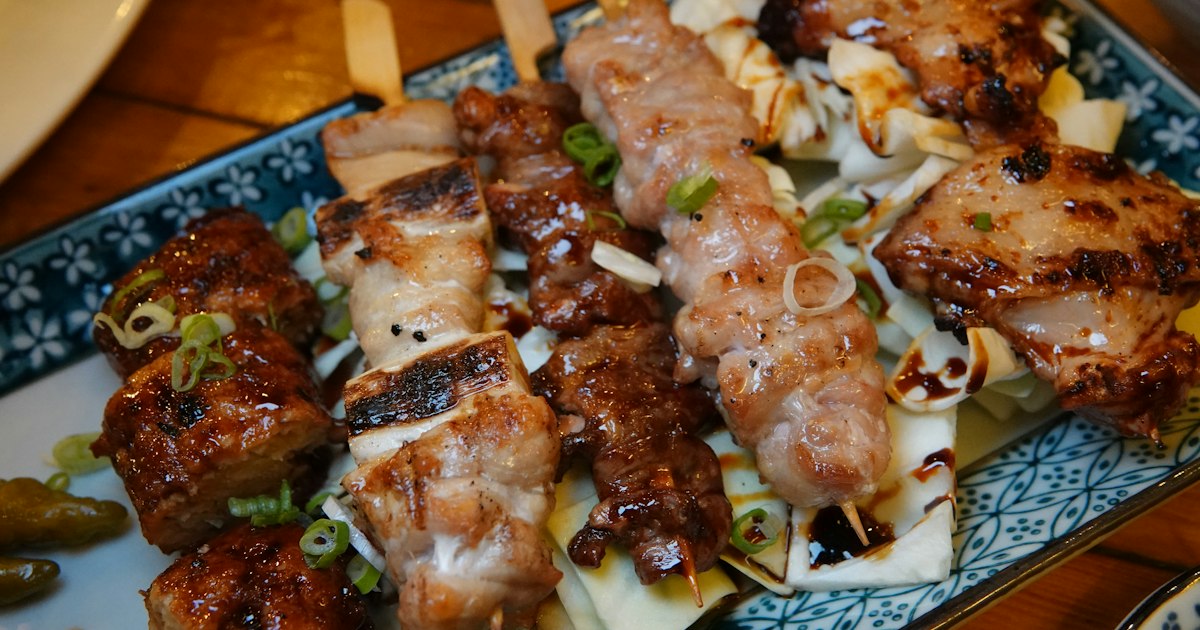
If you’ve ever eaten at a yakitori counter in Japan and watched the cook fan a small clay box glowing with charcoal, you’ve seen a shichirin at work. These tabletop grills are cheap enough to be an impulse souvenir and good enough that serious yakitori shops have used the same design for over a century. Here’s what they actually are, where to buy one without overpaying, and how to use it without setting off a smoke alarm or cracking it on the first try.
What a Shichirin Actually Is
Shichirin (七輪) are small charcoal braziers, traditionally made from diatomaceous earth (keisōdo) — a soft, porous rock quarried in a handful of places in Japan. The material insulates heat extremely well, so the outside stays cool-ish to the touch while the inside burns at grilling temperature on a small handful of charcoal. Cheaper modern versions are made from fired ceramic or a ceramic-ash composite, which is heavier and less efficient but far more durable if you’re rough with it. Either way, the appeal is the same: real charcoal flavor from a grill that fits on a balcony table or a ryokan’s tatami floor.
Where to Buy One in Japan
The best-known production area is Nanao, on the Noto Peninsula in Ishikawa Prefecture, where diatomite shichirin have been hand-cut and fired since the Edo period. If you’re in the region, small workshops and gift shops around Nanao and Wajima sell them directly, though stock and hours vary by shop, so it’s worth calling ahead or checking with the local tourism office before making a special trip.
For most travelers, the easier option is Kappabashi Dougu Street (合羽橋道具街) in Asakusa, Tokyo — a long strip of kitchenware wholesalers a short walk from Tawaramachi Station on the Ginza Line. Most shops open around 9:00 or 9:30 and close by 17:30 or 18:00, and several close on Sundays, so a weekday morning visit gives you the best chance of full stock and staff who’ll explain the differences between grades. Osaka has an equivalent in Sennichimae Doguyasuji near Namba, with similar hours.
Failing that, Tokyu Hands, Loft, and Don Quijote all stock entry-level shichirin, and Amazon Japan and Rakuten sell everything from ¥1,000 novelty grills to artisan Nanao pieces shipped nationwide — useful if you’d rather have one waiting at your hotel or Japan address than carry it through a shopping district.
Budget, Mid-Range, and Splurge Options
Prices scale almost entirely with size and how the material was processed:
- Budget (~¥1,000–3,000): Small ceramic or composite shichirin, roughly 15–18cm across, sold at Tokyu Hands, Loft, or Don Quijote. Fine for grilling a few skewers for one or two people, and light enough to pack in a suitcase.
- Mid-range (~¥3,000–10,000): Standard 21–24cm diatomite shichirin from Kappabashi shops or kitchenware retailers — the size most households and small izakaya use.
- Splurge (~¥15,000–50,000+): Hand-carved Nanao-made diatomite shichirin, often larger (27cm and up) and sold with a maker’s name attached. These are genuinely multi-generation tools if cared for, and the ones used by long-running yakitori shops are typically this grade.
If you’re building a whole at-home yakitori night around it — skewers, dipping sauces, the works — our companion guide on home yakitori nights with a shichirin goes deeper into recipes and setup.
What Else You Need
A shichirin alone won’t get you grilling. You’ll also want:
- Charcoal: Binchotan (white charcoal) is the traditional choice — it burns long, hot, and nearly smoke-free, and is sold at supermarkets and Don Quijote for roughly ¥500–1,500 per bag. Ogatan (compressed charcoal briquettes) is a cheaper, easier-to-light alternative.
- A grill net (yakimono-ami): A simple wire mesh that sits on top; sold alongside the shichirin itself at any of the shops above for a few hundred yen.
- A fire starter and fan or small bellows: Charcoal chimneys aren’t common in Japan; the traditional method is a handheld fan (uchiwa) to feed air to the coals while they catch.
- A fire-extinguishing pot (hikeshi-tsubo): A sealed ceramic jar you drop spent coals into to snuff them out for reuse — far safer and cheaper than burning through a full bag each time.
How to Light and Use One
Stack a few pieces of charcoal with a firestarter cube or lit paper underneath, fan steadily until the edges glow and ash over (five to fifteen minutes depending on the charcoal), then spread the coals evenly before you start grilling. Diatomite shichirin need a few minutes to heat through, so don’t expect instant high heat the way you would with gas. Keep a metal tray or tile underneath if you’re using one on a wooden table or tatami, since the base does get warm even though the sides stay relatively cool.
This is also where a shichirin earns its reputation: a handful of good binchotan under a few skewers of chicken thigh, or a splurge cut of Omi beef if you’ve brought some back from Shiga, turns into genuinely restaurant-quality yakiniku in your own room. Pour a Japanese highball to go with it and you’ve basically recreated an izakaya at home. If you’re setting up on tatami, a pair of zabuton floor cushions makes the low-table seating far more comfortable for a long grilling session.
Common Mistakes to Avoid
- Grilling indoors without ventilation. Burning charcoal produces carbon monoxide. Use a shichirin on a balcony, garden, or other open-air space with good airflow — never in a closed room, and never in a standard hotel room.
- Dousing it with water to put it out. Diatomite shichirin can crack from the thermal shock. Let coals burn down naturally or move them to a hikeshi-tsubo instead.
- Buying one too small for your group. A 15cm grill handles two or three skewers at a time — fine for a couple, frustrating for four hungry people. Size up if you’re grilling for a group.
- Forcing it with lighter fluid. It works, but it taints the flavor that’s the whole point of charcoal grilling. A proper fan-and-patience approach, or a charcoal starter cube, gives a cleaner burn.
Taking One Home
Small shichirin (under 1kg, 15–18cm) pack reasonably well in checked luggage if wrapped carefully — diatomite is sturdy but not shatterproof. You cannot bring charcoal, lighter fluid, or firestarter cubes on a flight, so buy fuel at your destination instead. If you don’t want to deal with any of this mid-trip, most reputable retailers listed above ship internationally, which is often easier than nursing a breakable grill through security.