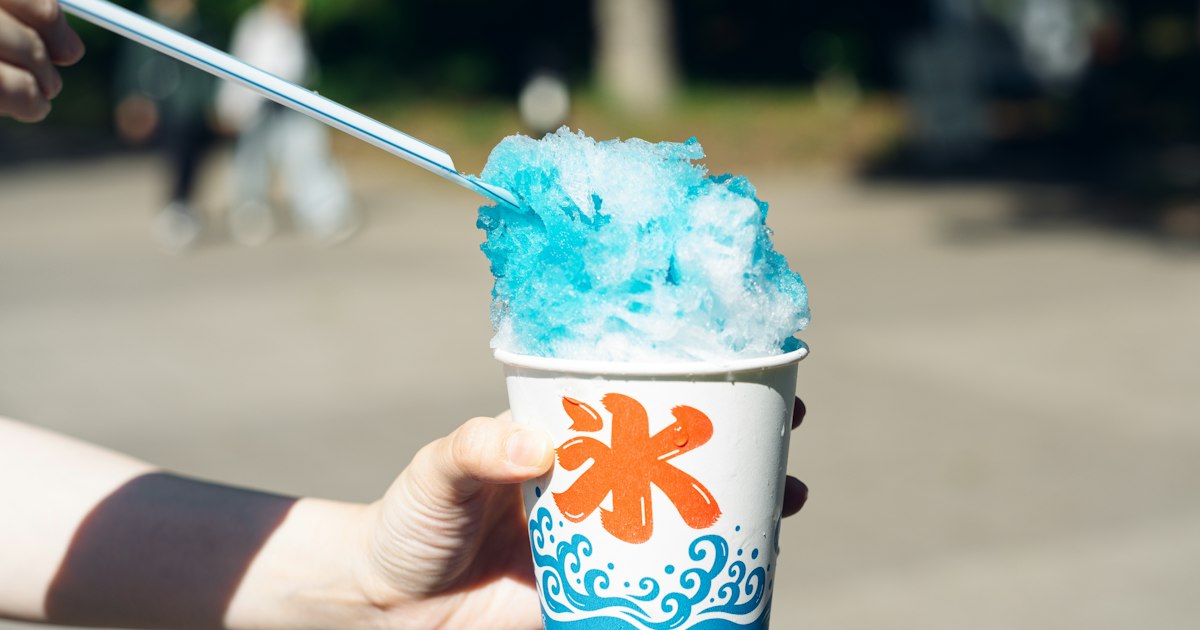
Photo by Yuika Takamura on Unsplash
Few souvenirs capture a Japanese summer as well as a kakigori machine. Long before bingsu and snow cones became global dessert trends, Japan had already perfected the art of shaving ice into featherlight drifts and burying them under syrup, condensed milk, or matcha powder. Doshisha, an Osaka-based housewares company, makes some of the most widely owned kakigori machines in Japanese homes — sold everywhere from discount megastores to department store kitchen floors. If you want to recreate that festival-stall shaved ice at home, here’s what to know before you buy.
Why Doshisha Is Japan’s Go-To Kakigori Brand
Doshisha isn’t a specialty ice-cream company — it’s a general consumer goods maker that produces everything from fans and heaters to small kitchen appliances, which is exactly why its kakigori machines are so common. They’re inexpensive, widely stocked, and built for the Japanese home kitchen rather than commercial use. The brand most associated with home shaved ice is “Hatsuyuki” (初雪, meaning “first snow”), a name used across both manual, hand-crank ice shavers and electric motorized versions. The appeal is texture: a well-made Hatsuyuki machine shaves a block of ice into fine, fluffy flakes — closer to fresh snow than the crushed-ice chips you get from a blender or a freezer-door ice maker.
Manual vs Electric: Which One to Buy
This is the first real decision, and it comes down to how often you’ll use it and how much noise and effort you’re willing to tolerate.
- Manual hand-crank machines are the classic style — you lock a frozen block or dome of ice into the top, turn a crank or lever, and shaved ice falls into a bowl underneath. They’re quiet, don’t need electricity, and are genuinely fun for kids to operate, but they require real arm effort for a large bowl’s worth of ice and work best with smooth, bubble-free ice blocks.
- Electric machines use a motor to spin a blade against the ice, producing the ultra-fine “snow” texture that’s become popular for fluffy milk-based kakigori. They’re faster and need less physical effort, but they’re louder, bulkier, and need a Japanese 100V outlet.
If you mainly want nostalgia and a fun thing to do with kids on a hot afternoon, go manual. If you want cafe-style fluffy shaved ice on demand, go electric.
Price Guide: Budget, Mid-Range, Splurge
Doshisha and similar Japanese kakigori machines span a wide price range depending on build quality and ice-shaving mechanism:
- Budget (around ¥1,500–¥3,000): Simple plastic manual shavers, often using small ice cubes from your freezer’s ice tray rather than a frozen block. Fine for occasional use, less impressive texture.
- Mid-range (around ¥3,000–¥6,000): The classic Hatsuyuki-style manual machines with a metal blade and a mold for freezing a proper ice dome or block — the better choice if texture matters to you.
- Splurge (around ¥6,000–¥12,000+): Electric motorized versions that produce the fine, snow-like “fluffy” ice used for premium dessert-shop style kakigori, sometimes with multiple blade settings for coarse vs fine textures.
Syrups, condensed milk, and matcha or kinako (roasted soybean flour) toppings are sold separately and are worth picking up at the same time — they’re inexpensive and make a bigger difference to the final result than people expect.
Where to Buy One in Japan
You don’t need to hunt down a specialty shop — kakigori machines are mainstream kitchenware in Japan and turn up in several reliable places:
- Don Quijote (Donki): The discount chain is one of the easiest places to find budget and mid-range manual machines, often displayed near seasonal summer goods from late spring onward. Most urban branches, including the flagship near Shibuya Station, stay open very late or 24 hours, which makes them convenient for an evening browse after sightseeing.
- Bic Camera and Yodobashi Camera: Both electronics chains carry a surprisingly deep small-appliance section, including electric kakigori machines. Yodobashi’s Akiba flagship near JR Akihabara Station (roughly 9:30am–10pm daily) and Bic Camera’s Shinjuku stores (typically 10am–9pm) are good bets if you want to compare manual and electric models side by side before buying.
- Tokyu Hands / Hands: A good source for the simpler, design-forward manual shavers, often at the lower end of the price range.
- Doshisha’s official online store and Amazon.co.jp / Rakuten: Useful if you can’t find your preferred model in person, though shipping a bulky appliance internationally adds cost — it’s generally cheaper to buy in-store and pack it in your luggage.
Best Time to Buy
Kakigori machines are seasonal stock in most Japanese stores. Shelves fill up from late April through the peak summer months (June–August), and popular models can sell out or get pushed to the back of the store once autumn arrives. If you’re visiting in summer, buy early in the trip rather than waiting, since popular electric models move fast during heatwaves. If you’re visiting in winter or spring, you may actually find better clearance pricing on leftover stock — just confirm the model is still in full working condition, as display units can sit on shelves a while.
Common Mistakes to Avoid
- Buying a manual machine that needs a molded ice block without realizing your freezer at home can’t make one — some machines come with a plastic ice mold, others expect you to freeze water in a specific dome or cylinder shape. Check the box for what ice format the machine actually needs.
- Forgetting about voltage. Electric machines are built for Japan’s 100V, 50/60Hz electrical system. Taking one home to a 220–240V country means you’ll need a step-down voltage converter, not just a plug adapter — otherwise you risk burning out the motor.
- Assuming all shaved ice textures are the same. If the “fluffy, snow-like” texture of trendy kakigori cafés is the whole point for you, a basic manual shaver with a worn or low-quality blade will disappoint — it produces coarser, more granular ice. Read the model description (or ask staff) specifically about blade quality if that texture matters.
- Overpacking it in checked luggage. Boxes are bulkier than they look, and glass or ceramic bowls sometimes included with higher-end sets should go in carry-on or be wrapped well.
Bringing It Home
A manual Hatsuyuki-style kakigori machine is one of the easiest “only in Japan” kitchen souvenirs to bring back, since it needs no electricity and packs down reasonably flat. If you’re assembling a broader Japanese kitchen haul, it pairs well with other practical finds — a traditional kappougi apron to keep your clothes free of syrup drips, and a stash of Japanese stick coffee for the mornings after a late-night kakigori session. However you build your kit, the machine itself is the centerpiece: a cheap, low-tech way to bring a genuine slice of Japanese summer back to your own kitchen.