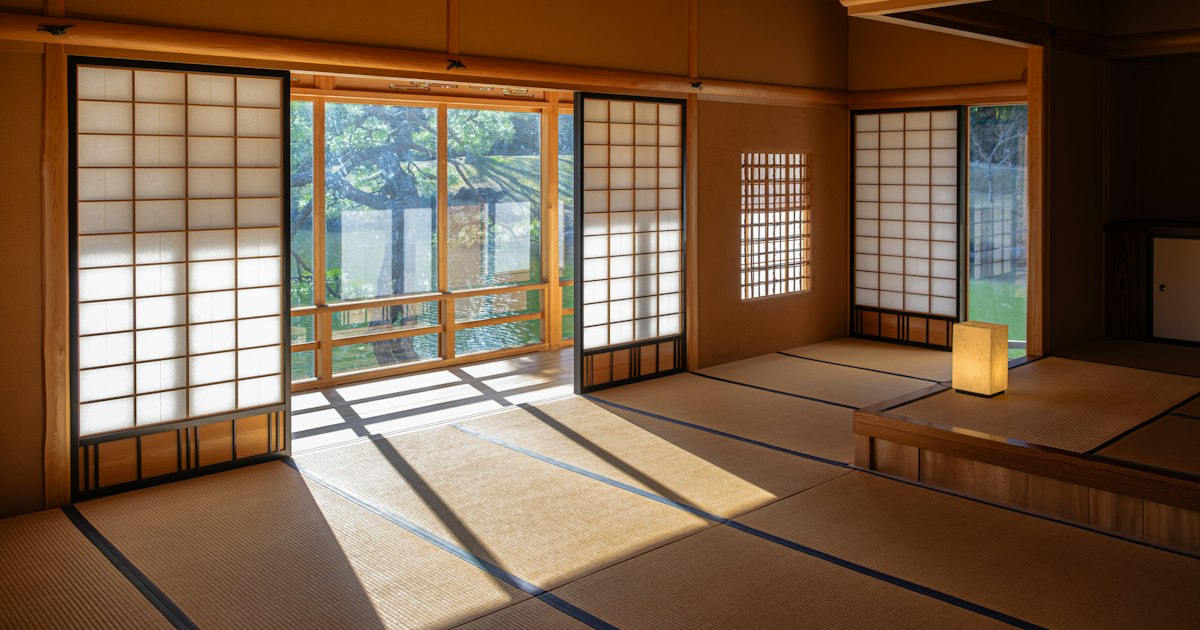
Photo by Viviana Nysaether on Unsplash
If you’ve ever toured a Japanese apartment and opened what looks like a shallow cupboard with two sliding doors and a shelf cutting it in half, you’ve met the oshiire (押入れ). It’s not a mistake in the floor plan — it’s one of the oldest and most logical storage systems in Japanese housing, built specifically around the futon lifestyle. For foreign renters and long-stay visitors, understanding how an oshiire is meant to work (and how it differs from a Western closet) will save you from mold problems, wasted space, and an awkward first week of not knowing where to put anything.
What an Oshiire Actually Is
An oshiire is a built-in storage alcove, typically 80-90cm deep and 1.6-1.8m wide, found in Japanese-style (washitsu) rooms and many older apartments regardless of room style. Unlike a Western closet, it has no hanging rod by default. Instead, a fixed shelf called a naka-dana sits roughly 90cm off the floor, splitting the space into an upper tier (ue-dan) and lower tier (shimo-dan). The doors are usually two or four sliding fusuma panels rather than a hinged door, which is why the opening looks wider and shallower than closets you may be used to.
The depth (around 80cm) isn’t arbitrary — it’s sized to fit a folded futon mattress and quilt set stacked flat. In a traditional household, the futon lives in the oshiire by day and comes out onto the tatami at night. If you’re renting a room with tatami flooring, it’s worth seeing how that flooring is actually made before you judge the room’s age or quality — our piece on visiting a Japanese tatami workshop shows how much handwork goes into a mat that looks simple from the doorway.
How Renters Actually Use the Space Today
Very few contemporary renters stack futons in there every single day — most either own a bed or keep a futon out permanently on a frame. In practice, the oshiire becomes general-purpose deep storage: suitcases, seasonal clothing, vacuum cleaners, spare bedding, boxes of documents, even bicycles folded into pieces in a pinch. The upper shelf is where people put lighter, bulkier items (spare pillows, seasonal decorations, empty suitcases), and the lower section holds heavier bins and anything you want within easy reach.
Because there’s no rod, renters who want to hang clothes install a tension rod (a “nobi-nobi boo” or S-shaped hanger bar) between the side walls — these cost roughly 500-1,500 JPY at any home center or 100-yen shop and need no drilling, which matters because most rental contracts forbid wall damage. If you’re setting up a first apartment and want cheap bins, dividers, and hanging hardware, the smaller 100-yen chains often have better closet-organizing shelves than the big-box Daiso stores; see our guide to Can Do and Watts, Japan’s other 100-yen shop chains, for where to look.
The Ventilation Problem Nobody Warns You About
This is the single most important thing to know, and the most common mistake new renters make: oshiire have poor air circulation because they’re enclosed on three or four sides with no vents in many older buildings. Japan’s humidity, especially June through September, means anything packed tightly against the back wall can grow mold (kabi) within weeks. Long-term residents deal with this in three ways:
- Leaving a 2-3cm gap between stored items and the back wall and side walls, not pushing boxes flush against the wood.
- Placing a sunoko — a slatted wooden duckboard, sold at home centers for roughly 1,000-3,000 JPY — on the floor of the oshiire before putting anything on it, so air moves underneath.
- Using disposable moisture-absorbing packets (shikke-tori) that sit in a tray and collect liquid as they absorb humidity; a pack of two or three runs about 300-500 JPY at any drugstore or supermarket and needs replacing every 1-3 months depending on season.
Opening the fusuma doors for 10-15 minutes on a dry day every week or two, especially after rainy season, is the free version of the same fix. If you skip all of this, the first sign of trouble is usually a musty smell from stored fabric, not visible mold — by the time you see spots, it’s often already in the futon or boxes.
Oshiire vs. Other Japanese Closet Types
You’ll encounter a few variations once you start apartment hunting, and listings don’t always spell out the difference:
- Oshiire — the traditional deep alcove described above, with a mid-shelf, found mostly in washitsu or older buildings.
- Kuroze or walk-in closet (WIC) — a newer, Western-style closet with a hanging rod as standard, common in apartments built after the 2000s and usually listed as a selling point because it’s still relatively rare.
- Nando — a small windowless storage room, bigger than a closet but smaller than a room, sometimes repurposed as a home office or pantry in older houses.
When you’re comparing floor plans (madori) before signing a lease, “OSH” or the kanji 押入 on the diagram tells you it’s the no-rod traditional type — budget for a tension rod and sunoko board if you want it to function like a normal closet. For the logistics of actually collecting your keys and moving in once you’ve chosen a place, our guide on how Japanese apartment key handoffs work covers what to expect from the agent meeting through to move-in inspection.
Budget, Mid-Range, and Splurge Organizing Setups
You don’t need to spend much to make an oshiire genuinely useful. On a tight budget (around 2,000-3,000 JPY total), a tension rod, a couple of stackable plastic bins, and a pack of moisture absorbers from a 100-yen shop will cover the basics. A mid-range setup (8,000-15,000 JPY) typically adds a proper sunoko floorboard, a set of fabric storage boxes sized to the 80cm depth (sold specifically as “oshiire storage” or oshiire-you at stores like Nitori or Muji), and a small dehumidifying unit with a hygrometer readout so you can actually monitor humidity rather than guess. At the splurge end, renters who plan to stay long-term sometimes install a custom shelving unit built to the exact width of their oshiire (20,000-40,000 JPY through a local carpenter or home center’s custom-cut shelving service) or add a small plug-in ventilation fan, though the latter requires landlord permission since it involves installing a fixture.
One more practical note: measure your specific oshiire before buying anything, because widths vary noticeably between buildings — a 1.6m-wide alcove and a 1.8m one will fit different bin configurations, and “standard” organizer sizes sold in Japan assume the depth (roughly 80cm) but not always the width.
Best Timing for Setting Yours Up
If you’re moving in during Japan’s dry autumn or winter months (November through February), it’s the easiest time to set up an oshiire system because humidity is low and mold risk is minimal — do your organizing and sealing-up then if you have the choice. If you’re moving in during the rainy season (early June to mid-July) or the humid peak of summer, prioritize ventilation measures from day one rather than waiting, since that’s exactly when stored fabric is most vulnerable.
Small as it looks on a floor plan, the oshiire is a good example of how Japanese apartments assume a slightly different daily routine than many renters arrive expecting. Once you know what the shelf height and the depth are actually for, it stops being an odd leftover closet and starts being one of the more useful parts of a small apartment.