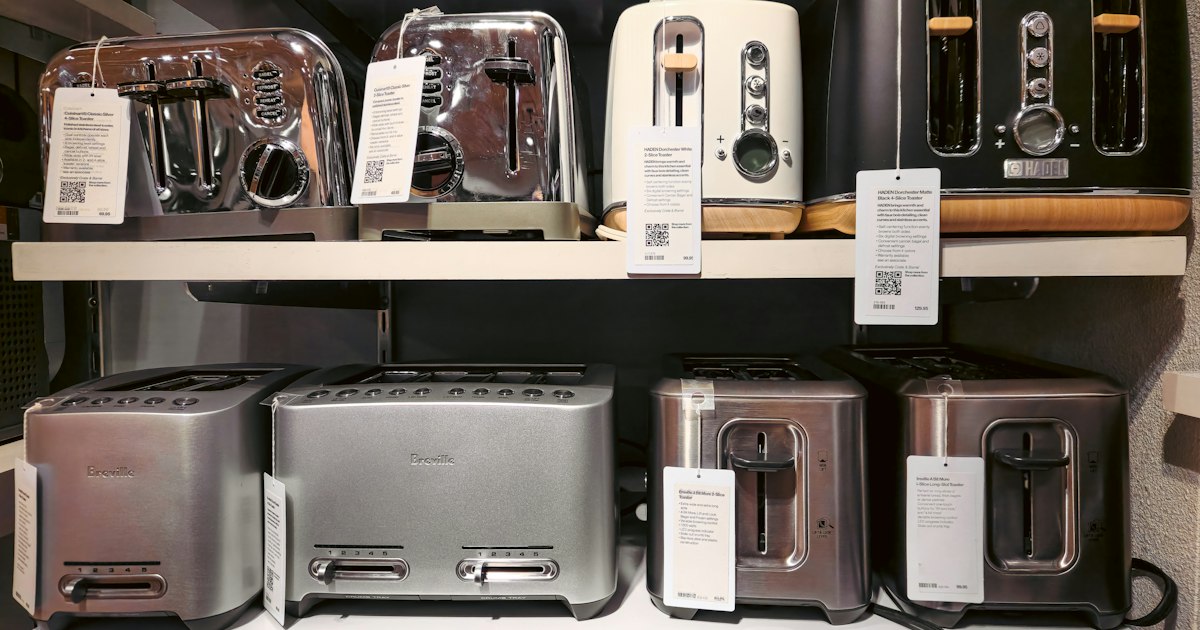
Photo by Zoshua Colah on Unsplash
Ask a design-obsessed Tokyoite what’s on their kitchen counter and there’s a good chance they’ll mention Balmuda. The company’s steam toaster launched in 2015, sold out repeatedly, and turned a Y24,000 bread-warming machine into a genuine cultural phenomenon. If you’re visiting Japan and wondering whether it’s worth hauling a toaster home in your luggage — or which other Japanese kitchen appliances actually deserve the hype — here’s what’s real, what it costs, and what to watch out for before you buy.
What Makes the Balmuda Toaster a Cult Object
The trick is water. Before toasting, you pour about 5cc (roughly a teaspoon) into a small opening on top. The machine turns it to steam in the first minute, which keeps the inside of the bread moist while the heating elements crisp the crust — the result is noticeably closer to oven-baked bread than anything a standard toaster produces. It genuinely works best on thick-cut shokupan (Japanese milk bread), croissants, and frozen rolls, which is part of why it caught on so fast in a country obsessed with bakery culture.
The current two-slice models (sold under names like the K05 and K06 series) run roughly ¥24,000–¥26,000 including tax. That’s expensive for a toaster by any country’s standard, and Balmuda rarely discounts it — this is a brand that protects its retail price the way Apple does, so don’t expect a bargain just because you’re buying in Japan.
Where to Buy One (and When)
You don’t need to track down a flagship boutique. The most practical route for travelers is a major electronics retailer — Bic Camera or Yodobashi Camera — both of which have large stores in Tokyo (Shinjuku, Akihabara, Yurakucho), Osaka (Namba), and other big cities, typically open daily from around 10:00 to 21:00. Staff at the main branches usually speak some English, and both chains offer tax-free processing for tourists on purchases over ¥5,000 before tax — bring your passport to the register or the dedicated tax-free counter. Japan adjusted its duty-free procedures again in 2026, so confirm the exact steps (some stores now verify at departure rather than refunding instantly) with staff before you check out.
Department stores like Isetan Shinjuku and Takashimaya also carry the full Balmuda line, often with nicer gift-wrapping if you’re buying it as a present. Balmuda also runs its own small retail spaces in Tokyo, but stock and hours vary, so a big-box electronics store is the safer bet if you only have one shot at buying before your flight.
On timing: there’s no real “sale season” for Balmuda specifically, but Bic Camera and Yodobashi run broader promotions and point-back campaigns around Japanese New Year (early January) and year-end “bonenkai” sales in December, which can occasionally shave a bit off bundled purchases or earn you store points (less useful if you’re leaving the country, since points can’t be redeemed abroad).
Beyond the Toaster: Other Balmuda Appliances Worth a Look
The toaster is the gateway product, but Balmuda makes a full line, and the quality holds up across it:
- Budget-ish entry (~¥17,000–18,000): The Pot, an electric kettle with an unusually slow, controlled pour spout — good for pour-over coffee.
- Mid-range (~¥27,000–36,000): The Brew coffee maker, and the GreenFan, a desk/living-room fan prized for its unusually quiet, natural-feeling airflow rather than a flat blast.
- Splurge (~¥70,000+): The Range, a combined steam oven and microwave in a compact footprint — genuinely useful in small Japanese kitchens, but a serious investment and a bulky thing to fly home with.
If you’re outfitting a long-term rental in Japan rather than shopping as a souvenir, it’s worth knowing that Japanese kitchens (and the appliances built for them) assume much less counter space than most Western kitchens — the same space logic that shows up in Japan’s compact, top-loading washing machines. Balmuda’s whole design philosophy is built around that constraint, which is part of why the products look so different from Western appliances of the same category.
Before You Buy: Voltage, Plugs, and Warranty Realities
This is the part people get wrong most often. Appliances sold in Japan are built for Japan’s 100V electrical supply and use the ungrounded two-flat-pin Type A plug. If you live somewhere on 100–127V (much of North America, parts of South America), a Balmuda toaster or kettle will generally work with just a plug adapter, though it may run very slightly under power. If you live in a 220–240V country (UK, most of Europe, Australia), the heating elements in things like the toaster or Range can run dangerously hot, draw excess current, or simply fail — you’d need a proper step-down transformer, not just a plug adapter, and even then it’s not something Balmuda designs or warranties for.
Also worth knowing: the Japan-market warranty is serviced through Japan-based support, so a fault after you’ve flown home usually means no local repair option. Manuals are in Japanese (sometimes with partial English in the box), and there’s no “duty-free, use-anywhere” guarantee — the tax refund only covers consumption tax, not compatibility. If electrical mismatch is a dealbreaker, check whether the specific model is sold through an authorized distributor in your home country before committing to the Japan-only version.
Other Premium Japanese Kitchen Brands Worth Comparing
Balmuda gets the design-magazine attention, but it’s not the only premium name worth a look, and some are more travel-friendly:
- Zojirushi — the gold standard for rice cookers and vacuum insulated bottles. A mid-range induction rice cooker runs ¥30,000–60,000, with top pressure-IH models well over ¥100,000. Note that Japanese rice cooker “cups” are 180ml, not 200ml, which trips up a lot of first-time buyers measuring rice at home.
- Tiger — similar category to Zojirushi, often slightly cheaper, and widely available at any electronics store or even some supermarkets for the vacuum flasks (from around ¥3,000).
- Vitantonio and Bruno — colorful, compact multi-plates and hot plates (¥8,000–15,000) that are genuinely popular as gifts and far easier to pack than a toaster.
All three brands sell internationally in some form, which can make them a safer bet than Balmuda if you’re not confident about voltage compatibility back home.
Shipping and Packing It Home
A toaster or kettle fits in checked luggage if you wrap it well, but something like The Range is a different problem — heavy, boxy, and awkward in a suitcase. If you’ve gone all-in on a Balmuda haul, or you’re combining it with other large purchases from your trip, it’s worth reading up on sea freight versus air shipping options from Japan — sea freight is far cheaper for anything bulky, it just takes weeks rather than days.
Pairing It With the Rest of Your Kitchen
If a new toaster or kettle has you thinking about upgrading your whole table setup, Japan’s regional pottery towns are a natural next stop. An hour from Tokyo, Kasama’s laid-back pottery studios sell handmade plates and mugs directly from the kilns — a nice, lower-stakes complement to a splashy appliance purchase, and much easier on the suitcase.