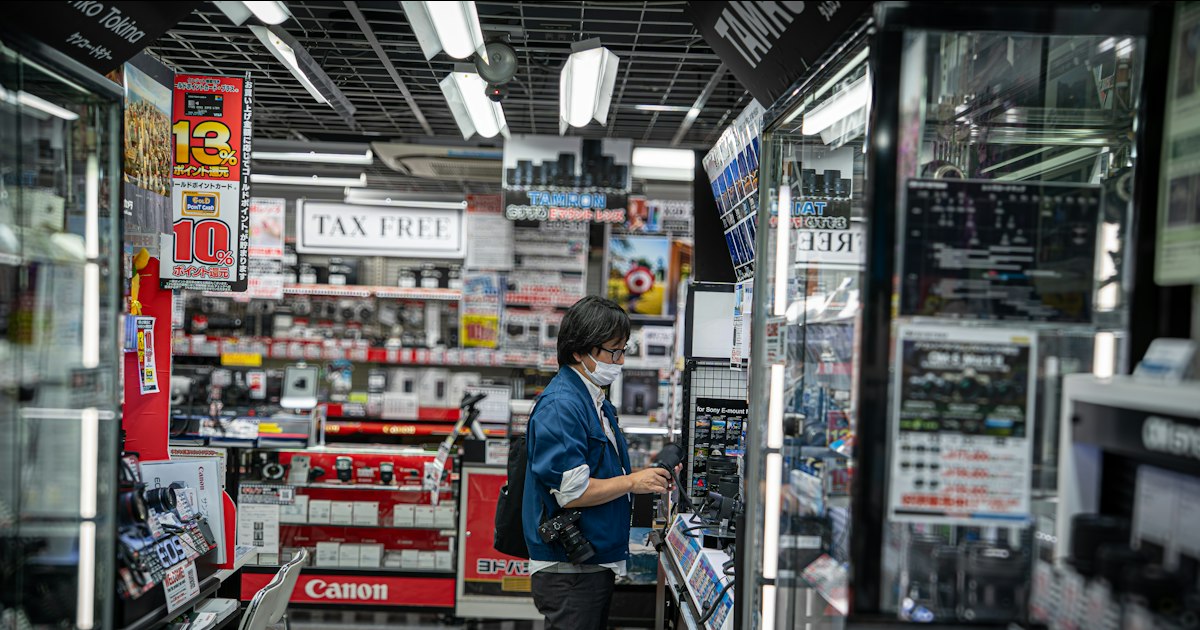
Photo by Bhanu Singh on Unsplash
Panasonic’s home-market shavers and epilators are a quiet obsession among repeat visitors to Japan — the blades, motors, and skin-care coatings sold domestically are often a generation ahead of what Panasonic exports, and the price-to-performance ratio at a Tokyo electronics store beats almost anywhere else in the world. But the Japan-only lineup comes with a few traps: voltage mismatches, warranty gaps, and model numbers that don’t match what you’ll find back home. Here’s what to actually know before you buy.
Why Buy a Panasonic Shaver or Epilator in Japan
Panasonic develops and launches its flagship grooming appliances in the Japanese market first, often a full product cycle before equivalent models appear overseas under different names and slightly different internals. Domestic models also tend to run cheaper than the “export” versions sold in the US or Europe, even before you factor in tax-free shopping. For travelers, that makes a men’s shaver or facial epilator one of the better souvenir-slash-practical-purchases you can make — unlike, say, a jar of regional miso, it’ll still be useful a decade later.
Men’s Shavers: The Ramdash (ラムダッシュ) Lineup and Prices
Panasonic’s men’s electric shaver line sold in Japan is called Ramdash (sometimes romanized Lamdash). It spans three rough tiers:
- Budget (3-blade): roughly ¥8,000–¥12,000. Fine for a basic daily shave; often lacks a cleaning/charging dock.
- Mid-range (5-blade): roughly ¥25,000–¥35,000 list price, frequently discounted to the ¥20,000s at big-box electronics stores. Usually includes an automatic cleaning and charging stand.
- Flagship (5- or 6-blade): roughly ¥45,000–¥55,000 list, but street prices (with store discounts and point campaigns) often land in the ¥35,000–¥40,000 range. These models have the most refined linear motors and skin-sensor technology.
Replacement blade cassettes for Japan-market Ramdash models are sold separately, roughly ¥4,000–¥7,000 per set, and are generally not interchangeable with the blade numbers sold for overseas Panasonic shavers even when the shaver looks nearly identical — more on that below.
Epilators and Facial Shavers: The Ferrie (フェリエ) Line
For women’s facial and body hair removal, Panasonic’s Japan-market brand is Ferrie. This covers small battery-powered facial shavers (roughly ¥3,000–¥6,000), body epilators for legs and arms (roughly ¥10,000–¥15,000), and at the top end, home IPL light-based hair-removal devices (roughly ¥30,000–¥45,000). The facial shavers are an especially popular, low-stakes souvenir — compact, cheap, and genuinely useful for daily skincare routines back home, in the same practical-beauty-buy category as Japanese shampoo and hair care or hand cream and lip balm.
Voltage, Warranty, and the Replacement-Blade Trap
This is where travelers get burned, literally in rare cases. Three things to check before buying:
- Voltage: Many current Panasonic shavers and epilators sold in Japan are dual-voltage (100–240V), but not all — some budget and older domestic-only models are 100V-only. Check the small print on the charging base or AC adapter before you buy. If you’re from a 220–240V country (UK, most of Europe, Australia) and the unit is 100V-only, it may overheat or fail on your home outlet. US travelers (120V) are generally fine either way.
- Plug shape: Japan uses the same two-flat-pin Type A plug as North America, so only non-US/Canada travelers need a plug adapter — voltage is the bigger issue, not plug shape.
- Warranty: The standard manufacturer warranty (usually one year) is honored at Panasonic service centers in Japan only. Panasonic’s overseas subsidiaries generally won’t service a Japan-market unit, and replacement blades are sold under different model codes region to region — a JP-market blade set often won’t be stocked by your home-country Panasonic retailer. If you want to keep using the shaver long-term, it’s worth buying an extra blade cassette or two while you’re in Japan.
Where to Buy: Akihabara, Bic Camera, and Yodobashi
Tokyo’s big electronics retailers are the easiest and generally cheapest place to buy, with tax-free counters and some English-speaking staff:
- Yodobashi Camera Akiba — a short walk from Akihabara Station’s Electric Town exit (JR Yamanote, Keihin-Tōhoku, and Chūō lines, plus the Hibiya and Tsukuba Express subway lines). Typically open around 9:30am–10pm. The multi-floor store has a large grooming-appliance section and a dedicated duty-free desk.
- Bic Camera — flagship branches near Yurakucho/Ginza and Shinjuku, generally open around 10am–9pm. If you’re routing through central Tokyo by subway rather than JR, it’s worth comparing day-pass options — see our guide to the Tokyo Subway Ticket vs Tono Furii Kippu if you’ll be hopping between electronics districts and sightseeing in one day.
Prices at these chains are usually within a few percent of each other; it’s worth a quick price comparison on the spot, since staff can often match or beat a rival’s advertised price if you ask.
Tax-Free Shopping: How It Works and Common Mistakes
As a short-term visitor, you can get the 10% consumption tax waived at tax-free-registered stores (look for the “Tax-Free” sign) by showing your passport at purchase or at a dedicated tax-free counter. As of the current simplified system, general goods and consumables are combined under one rule: minimum ¥5,000 (pre-tax) and maximum ¥500,000 per person, per store, per day. Common mistakes to avoid:
- Forgetting your passport — no passport, no tax refund, no exceptions, even for a return visit the same day.
- Assuming you can use the item in Japan before leaving — tax-free electronics are meant to leave the country with you; customs can ask to see them on departure.
- Not budgeting for the stacking rule — if you’re buying both a Ramdash shaver and, say, a Ferrie epilator at the same store same day, combine the receipts to clear the ¥5,000 minimum more easily.
Best Time to Buy, and Budget vs. Splurge Picks
Prices dip around two points in the year: early January, when stores run New Year “fukubukuro” lucky-bag promotions that sometimes bundle grooming appliances at a discount, and in May–June around Mother’s Day and Father’s Day, when Ramdash and Ferrie are heavily promoted as gift items. Big-box stores also run rotating point-back campaigns that can effectively knock another 5–10% off, on top of the tax-free discount — ask staff if a foreign-tourist coupon is available, since these are sometimes separate from the general promotions.
For a quick decision: if you just want a reliable daily shaver, a mid-range 5-blade Ramdash around ¥25,000–¥35,000 is the sweet spot. If you’re buying mainly for the souvenir factor and want something cheap and useful, a Ferrie facial shaver at ¥3,000–¥6,000 is hard to beat. And if you want the best Japan has to offer and don’t mind the splurge, a flagship Ramdash at ¥40,000–¥55,000 list — picked up tax-free with a store discount — will usually still undercut the equivalent import price back home.