Japan is where Pokemon cards are printed, and Japanese-language product is consistently cheaper, released faster, and easier to find in bulk than in North America or Europe. A new expansion drops in Japan two to four months before its English counterpart, the singles market is enormous because trading card shops have existed in cities like Tokyo and Osaka for decades, and grading infrastructure has caught up in the last two years now that PSA operates a Tokyo submission center. Whether you want a shrink-wrapped booster box at a fair price, a specific vintage single, or a card graded before you fly home, Japan can do all three — but each goal points to a different part of the country and a different shopping strategy.
Sealed Product: Pokemon Centers and the Lottery System
The official Pokemon Center stores are the obvious starting point for sealed booster packs and boxes at retail price. A standard 5-card booster pack runs 165 yen, and a sealed box of 30 packs is typically around 5,500 yen, tax included. Tokyo has several branches, including Pokemon Center Mega Tokyo in Sunshine City (Ikebukuro), Pokemon Center Tokyo Skytree, Pokemon Center Tokyo DX and Shibuya. Osaka has Pokemon Center Osaka DX in Umeda, with smaller branches in Kyoto, Nagoya, Fukuoka, Sapporo and Yokohama. Most keep mall hours of roughly 10:00 to 20:00.
The catch is that popular sets sell out within minutes of release, so Pokemon Centers now handle new expansions almost entirely through a lottery (chuusen) system: you register interest online or via the Pokemon Center app in the days before release, and winners are told when and how much they can buy, usually capped at one or two boxes per person with ID checked at pickup. Walking in on release day expecting open stock rarely works for a hot set; older, back-catalog product is far easier to just buy off the shelf. New main-series expansions release roughly every six to eight weeks, almost always on a Friday.
Big-Box Stores and Convenience Buys
Beyond the official stores, Bic Camera, Yodobashi Camera and Don Quijote all stock sealed Pokemon booster boxes and packs in their toy or hobby sections, generally at or near retail price, and their stock isn’t as instantly mobbed as a Pokemon Center’s. Toys”R”Us Japan locations are another reliable, low-drama option, especially outside Tokyo and Osaka. None of these run public lotteries, so it’s genuinely first-come, first-served; checking shelves on a weekday morning right after opening is your best shot at a fresh restock.
Hunting Singles: Nakano Broadway, Akihabara and Den Den Town
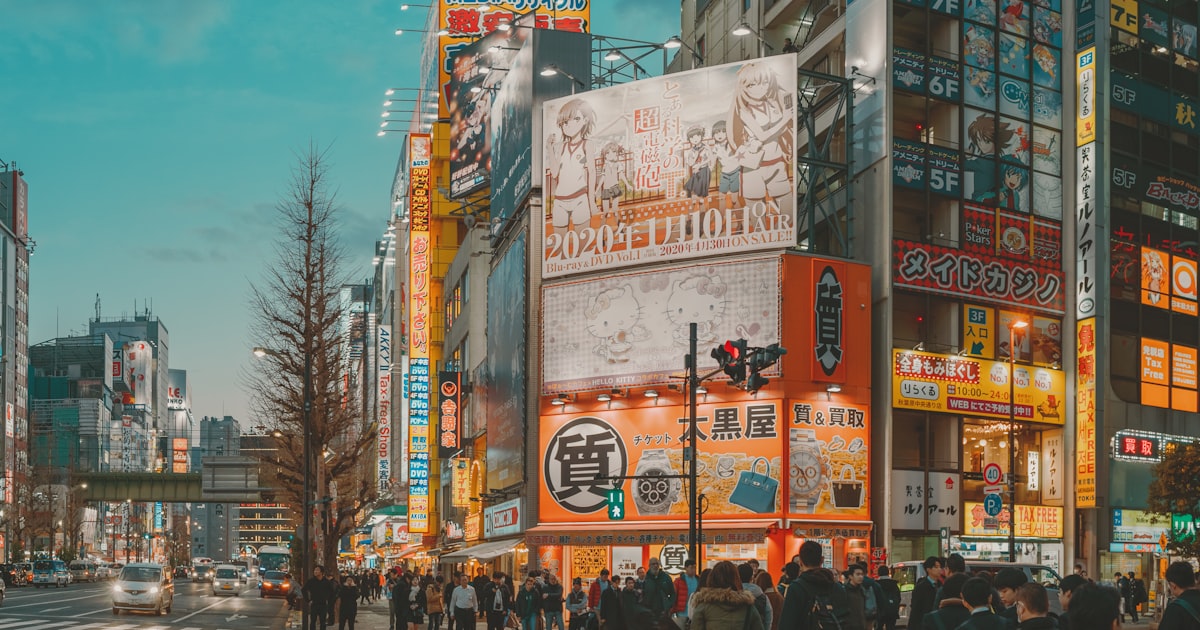
For individual cards rather than sealed product, Tokyo’s card shop scene is concentrated in two neighborhoods. Nakano Broadway, a few stops from Shinjuku, has multiple dedicated trading card shops stacked across its upper floors alongside the manga and toy stores it’s better known for. It’s a great one-stop mix of graded singles, bulk commons in dollar-bin-style boxes, and genuine vintage cards, and pairs naturally with an afternoon spent browsing the rest of the building — see our full guide to Nakano Broadway: Tokyo’s Other Otaku Mecca. Akihabara is the other pole, with the multi-floor Mandarake complex devoting real estate to Pokemon singles, plus independent shops and chains like Yu-Yu-Tei scattered through the backstreets off the main strip. Expect cash-only registers at smaller shops and locked glass cases for anything graded or high-value.
If you’re also spending time in the Kansai region, Osaka’s Den Den Town (Nipponbashi) is a smaller, less crowded version of Akihabara with its own Mandarake branch and several independent card shops. If you’re covering both cities on one trip, our guide to JR Regional Rail Passes for Kansai and beyond is worth checking before you buy Shinkansen tickets separately, and once you’re in either city an IC card gets you through subway and train gates without fumbling for cash — see IC Cards Beyond Tokyo if you haven’t used ICOCA before.
Getting Cards Graded in Japan
Grading used to mean shipping cards to the US and waiting months, but PSA opened a submission center in Tokyo in 2023 that accepts orders and payment in yen without the international shipping step, which has shortened turnaround and removed a lot of the customs uncertainty. Pricing is tiered by declared value and turnaround speed, so check PSA’s current Japan submission fees directly before committing, since they’re adjusted periodically. CGC has also been expanding its presence in Japan through partnered shops. If you’d rather not handle submission logistics yourself, established shops such as Mint and Hareruya offer agency services, submitting cards to PSA on your behalf for a service fee on top of the grading cost.
If you’d rather skip the wait entirely, both Mandarake and Nakano Broadway’s card shops sell already-graded slabs, including PSA 10 examples of vintage cards, directly off the shelf. You pay a premium over raw price, but you walk out with a finished product the same day.
Common Mistakes to Avoid
The biggest one is buying from resellers loitering outside popular stores on release day; they mark sealed product up well beyond retail, and there’s no reason to pay it when back-catalog boxes are sitting on shelves elsewhere. Second, don’t assume any single store will have stock of a hot new set the day you show up — the lottery system exists precisely because demand outstrips supply. Third, inspect secondhand singles closely before buying, since Japanese shops grade condition on their own internal scales that don’t map neatly to English-market terms, and whitening or soft corners can hide under a sleeve. Finally, if you’re carrying anything valuable or graded home, keep it in your carry-on rather than checked luggage; slabs are bulky but not heavy, and rough baggage handling can crack the case.
Best Time to Visit and Budget Tips
For sealed product, timing your visit to land a few days after a new release, rather than on release day itself, usually means less lottery competition and calmer shelf stock. For singles hunting, weekday mornings are quieter than weekends at both Nakano Broadway and Akihabara, and shops often restock display cases on Mondays after weekend trade-ins. Budget-wise, bulk commons and playset singles at Nakano Broadway or Den Den Town are the cheapest way to build a collection; mid-range shoppers do well buying sealed boxes at Pokemon Center or Bic Camera retail prices; and if you’re splurging, graded vintage cards — especially early Base Set-era Charizard cards — can run from tens of thousands of yen into the high six figures depending on grade and rarity.