Photo by Hakan Nural on Unsplash
If you’ve ever wondered where decades of Japan’s manga, anime figures, trading cards and video games go after their first owners are done with them, the answer is often Mandarake. Founded in Nakano in 1980, this nationwide secondhand chain has become the default pilgrimage site for collectors — not a polished flagship store, but a sprawling, slightly chaotic network of specialist shops where a 100-yen bargain bin sits a few floors below a locked glass case holding a 300,000-yen animation cel. Shopping it well takes a bit of strategy. Here’s how to do it.
What Mandarake Actually Is
Mandarake isn’t a single store — it’s dozens of small, independently themed shops under one brand, each specializing in a narrow category: shonen manga, shojo manga, doujinshi (fan-made comics), trading cards, tokusatsu toys, idol goods, retro video games, cosplay, and animation art. The two essential stops for foreign visitors are the Nakano Broadway complex in Tokyo and the Mandarake Complex in Akihabara, though there are also branches in Shibuya, Ikebukuro, Osaka (Umeda and Nipponbashi), Nagoya, Fukuoka, Sapporo, Kobe, Utsunomiya and Kokura. Most locations open around 12:00 and close at 20:00, seven days a week, though individual shop hours inside Nakano Broadway can vary slightly by floor.
Nakano Broadway vs. Akihabara
Nakano Broadway, a short walk from Nakano Station’s north exit (one stop west of Shinjuku on the JR Chuo Line), is the original mothership: roughly 25 separate Mandarake shops are scattered across the upper floors of an aging 1960s shopping arcade, mixed in with independent dealers selling everything from vintage watches to rare sneakers. It feels less like a store and more like an otaku shopping mall, and it rewards slow, floor-by-floor browsing over a couple of hours.
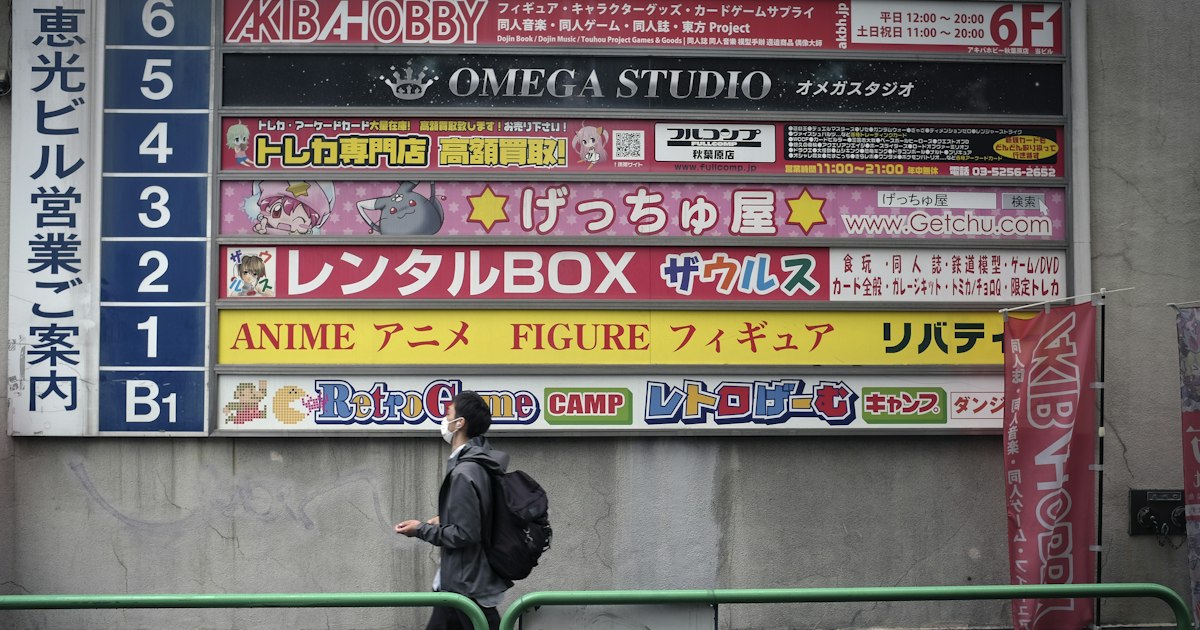
The Akihabara Mandarake Complex, a few minutes from Akihabara Station’s Electric Town exit, is the more tourist-friendly option: eight floors in one building, each clearly labeled by category, with English signage in places and a more curated, higher-turnover selection. If you only have an hour, Akihabara is the faster hit; if you have an afternoon and like digging, Nakano Broadway is where serious collectors go.
Understanding the Grading and Pricing System
Nearly every item carries a condition grade — typically S, A, B, C and sometimes with modifiers like “AB” — along with notes on whether a manga volume still has its obi (the thin paper band around the spine) or a figure still has its original box. Grading directly affects price, so it’s worth a few seconds to check before buying: a “C” grade book with a torn cover might be a few hundred yen, while the same title in “S” grade with an intact obi could be several times that.
Prices span an enormous range. Budget shoppers can walk out with loose trading cards, bargain-bin doujinshi, or beat-up manga volumes for 100–500 yen each. Mid-range shoppers will find most pre-owned figures, model kits and complete manga sets in the 2,000–10,000 yen range. At the top end, rare first editions, vintage Showa-era toys, and original animation cels or sketches from classic anime routinely sell for 50,000 yen and up, occasionally into the hundreds of thousands for genuinely rare pieces. There’s no haggling — prices are fixed and tagged.
Buying, Tax-Free Shopping, and Payment
Most Mandarake shops now accept major credit cards and IC transit cards, but smaller specialty counters inside Nakano Broadway can still be cash-only, so carry some yen as backup. Tax-free shopping is available at the larger locations for purchases over 5,000 yen (before tax) on the same day and same receipt, provided you show your passport at the register — it’s worth consolidating a day’s purchases into one shop’s till rather than spreading them across different specialty counters, since each counts as a separate transaction for the tax-free threshold. If you’ve already set up your customs and immigration details in advance through Visit Japan Web, the tax-free paperwork at checkout goes noticeably faster. Mandarake’s own site (en.mandarake.co.jp) also ships overseas directly if you spot something you regret not buying, or want to browse stock before your trip.
Best Timing and Common Mistakes
Weekday afternoons, especially early in the week, are far calmer than weekends, when Nakano Broadway’s narrow corridors fill with regulars doing their rounds. New stock tends to turn over after major events — doujinshi and limited merchandise prices often spike for a few weeks right after Comiket, so hunting for a specific title in that window can mean paying a premium. The most common mistakes visitors make are: assuming everything is secondhand-cheap (rare items are priced like the collectibles they are), skipping the grading notes and being surprised by condition at the register, forgetting cash for smaller counters, and underestimating how much time a proper browse takes — budget at least two hours for Nakano Broadway if you actually want to see most of it rather than skim the ground floor.
Pairing Mandarake With the Rest of Your Trip
If you’re building a souvenir-hunting day around secondhand goods, Mandarake pairs naturally with other treasure-hunt-style shopping. Collectors chasing acrylic stands, charms and itabag supplies to display their new figures will want to read up on itabags and acrylic stand culture before browsing the display-goods floors, and anyone who enjoys the thrill of digging through racks should put Japan’s vintage Americana scene on the same itinerary — it shares the same secondhand-hunting mindset, just with denim instead of doujinshi. And if you’re planning to shop across multiple days and multiple chains, it’s worth skimming how Japan’s store point card system works, since some larger otaku retailers near Mandarake’s locations participate in these programs too.
Whether you walk out with a 100-yen stack of old shonen manga or a single glass-cased collectible that justifies the extra suitcase, Mandarake is one of the few shopping experiences in Japan where the hunt is genuinely part of the fun. Go in with a little patience, check the grading tags, and leave enough time to get properly lost in the shelves.