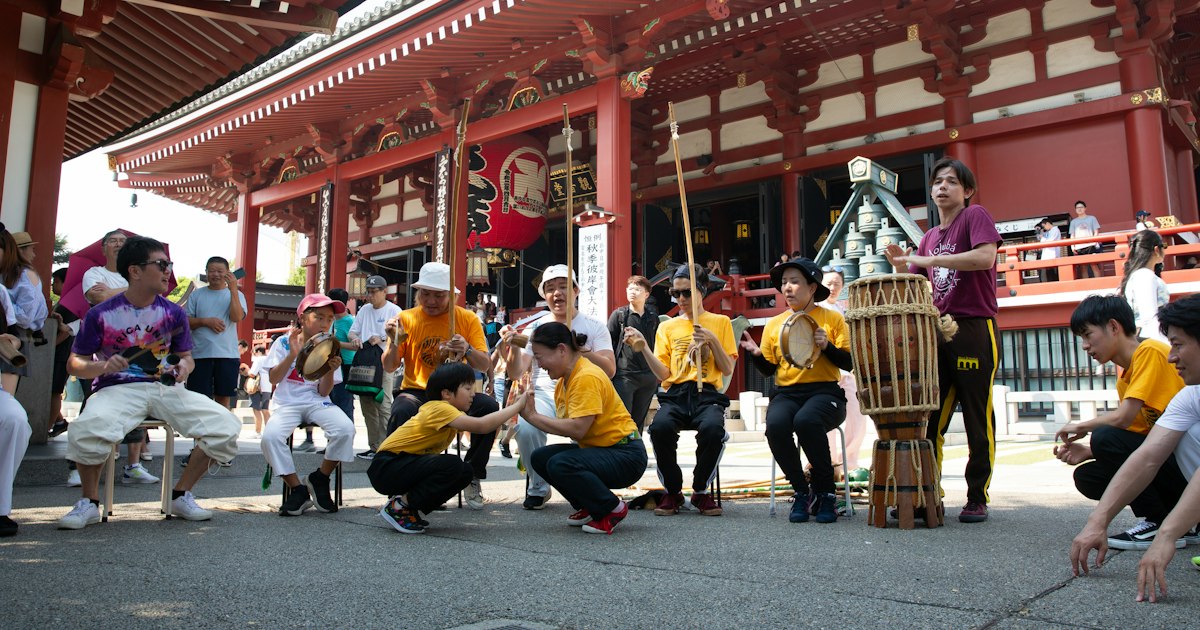
Photo by Rafik Wahba on Unsplash
The deep, chest-thumping boom of a taiko drum is one of the most physical sounds in Japanese culture — you feel it in festivals, sumo tournaments, and temple ceremonies long before you understand what it means. For visitors, taiko is also unusually accessible: you don’t need to read music or speak Japanese to pick up a pair of bachi (drumsticks) and hit something that sounds great on the first try. This guide covers where to actually buy a taiko drum to take home, and where complete beginners can take a lesson, with real prices and logistics.
Miyamoto Unosuke Shoten: Asakusa’s 160-Year-Old Taiko Shop
If you only visit one taiko shop in Japan, make it Miyamoto Unosuke Shoten in Asakusa, Tokyo. Founded in 1861, this is one of the country’s oldest and most respected makers of taiko and festival goods, and its main shop sits just a few minutes’ walk from Sensoji Temple and the Nakamise shopping street — an easy add-on to a Sensoji visit rather than a special trip. The shop floor stocks everything from small decorative hand drums to full-size performance taiko, plus happi coats, hachimaki headbands, and other matsuri (festival) gear.
Prices vary enormously by size and construction. Small souvenir-grade hand drums (uchiwa-daiko, the flat fan-shaped style used in Bon Odori dancing) start around ¥3,000–8,000. Mini decorative barrel drums (okedo-style, a few inches tall, meant for a shelf rather than playing) run roughly ¥15,000–40,000. A genuine playable nagado-daiko carved from a single hollowed log with stretched cowhide heads — the kind used in professional taiko groups — can run from several hundred thousand yen into the millions, since each one takes years to season the wood properly. Staff are used to tourists and can advise on shipping large drums overseas, which is worth asking about before you fall in love with something too big for your suitcase.
Asano Taiko: Touring Japan’s Most Famous Drum Maker in Ishikawa
For a deeper dive into how taiko are actually made, Asano Taiko in Hakusan City, Ishikawa Prefecture, is the name serious players and festival organizers across Japan turn to. The company has been building drums since the Edo period and runs a dedicated taiko hall near its factory where visitors can see instruments on display, hear demonstrations, and buy everything from practice drums to professional stage pieces. It’s a bit more of a detour than the Asakusa shop — about 20–25 minutes by car or taxi from Kanazawa Station, or reachable by local bus — so it suits travelers already heading to Kanazawa rather than a dedicated day trip from Tokyo. If you’ve already looked into other traditional Japanese instruments, the shamisen and koto guide covers a similar mix of workshop visits and retail shops for string instruments, and makes a good companion stop if your interest in traditional music goes beyond taiko.
Taking a Taiko Lesson in Tokyo: Where Beginners Are Welcome
You don’t need to buy a drum to experience taiko — plenty of studios in Tokyo run short, English-friendly lessons aimed squarely at tourists with zero drumming experience. These are typically group workshops of 60–90 minutes, held in a studio with a row of practice drums, where an instructor teaches a short rhythm pattern and everyone plays together by the end. Expect to pay roughly ¥3,000–6,000 per person, with bachi and drums provided — you just show up in comfortable clothes you don’t mind sweating in.
- Booking: Reserve at least a few days ahead, especially on weekends; some studios only run sessions when a minimum headcount books.
- What to wear: Loose clothing and socks (most studios are shoes-off, on tatami or wooden floors).
- Language: Many Tokyo-based taiko experience studios cater specifically to foreign visitors and run the lesson partly or fully in English — confirm this when booking if it matters to you.
- Noise: Taiko is loud. Studios are soundproofed, but don’t expect a quiet, meditative hour — it’s a workout as much as a music lesson.
If you’d rather watch professionals than play yourself, keep an eye on seasonal festival schedules and theater listings — taiko groups frequently perform as part of larger programs. Booking a seat for a dedicated stage performance works much the same way as reserving tickets for Takarazuka Revue or other Japanese performing arts: buy early for weekend shows, and check whether English programs or supertitles are offered.
Sado Island: Where Taiko Is a Way of Life
For a more immersive trip, Sado Island in Niigata Prefecture is the spiritual home of modern taiko performance — it’s where the internationally touring group Kodo is based, and the island has built a small ecosystem around the instrument, including workshops and performance spaces connected to the group’s training village. Reaching Sado takes real commitment: a Shinkansen to Niigata Station (about 2 hours from Tokyo), then a ferry or jet foil from Niigata Port to Ryotsu on Sado (roughly 65 minutes by jet foil, longer by car ferry). This isn’t a casual half-day outing, but for anyone genuinely passionate about taiko, it’s the closest thing to a pilgrimage, and it pairs well with Niigata’s rural scenery and seafood if you’re building a longer Japan Sea coast itinerary.
What to Budget: Three Tiers
Taiko spending splits cleanly into three tiers, so decide which trip you’re on before you start browsing:
- Budget (¥3,000–8,000): A one-hour beginner lesson in Tokyo, or a small souvenir hand drum from Miyamoto Unosuke Shoten that fits in a suitcase.
- Mid-range (¥15,000–100,000): A decorative display drum, a child-size playable taiko, or a multi-session lesson course if you’re staying in Japan long enough to take more than one class.
- Splurge (¥300,000 and up): A full-size, professionally made performance taiko from Miyamoto Unosuke or Asano Taiko — effectively a piece of handcrafted furniture that also happens to be a serious instrument, and something you’ll want to arrange freight shipping for rather than carry home.
Best Timing and Common Mistakes
Summer (July–September) is peak taiko season in Japan, since most matsuri featuring live drumming cluster in this window — plan around a local festival date if you want to see taiko in its natural setting rather than just in a shop or studio. Shops and lesson studios themselves run year-round, so there’s no bad time to buy a drum or take a class.
The most common mistake visitors make is buying a full-size drum on impulse without checking shipping costs first — a real nagado-daiko is heavy and awkward, and freight can add tens of thousands of yen on top of the drum’s price. The second most common mistake is skipping a lesson because it feels too “touristy”: even a single 60-minute session makes the instrument, and the festivals you’ll see for the rest of your trip, click in a way that just watching never quite does. If your Japan itinerary already has room for other hands-on cultural experiences, it’s worth treating a taiko lesson the same way you might treat a stop to see Bunraku puppet theater — a short, concrete window into a tradition that’s otherwise easy to only glimpse from a festival sidewalk.