If you grew up watching a man in a rubber suit punch a monster into a model city, Japan is the one place where that love of tokusatsu (“special filming”) actually pays off. Ultraman, Kamen Rider, Super Sentai and Godzilla aren’t nostalgia acts here — they’re live franchises with new toy lines dropping every few months, decades of vintage sofubi (soft vinyl) figures circulating in secondhand shops, and entire stores built around a single character universe. This guide covers where to actually go, what things cost, and the mistakes that trip up first-time hunters.
Akihabara: the obvious starting point, for good reason
Akihabara in Tokyo is still the densest concentration of tokusatsu merch anywhere. Three stops matter most:
- Mandarake Complex (Akihabara) — eight floors of secondhand goods; vintage sofubi figures, model kits, and out-of-print DVDs live on different floors, so check the floor directory at the entrance. Open 12:00–20:00. Vintage Ultraman sofubi from the 1970s–80s runs roughly ¥3,000–¥15,000 depending on condition and maker (Bullmark and Marusan pieces command the highest prices).
- Kotobukiya and Volks — for new-release garage kits and resin statues, pricier but pristine. A mid-size Godzilla resin figure can run ¥8,000–¥30,000.
- Super Festival (Super Fes) — not a shop but a twice-yearly garage kit convention held in Tokyo (usually around February and August) at venues like Tokyo Big Sight. This is where small sculptors sell limited-run resin kits of obscure kaiju and rider forms you’ll never see in a retail store. Dates shift yearly, so check before planning a trip around it.
Bandai’s own stores: where the new stuff actually launches
Bandai owns Kamen Rider, Super Sentai, and most current Ultraman merchandising, and its flagship retail arm is Premium Bandai and the physical Bandai Namco stores. The Ikebukuro and Namba (Osaka) locations of Bandai Namco’s “Gee! Store” and the Tamashii Nations stores carry the current Soul of Chogokin and S.H.Figuarts lines — these are the premium, highly articulated figures serious collectors want, typically ¥6,000–¥16,000 per figure. New releases sell out fast online, so in-store stock is often your best shot at getting one without reseller markup. Check opening hours on the store’s own page before going, as Bandai retail hours vary by location and season.
Nakano Broadway: quieter, cheaper, deeper vintage
If Akihabara feels too crowded or too focused on anime, Nakano Broadway (a short walk from Nakano Station on the JR Chuo Line, about 10 minutes from Shinjuku) is the connoisseur’s alternative. Multiple small, independently run stalls specialize in tokusatsu — some exclusively in Ultra Series, others in kaiju vinyl. Prices skew lower than Akihabara for comparable vintage condition because foot traffic is thinner and rent is cheaper, but selection varies stall to stall, so budget at least an hour to walk all three floors. Most stalls open around 12:00 and many close by 20:00; Wednesdays see reduced hours at some shops, so avoid that day if possible.
Osaka and beyond: Den Den Town and Amerikamura
Osaka’s Nipponbashi Den Den Town is Kansai’s answer to Akihabara, with several Mandarake and Super Potato-style shops carrying tokusatsu alongside retro games. It’s smaller than Tokyo’s scene but less crowded, and prices are comparable. If you’re shopping Osaka anyway, pair it with a stop at Amerikamura, which has vintage and secondhand shops that occasionally surface 80s–90s toy stock mixed in with clothing — it’s not a dedicated toy district, but worth a detour if you’re already in the area.
Budget, mid-range and splurge: what to actually expect to spend
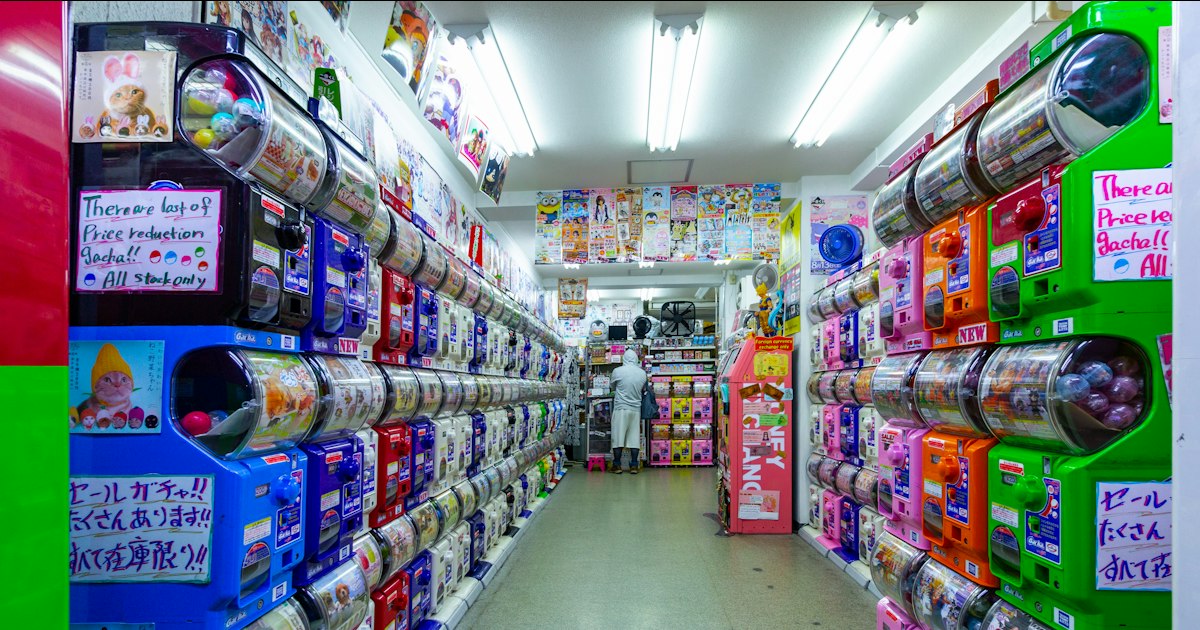
- Budget (under ¥3,000): gashapon (capsule toys, ¥200–¥500 per pull) from machines in any Akihabara arcade or station; loose, well-worn vintage sofubi missing accessories; keychains and standees from convenience store collaborations.
- Mid-range (¥5,000–¥20,000): boxed S.H.Figuarts or S.H.MonsterArts figures, mid-condition vintage Bullmark/Marusan sofubi, Godzilla resin kits from hobby shops.
- Splurge (¥30,000+): mint-in-box vintage 1960s–70s sofubi (a first-run Bullmark Ultraman in excellent condition can exceed ¥100,000), limited garage kits from Super Festival, and X-Plus Toho large-scale Godzilla statues, some of which retail well above ¥50,000.
Best timing and seasonal events
There’s no single “collecting season,” but a few timing notes matter. New Kamen Rider and Sentai toy lines launch alongside each show’s TV season change, typically early March and late August/September — shops restock heavily right after these transitions. Godzilla merch spikes around any new theatrical release (Toho has released a new Godzilla film roughly every few years, most recently with major anniversary tie-ins), so check what’s currently in theaters before your trip, and if you want to watch one while you’re there, see our guide to subtitled screenings at TOHO Cinemas. For vintage hunting specifically, weekday mornings right after a shop opens are quietest — serious local collectors often sweep new secondhand intake within hours of a weekend drop-off.
Common mistakes to avoid
- Assuming “vintage” means authentic. Reproduction sofubi has existed since the 1990s. Ask staff directly (“kore wa fukkoku desu ka?” — “is this a reissue?”) at Mandarake-style shops; reputable dealers will tell you straight and price accordingly.
- Not checking export/customs rules for size. Large resin statues and Figuarts dioramas are heavier and bulkier than they look boxed — factor checked-baggage weight or shipping costs before buying multiples.
- Skipping gashapon machines because they seem like “kid stuff.” Many exclusive, short-run tokusatsu designs only ever appear in capsule form and are never sold as standalone figures.
- Shopping only in Akihabara. Prices for identical vintage condition are frequently lower in Nakano Broadway or Osaka’s Den Den Town simply because rents are lower there.
- Forgetting cash. Smaller secondhand stalls, especially in Nakano Broadway, are far more likely to be cash-only than larger chain stores.
Whichever route you take, build in unstructured browsing time — the best finds in this hobby are rarely the ones you planned for, they’re the beat-up Showa-era kaiju figure sitting in a ¥500 bargain bin that nobody else recognized.