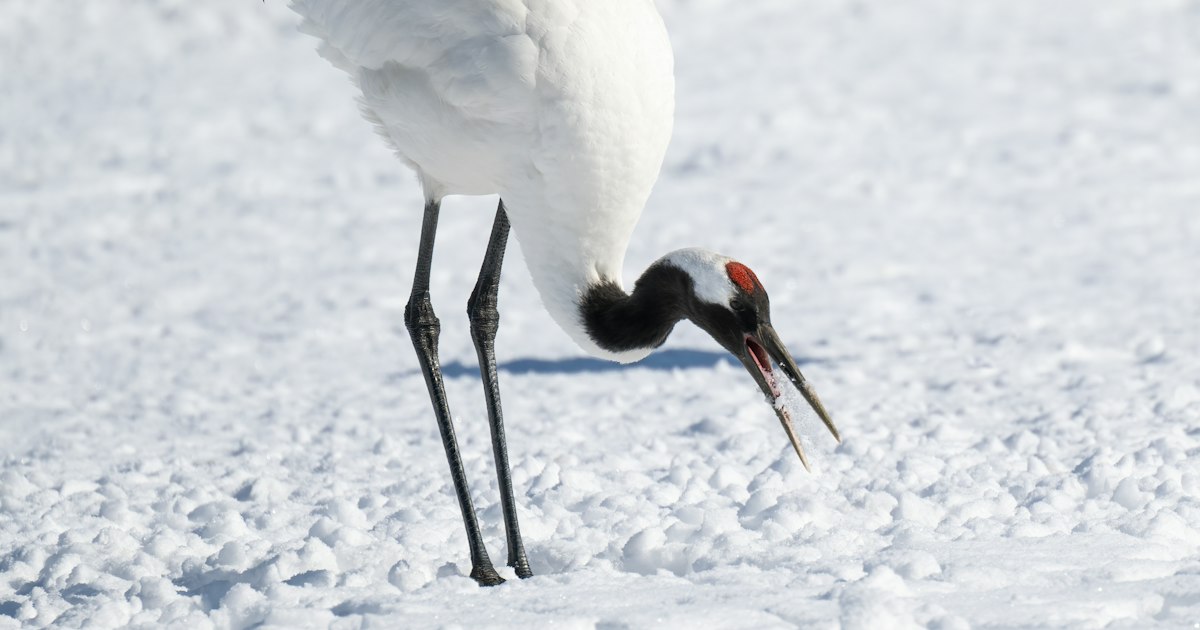
Japan packs an outsized bird list into a small footprint: snow-bound cranes in Hokkaido, endemic woodpeckers in subtropical Okinawa, and migratory flycatchers passing through Tokyo’s parks twice a year. You don’t need a safari budget or a month of travel to see something genuinely special — but you do need to know when to show up, what to bring, and which trips are worth booking a guide for. Here’s a practical rundown for visiting birders.
When to Go: Matching Species to Season
Japan’s birding calendar is split sharply by season, and timing matters more than almost anything else on this list.
- Winter (December–February): The headline season. Red-crowned cranes and Steller’s sea eagles concentrate in eastern Hokkaido, and hooded and white-naped cranes winter in Kyushu. Cold (often below -10°C in Hokkaido) but the payoff is reliable, close-range viewing of birds that are otherwise scattered and shy.
- Spring (late March–May) and autumn (September–October): Migration windows. Tokyo’s urban green spaces fill with warblers, flycatchers and buntings passing through, and coastal wetlands like Yodo River estuary in Osaka or Fujimae Tidal Flat near Nagoya see shorebird traffic.
- Summer (June–August): The best window for Okinawa’s endemics and high-altitude breeders in the Japanese Alps, though it’s also typhoon and humidity season in the south.
Essential Gear: Binoculars, Field Guides and Weatherproofing
An 8×42 binocular is the standard all-rounder for Japan — bright enough for dawn crane-feeding sessions, stable enough for boat cruises, and not so heavy it wrecks a long travel day. If you’re buying in Japan rather than bringing your own, Kowa (based in Chiba) is a domestic optics brand with genuinely competitive mid-range binoculars, and large electronics stores like Yodobashi Camera and Bic Camera carry Nikon, Kowa and imported Swarovski/Zeiss models side by side — useful if you want to compare in hand before a big purchase.
English-language field guides are the harder item to source locally. Japanese bookstores stock excellent Japanese-only guides, but if you want something readable on the plane, check Maruzen, Kinokuniya or Good Day Books before you go — Kinokuniya branches in Tokyo and Osaka reliably stock the English-language “A Field Guide to the Birds of Japan” published by the Wild Bird Society of Japan. Round out your kit with real cold-weather layers for Hokkaido (down jacket, insulated boots, hand warmers — standing still on a riverbank at -15°C for an hour is a different experience than walking around in it), and a rain shell for Okinawa’s sudden downpours.
Hokkaido in Winter: Cranes and Sea Eagles
This is Japan’s marquee birding trip. The Tsurui-Ito Tancho Sanctuary near Kushiro, run by the Wild Bird Society of Japan, offers free admission and dawn feeding sessions (roughly 7–8am in deep winter) where red-crowned cranes gather at close range against a snowy backdrop — genuinely one of the best wildlife spectacles in the country. It’s a 40-minute drive from Kushiro city, or reachable by taxi; public transit is thin, so renting a car is the practical option.
Further north, the port town of Rausu on the Shiretoko Peninsula runs eagle-watching boat cruises from late January through February, when hundreds of Steller’s sea eagles and white-tailed eagles follow the drift ice down from Russia to feed. Boats leave early (often before sunrise) and tours typically run around ¥15,000–20,000 per person — book ahead, as cold weather and small boat capacity mean trips fill fast and cancel easily in bad weather. Because lodging around Rausu and Kushiro is limited and books out during peak eagle season, it’s worth comparing Rakuten Travel, Jalan and Booking.com a few months out rather than a few weeks out. If your route passes through Asahikawa, the Asahiyama Zoo’s winter penguin walks make a good non-birding add-on for the same cold-weather trip.
Kyushu’s Crane Capital: Izumi
Izumi, in Kagoshima Prefecture, hosts the largest wintering population of hooded and white-naped cranes anywhere in the world — often over 10,000 birds between November and February. The Izumi Crane Observation Center sits right on the flats where they gather, with an entry fee of only a few hundred yen and viewing hours roughly 9am–5pm. It’s accessible via Shin-Izumi Station on the Kyushu Shinkansen, then a short taxi ride. Go on a weekday morning if you can — the observation deck gets crowded with local school groups and photographers on weekends.
Okinawa’s Endemic Specialties: Yanbaru
The subtropical forest of Yanbaru, in northern Okinawa, is the only place on Earth to see the Okinawa Rail and Okinawa Woodpecker, both endangered and both genuinely difficult to find without local knowledge. This is the one region on this list where a guided tour isn’t optional so much as necessary — the forest is dense, the birds are quiet, and several of the best-known tracks sit on protected land where unguided access is restricted or discouraged. Small operators based in Kunigami village run dawn walks; expect to pay roughly ¥8,000–15,000 per person for a half-day guided outing, which is well worth it given the alternative is hours of frustrated listening with nothing to show for it. Early summer mornings (just after dawn) are the best window before the heat and humidity build.
Birding Close to Tokyo: No Car Required
You don’t need to leave the capital to get a worthwhile birding morning in. The moat and gardens of the Imperial Palace East Garden are free, open roughly 9am–4:30pm (closed Mondays and Fridays), and pull in a surprising range of migratory songbirds each spring and autumn thanks to the mature tree cover in the middle of the city. Yoyogi Park and the wooded approach to Meiji Jingu are similarly good and similarly free. For a bit more elevation and variety, Mount Takao is an hour from central Tokyo by train, with a cable car (around ¥500 one-way) up the lower slopes and mixed forest trails that host flycatchers, woodpeckers and the occasional raptor overhead — easily combined with a half-day hike.
Guided Tours and Common Mistakes to Avoid
For a first trip, a guide pays for itself fastest in Okinawa (access and species identification) and Hokkaido (logistics in brutal cold with a tight weather window). Elsewhere — Kushiro’s crane sanctuary, Izumi, Tokyo’s parks — independent birding works fine with basic Japanese place names written down or translated on your phone.
The most common mistakes visiting birders make: underestimating Hokkaido cold and showing up without proper boots or hand warmers; booking eagle cruises too close to the date and finding them sold out or weather-cancelled with no flexibility left in the itinerary; and assuming public transport will get them everywhere — in rural Hokkaido and Kagoshima, a rental car or pre-booked taxi is often the only realistic option. Build a buffer day into any winter Hokkaido itinerary, since cruises and even road access can be disrupted by snow.