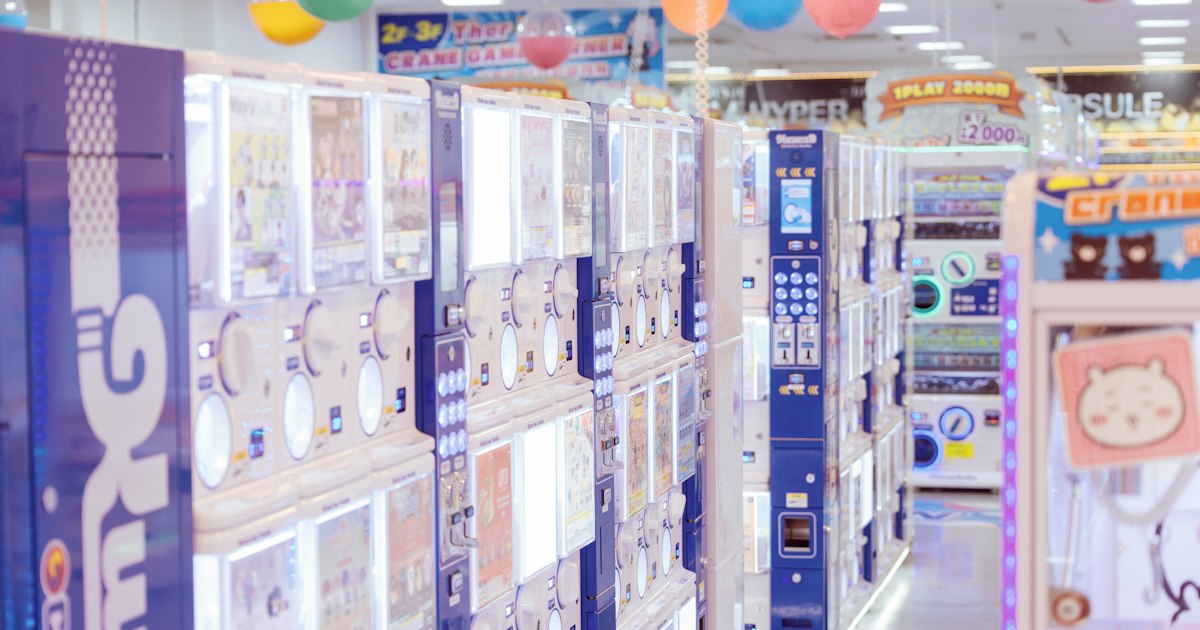
Photo by Connor Gan on Unsplash
Long after Japanese mobile phones themselves stopped needing a strap hole, the tiny charms that dangled from them — keitai strap, as they’re still called — never really went away. They migrated to bag zippers, camera straps, and backpack loops, and they’re now one of the easiest, cheapest, and most satisfying souvenirs you can bring home from Japan. A single gacha capsule costs less than a can of coffee, takes thirty seconds to pull, and gives you a tiny piece of a specific anime, shrine, or city that no airport gift shop sells. This guide covers where to find the good machines, how pricing actually breaks down, and the mistakes that trip up first-time collectors.
What “Keitai Strap” Actually Means Today
The term comes from “keitai denwa” (mobile phone) plus “strap” — originally a literal phone charm sold at carrier shops in the late 1990s and 2000s. Phones dropped the strap hole years ago, but the category survived because the format is perfect for small collectible figures: a plastic or rubber charm, usually 3–6cm, attached to a cord or clasp with a swivel hook. You’ll see them called “rubber strap” (rubasuto), “acrylic charm” (akurisuta), or just “mascot” depending on material. For collecting purposes, they’re all the same hobby — small, cheap, character-driven, and portable.
Gacha Machines: Where and How Much
Capsule toy machines (gachapon or gasha-gasha) are everywhere, but density and quality vary a lot by location:
- Akihabara, Tokyo — the single best hunting ground. Gachapon Kaikan near the Electric Town exit has 400+ machines in one building, open roughly 11:00–20:00. Yodobashi Camera’s Akihabara branch also has a large machine floor near the entrance.
- Ikebukuro, Tokyo — strong for anime and idol franchises, especially around Sunshine City, which skews female-fandom and has strap lines you won’t see in Akihabara.
- Nakano Broadway, Tokyo — smaller machine clusters mixed in with the vintage toy shops; good for discontinued or rare runs you won’t find in mainstream arcades.
- Nipponbashi/Den Den Town, Osaka — Osaka’s answer to Akihabara, with a similar concentration of machines along the covered arcade.
Prices run ¥200–¥500 per capsule for standard lines, with licensed anime/game straps and anything using metal or glitter resin pushing toward ¥400–¥600. Limited-run shrine, railway, or regional mascot straps (think local tourism characters) often sit at ¥300. Bring coins — most machines are cash-only, though newer units in Akihabara increasingly accept IC cards like Suica. Keep a stock of ¥100 coins; convenience stores nearby will break larger bills if you run out.
Character Shops: Guaranteed Stock vs. Gacha Luck
Gacha is random — you don’t choose the design, and popular characters sell out of their restock boxes fast. If you want a specific character guaranteed, character goods shops are the better bet, just at a higher fixed price:
- Pokémon Center stores (Tokyo Skytree, Shibuya, Nihonbashi, and branches nationwide) sell official rubber and acrylic straps for ¥700–¥1,200.
- Jump Shop and Animate chains stock straps tied to current Shonen Jump and seasonal anime, typically ¥800–¥1,500, with exclusive store variants during tie-in campaigns.
- Kiddy Land in Harajuku carries a strong Sanrio and Studio Ghibli strap selection alongside gacha-format capsule machines on its upper floors, so you can compare both formats in one stop. It’s open 11:00–20:00 most days.
- Shrine and temple gift counters sell charm-style straps (often blessed, omamori-adjacent) for ¥500–¥800 — a nice souvenir if you’re visiting somewhere like Kamakura’s temple circuit, where several of the smaller temples sell their own original strap designs not available elsewhere.
Budget, Mid-Range, and Splurge Collecting
Budget (¥200–¥500/piece): stick to standard gachapon lines in Akihabara or Den Den Town. A ¥3,000 budget easily yields 8–10 charms and lets you treat duplicates as trade fodder or extra gifts.
Mid-range (¥700–¥1,500/piece): official character shop straps from Pokémon Center, Animate, or Jump Shop — guaranteed design, better materials (enamel pins fused to resin, metal rings instead of plastic clasps), and usually packaged for gift-giving.
Splurge (¥2,000+): limited convention exclusives, hand-painted artist straps sold at doujin events like Comic Market, or vintage 2000s-era phone straps from secondhand shops in Nakano Broadway and Mandarake branches — these can run ¥1,500–¥5,000 depending on rarity and whether the original packaging survives.
Best Timing and Common Mistakes
Machine stock refreshes most reliably right after a franchise’s anime season starts (new cours begin early January, April, July, October) or around a shrine’s seasonal festival. Visiting Akihabara on a weekday morning means less crowding around the popular machines and a better shot at fresh restocks before weekend crowds clear them out. Avoid major holiday weeks (New Year, Golden Week in early May, mid-August Obon) if you want calm browsing — machines get mobbed and popular designs vanish fast.
The most common mistakes new collectors make:
- Not checking the capsule art before pulling. Machines display the full set of possible designs on a card or poster; if you only want one specific character, check the odds sheet (often it says how many of each are in the set, e.g., 1/8) before spending money on a machine where your favorite is a rare pull.
- Assuming all machines take cards. Most still don’t — carry coins.
- Buying fragile acrylic straps loose in a backpack. Acrylic charms chip in transit; ask for (or bring) a small hard case, or keep them in the plastic capsule shell until you’re home.
- Overpacking duplicates thinking they’ll trade well at home. Unless you’re specifically shipping to a collector community, duplicate pulls mostly just add suitcase weight — many travelers end up leaving extras in hostel “take one” boxes.
Getting There and Packing Them Home
Akihabara and Nakano Broadway are both easy JR/Tokyo Metro stops from central Tokyo, so this pairs naturally with other electronics or hobby shopping — if you’re also stocking up on modeling supplies, the paint and tool shops covered in this guide to Japan’s model paint and airbrush shops are a short walk from several of Akihabara’s gachapon buildings. Straps themselves are small and light, so they don’t affect luggage weight, but keep them out of checked-bag pressure zones — a side pocket of your carry-on or a dedicated pouch works best. If you’re relying on a pocket WiFi device to map out gacha locations and check store hours on the fly, sorting that out at the airport before you start exploring is worth doing first; see this comparison of pocket WiFi vs. data SIM options at Narita for the tradeoffs.
Whether you end up with three charms or thirty, keitai straps are one of the few souvenirs from Japan that cost almost nothing, take up almost no space, and still carry a very specific memory of exactly which arcade, shrine, or shop you found them in.