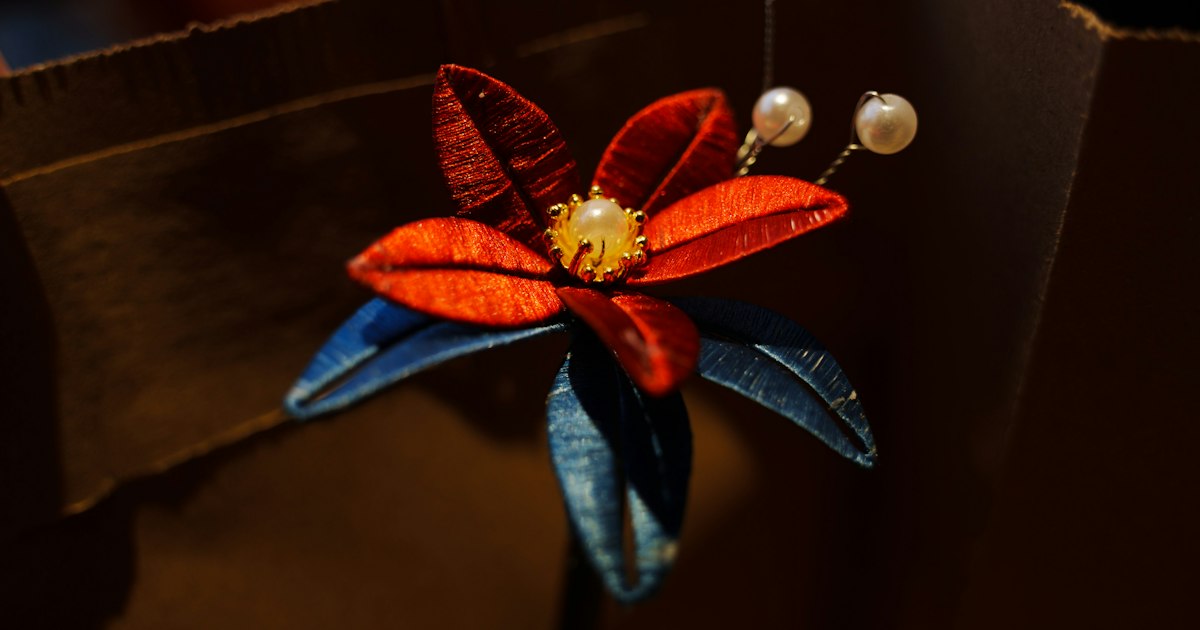
Walk past a kimono shop or a shrine during Shichi-Go-San season and you’ll likely spot it: tiny squares of silk folded into impossibly neat petals, clustered into chrysanthemums and plum blossoms on a hair ornament. That’s tsumami zaiku (つまみ細工), literally “pinched handiwork,” and it’s one of the more approachable traditional crafts for visitors to actually try — no kiln, no years of apprenticeship, just fabric, tweezers, and glue. Here’s where to buy a starter kit, where to take a class in Japan, and what trips up most beginners.
What Tsumami Zaiku Actually Is
The technique dates to the Edo period, when kimono tailors used leftover silk scraps to make hair ornaments (kanzashi) rather than waste them. A small square of fabric — traditionally chirimen silk crepe — is folded in half, then in half again, then pinched at the base into a petal shape with tweezers. Dozens of these petals are arranged into layered flowers, mounted on hairpins, brooches, or fans. Tokyo’s version is officially recognized as a traditional craft (Edo tsumami kanzashi), and it’s still the base ornament worn by maiko and used for children’s festival hairstyles.
What makes it a good craft to pick up as a traveler is the low barrier to entry: a basic flower takes 15–20 precut squares and no special equipment beyond tweezers, fabric glue or starch paste, and a flat surface to press the folds. It scales from a one-hour souvenir activity to a genuinely deep hobby.
Best Time of Year to Learn It
You can buy kits or book a class any time of year, but a few seasonal moments make the craft feel more relevant. Hinamatsuri (Girls’ Day, March 3) fills shop windows with plum and peach blossom kanzashi. Tanabata in early July brings out ornaments shaped like bamboo leaves and stars. And Shichi-Go-San (November 15, so right around now if you’re reading this in mid-November) is peak season for the elaborate flower kanzashi worn by seven-year-old girls in formal kimono — craft stores restock their chirimen fabric squares and kit selection heaviest in the weeks before each of these events, so browsing then gets you the widest choice of colors and patterns.
Where to Buy a Kit: Budget, Mid-Range, Splurge
Budget (under 1,000 JPY): Daiso and Seria both stock precut chirimen fabric squares and basic kanzashi hardware (metal pin bases, clasps) in their craft aisles for a few hundred yen a pack — enough to practice the fold and make one small flower. If you want a wider range of 100-yen shop chains to check while you’re at it, our guide to Can Do and Watts covers lesser-known alternatives to Daiso that sometimes carry different fabric colorways.
Mid-range (1,500–4,000 JPY): This is where a proper beginner kit lives. Craft chain stores like Yuzawaya and Okadaya — both have large stores in Shinjuku with dedicated Japanese-craft sections — sell boxed tsumami zaiku kits that include enough precut silk or rayon chirimen for two or three flowers, tweezers, paste, and illustrated instructions (mostly in Japanese, but the diagrams are followable without reading it). These are the easiest kits to actually use without supplementary fabric cutting, since getting perfectly square, un-frayed fabric pieces is half the battle for beginners.
Splurge (5,000 JPY+): Specialty kanzashi shops, including some in Asakusa near Sensoji, sell kits using real habutae or chirimen silk with hand-dyed gradients, plus higher-grade metal kanzashi findings instead of the simpler clip-on bases found in starter kits. These are worth it if you already know the fold and want materials that hold their shape and color better than synthetic substitutes.
Taking a Hands-On Class
If you’d rather be shown the fold than figure it out from a diagram, short tsumami zaiku workshops are bookable in Tokyo, most commonly in the Asakusa and Yanaka areas, where kanzashi making sits alongside other small craft experiences aimed at both tourists and locals. A typical beginner session runs 60–90 minutes, costs somewhere in the 3,000–6,000 JPY range, and sends you home with one finished piece — usually a hairpin or a small brooch — plus instructions to keep practicing. Instructors generally speak some English or work with picture-based demonstration, since the technique is physical rather than verbal: watching someone pinch and fold a petal three times teaches you more than any written explanation.
If you’re the type who enjoys watching a craft get made by hand even when you’re not the one making it, our piece on visiting a Japanese tatami workshop covers a similarly hands-on (if much larger-scale) traditional craft visit.
Common Mistakes Beginners Make
- Cutting fabric squares by eye. Tsumami zaiku petals only look uniform if every square is genuinely square. A millimeter of skew compounds across 20 petals into a visibly lopsided flower. Use a cutting mat and ruler, or buy precut squares until you’re confident.
- Using too much glue. A single small dot at the pinched base is enough; beginners tend to overdo it and end up with glue seeping through the silk, leaving a visible dark stain on lighter colors.
- Skipping the pressing step. Each fold should be pressed flat with a fingernail or bone folder before the next fold — rushing this makes the final petal shape soft and uneven instead of crisp.
- Buying synthetic fabric expecting silk results. Polyester chirimen substitutes (common in the cheapest kits) don’t hold a crease the same way real silk or rayon crepe does, so the petals can look slightly flat. Fine for a first attempt, but worth upgrading once you’re hooked.
Packing a Kit or Finished Piece Home
Unused fabric kits pack flat and weigh almost nothing, so they’re an easy souvenir regardless of how your luggage situation looks. Finished kanzashi are more delicate — the petals can crush under weight — so wrap them in tissue and carry them in a hard case or a sturdy box in your carry-on rather than burying them in a checked bag. If you’ve caught the small-craft-collecting bug in Japan generally, it’s worth browsing our guide to collecting Japanese phone straps, another compact, display-friendly hobby that travels just as easily.
And if fabric crafts aren’t quite your thing but you still want a handmade-feeling souvenir that’s easy to use daily, our rundown of fude pens for everyday journaling covers a different but equally portable Japanese craft good.