Photo by Priscilla Du Preez 🇨🇦 on Unsplash
Japan’s scissors culture runs deeper than most souvenir shoppers realize. The same blacksmithing lineage that produced samurai swords now turns out kitchen scissors that strip herbs with one snip, tailor shears that glide through wool without snagging a thread, and bonsai shears precise enough to trim a single bud. If you’re the kind of traveler who’d rather bring home a tool you’ll actually use for a decade than another keychain, hasami (はさみ, Japanese for scissors) are worth a detour. Here’s what’s actually worth buying, what it costs, and where to find it.
What Makes Japanese Scissors Different
Most Western scissors are stamped from a single flat piece of steel. Japanese hasami are often forged in two separate pieces — like a knife — then fitted together, which lets makers use harder, sharper steel on the cutting edge while keeping the body workable. This is the same logic behind Japanese kitchen knives, and it’s why a well-made pair of Japanese scissors feels noticeably different in the hand: lighter at the tip, with a cutting action that feels more like slicing than crushing.
You’ll also notice that many household kitchen scissors here come apart at the pivot screw. That’s intentional, not a defect — it lets you clean food residue out of the hinge and sharpen each blade separately, something almost no Western kitchen scissors allow.
Kitchen Scissors (Ryouri-basami): Everyday Workhorses
In a Japanese kitchen, scissors do jobs a knife would handle elsewhere: snipping green onions directly into a bowl, cutting nori into strips, trimming fish fins, even portioning pancakes for toddlers. Look for “ryouri-basami” (料理はさみ) or stainless kitchen shears with a detachable, dishwasher-safe design.
- Budget (¥500–1,500): Basic stainless pairs from Kai or Shimomura, sold everywhere from Don Quijote to supermarket hardware aisles. Fine for herbs, scallions, and packaging, not for bones.
- Mid-range (¥1,500–3,500): Kai’s “Select100” or similar lines, with a detachable blade for cleaning and a built-in bottle-cap opener or nut cracker in the handle — a genuinely clever bit of design most tourists have never seen.
- Splurge (¥5,000–10,000+): Forged single-material kitchen shears from craft brands like Tojiro, strong enough to cut through small fish bones and chicken joints, which ordinary scissors can’t do without bending.
Sewing & Tailor Shears (Rasha-kiri): Precision for Fabric
Serious sewers and quilters already know Japanese fabric shears by reputation — brands like Nenohi, a Tokyo workshop operating since the Edo period, still hand-forge tailor scissors the traditional way. These are sized not in centimeters but in “sun” (寸), an old unit of about 3.03 cm, so you’ll see sizes like 7-sun or 9-sun on the box — a small detail that trips up a lot of first-time buyers who assume it’s a typo.
True “rasha-kiri” (羅紗切り, literally “wool-cutting”) shears are heavy, bottom-weighted, and built to cut through dense wool or felt in one continuous motion without the fabric shifting — the opposite feel of lightweight craft scissors. A pair this good isn’t cheap:
- Budget (¥1,000–2,500): Everyday sewing scissors for cotton and light fabric, widely sold at Yuzawaya or Okadaya craft stores.
- Mid-range (¥5,000–15,000): Semi-professional forged shears for home sewers and cosplay/costume makers.
- Splurge (¥20,000–40,000+): Hand-forged, fully adjustable tailor shears from a named workshop, the kind kimono tailors and professional pattern-cutters buy for life. Expect to special-order or wait for sharpening service if you want it hand-finished to your grip.
Bonsai & Garden Shears: Tools for Precision Pruning
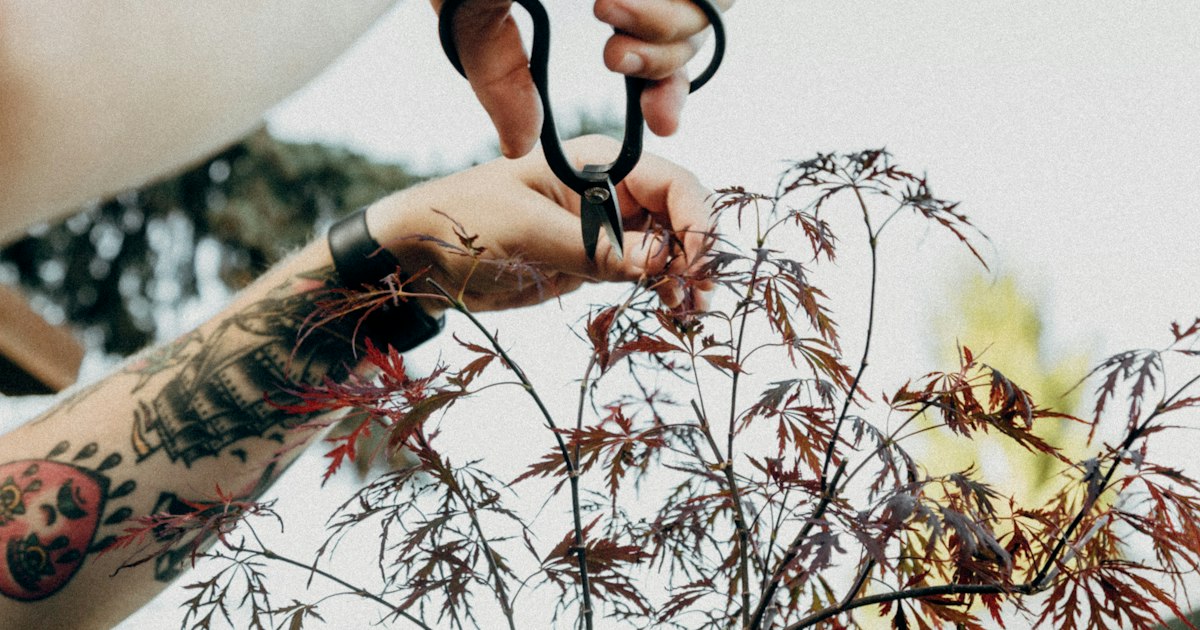
If you’re into bonsai, this is the category worth the trip on its own. Japanese bonsai shears come in distinct shapes for distinct jobs: “mejiri” for bud and fine-twig trimming, “edaki” for thicker branch cuts, and long-handled wire cutters for removing the aluminum or copper wire used to shape trunks. Good bonsai steel holds an edge sharp enough to cut cleanly without crushing cells at the wound, which matters for how fast the tree heals.
- Budget (¥1,500–3,000): Stainless bonsai scissors, fine for leaf and bud work on small trees, sold at garden centers and some department stores.
- Mid-range (¥5,000–12,000): Carbon-steel shears from established tool towns, sharper and longer-lasting but requiring more care (see mistakes below).
- Splurge (¥15,000–40,000+): Hand-forged carbon or high-carbon “shirogami/aogami” steel shears from a named craftsman, often sold with a signed box and a lifetime of resharpening possible if cared for properly.
Where to Buy: Kappabashi, Tsubame-Sanjo & Seki City
For convenience without leaving Tokyo, head to Kappabashi Dougu Street in Asakusa, the city’s professional kitchen-tool district, where several shops stock both everyday and craft-level kitchen scissors side by side so you can compare weight and sharpness in person. Shops here generally open around 9:00–10:00 and close by 17:00–18:00, and many are closed on Sundays, so check before you go. It’s an easy add-on to an Asakusa/Ueno day — get there via the Tokyo Metro Ginza Line or Toei Asakusa Line (if you’re unsure how Tokyo’s two subway operators and transfers work, see our Tokyo Metro vs Toei Subway guide).
For the real deep dive, two regions are worth planning a side trip around: Tsubame-Sanjo in Niigata, a metalworking region that’s made blades, flatware, and garden tools for centuries and now runs factory-outlet shops with seconds and overstock at a discount; and Seki City in Gifu, historically a sword-making town and now home to Kai Corporation’s cutlery operations, which holds an annual cutlery festival (Seki Hamono Matsuri) typically in October with factory-direct sales. Both are small-workshop towns where plenty of shops are cash-only, so carry yen — our guide to Japan Post Bank ATMs covers how to withdraw with a foreign card if you run short.
Common Mistakes to Avoid
- Buying carbon steel without a care plan. Carbon steel (as opposed to stainless) takes a sharper edge but rusts fast if left wet. Wipe bonsai and tailor shears dry after every use and store with a light coat of camellia oil (sold as “tsubaki oil” right next to the scissors in most shops).
- Assuming kitchen scissors are dishwasher-safe. Only the stainless, fully detachable models are. Carbon-blade or riveted (non-detachable) pairs should be hand-washed and dried immediately.
- Packing them in carry-on luggage. Scissors with blades longer than about 6 cm are generally not allowed in cabin baggage under Japanese airport security rules, and international carry-on rules vary by destination too. Pack any serious pair in checked luggage, wrapped in the original box or a cloth to protect the edge — if you’re also buying a new suitcase for the trip home, see our guide to buying a suitcase in Japan.
- Skipping the test-cut. At any proper hamono shop, staff expect you to test a pair on a scrap of fabric, paper, or branch before buying — it’s normal, not rude, and it’s the only way to feel the difference between a ¥2,000 pair and a ¥20,000 one.
- Choosing by price alone. A ¥1,500 kitchen pair from a reputable brand will outperform a ¥500 unbranded set for years. For gifts or serious hobby use, mid-range is almost always the better value than rock-bottom budget.
Whichever category you’re after, the best souvenir here isn’t the fanciest pair you can find — it’s the one sized and sharpened for the job you’ll actually use it for back home.