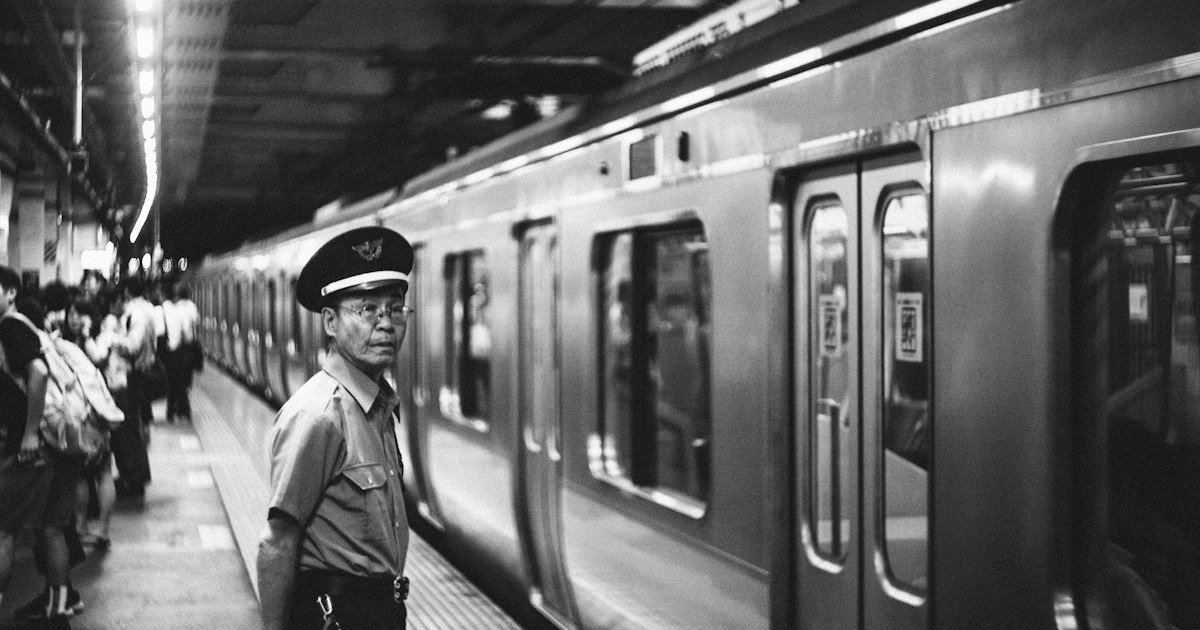
Photo by Yerko Lucic on Unsplash
If you’ve stared at a Tokyo subway map and wondered why some lines are labeled “Metro” and others “Toei,” and why your IC card balance sometimes drops more than expected on what felt like one continuous ride, you’ve bumped into one of Tokyo’s quirkiest pieces of infrastructure: two completely separate subway companies sharing the same tunnels, the same color-coded maps, and often the same station buildings. Understanding the split will save you money and confusion on every single day of your trip.
Why Tokyo Has Two Subway Operators
Tokyo Metro and the Toei Subway are not divisions of one company — they’re two independent operators that happen to run trains through the same city. Tokyo Metro Co., Ltd. is a semi-private company (majority-owned by the national government and the Tokyo Metropolitan Government, but run as a private railway) with nine lines: Ginza, Marunouchi, Hibiya, Tozai, Chiyoda, Yurakucho, Hanzomon, Namboku, and Fukutoshin. The Toei Subway, by contrast, is operated directly by the Tokyo Metropolitan Government’s Bureau of Transportation — the same bureau that runs Toei buses, the Arakawa streetcar, and the Nippori-Toneri Liner. It has four lines: Asakusa, Mita, Shinjuku, and Oedo.
The split dates back to postwar urban planning: Tokyo Metro’s predecessor (Teito Rapid Transit Authority) built the earliest lines starting in 1927, while the city government later built its own lines to fill gaps the private operator wasn’t covering fast enough. Decades later, the two networks are deeply interwoven on the map but still run as separate businesses — which is why they never fully merged their fares, even though there’s been talk of integration for years.
How to Tell Them Apart on the Map
Tokyo Metro lines are usually labeled with a letter-and-number code and a colored circle logo (G for Ginza, M for Marunouchi, H for Hibiya, and so on). Toei lines use a different logo style and their own letters: A for Asakusa, I for Mita (confusingly, not M), S for Shinjuku, and E for Oedo. Station numbers on platform signs and exit maps always show which operator you’re on — if you see a blue “Toei” logo on the sign, you’ve left the Metro network, even if you never changed trains.
This matters most in stations where both companies’ trains stop. Roppongi, for example, is served by both the Tokyo Metro Hibiya Line and the Toei Oedo Line — it’s a genuine two-operator hub, useful to know if you’re heading to the Roppongi nightlife and museum district. Shinjuku, Iidabashi, Monzen-nakacho, and Kuramae are other well-known crossover points.
The Fare Problem: Why Switching Operators Can Cost You
This is the part that trips up visitors. Because Tokyo Metro and Toei Subway are separate companies, each charges its own base fare — roughly ¥180 for the shortest IC-card rides, rising with distance, though both have adjusted fares slightly in recent revisions, so treat exact yen amounts as approximate and double-check the fare chart above the ticket machines. If your journey requires switching from a Metro line to a Toei line (or vice versa), you are technically paying two separate fares, not one combined fare for a single trip — even if you never leave the station building.
Paper single tickets make this worse: you generally can’t buy one ticket that covers both networks for a standard fare-gate journey, so you’d need to exit, buy a second ticket, and pass through separate gates. This is the single biggest point of confusion for first-time riders coming from cities with unified metro systems.
IC Cards Make Transfers Mostly Painless
The good news: tapping in and out with a Suica or Pasmo card smooths almost all of this over. These IC cards work seamlessly across Tokyo Metro, Toei Subway, JR East, and most private railways nationwide, so you never have to think about which company you’re on to actually ride. On top of that, Tokyo Metro and Toei Subway offer an automatic IC-card transfer discount (roughly ¥70 off) when you switch between their networks at a connecting station within a set time window — a small but real saving that only applies to IC taps, never to paper tickets. If you haven’t set up your IC card yet, note that Suica and Pasmo are now mostly sold as physical cards to short-term visitors, or loaded onto a phone; either way, have it ready before your first subway ride, not after.
Day Passes: Which One Actually Saves You Money
If you’re doing heavy sightseeing by subway in a single day, a pass can beat pay-as-you-go fares — but only if you pick the right one for your route:
- Tokyo Metro 24-Hour Ticket (around ¥600): unlimited rides on Tokyo Metro’s nine lines only, valid for 24 hours from first use (not calendar day). Good if your whole itinerary stays on Metro lines like Ginza or Marunouchi.
- Toei One-Day Pass (around ¥700): unlimited rides on all four Toei Subway lines, plus Toei buses and the Arakawa streetcar. Useful for Asakusa-Oedo Line days.
- Common One-Day Ticket (Tokyo Metro & Toei Subway) (around ¥900): covers both networks for a full day — the simplest option if your day genuinely mixes both companies’ lines.
- Tokyo Furii Kippu / Tokyo Combination Ticket (around ¥1,600): adds JR East lines within central Tokyo and Toei buses on top of both subway networks — worth it only if you’re also riding the Yamanote or Chuo Line a lot that day.
Pass prices get periodically revised, so confirm the current yen amount at any ticket machine or the Tokyo Metro/Toei websites before buying — but the logic of which pass fits which itinerary stays the same.
Transfer Stations and Common Mistakes
A few habits will save you real money and confusion:
- Check the operator before tapping through a gate. Signage at transfer stations clearly marks “Tokyo Metro” gates versus “Toei” gates — tapping an IC card through the wrong set still works, it just charges you as if you started a brand-new trip rather than getting the transfer discount.
- Don’t assume same-named stations are the same station. A few Metro and Toei stations with similar names sit blocks apart with no direct underground link — always check the walking distance on a map app rather than assuming a quick change.
- If you’re heading to Yoyogi-Uehara for the quiet cafés near Sangubashi and Yoyogi-Uehara, that’s the Tokyo Metro Chiyoda Line’s southern terminus — useful to know if you’re coming from a Toei line and need to plan the switch at a hub like Otemachi.
- Heading out to Ikebukuro? The Marunouchi, Yurakucho, and Fukutoshin Metro lines all reach it directly, which is handy if you’re making a day of Otome Road’s otaku shopping without needing Toei at all.
- Going toward Odaiba? The Toei Oedo Line gets you to Daimon or Shiodome, where you switch to the separate Yurikamome monorail — a third operator again, with its own fare, before you reach the island.
Quick Tips Before You Ride
Load an IC card before your first ride and keep it topped up — it removes 90% of the operator confusion automatically. If you’re using paper tickets or passes, pay attention to which logo is on your pass and which gates you’re walking through, since mixing them up means paying twice. And when in doubt about whether a station transfer is “free” within the fare gates or requires exiting and re-entering, Google Maps’ transit directions in Japan are generally reliable at flagging it — look for instructions that say “change trains” (free, same side of the gates) versus a prompt to exit the station entirely.
None of this makes Tokyo’s subway hard to use day to day — millions of commuters navigate it without a second thought. It just helps to know, before your first ride, that you’re dealing with two companies wearing one map.