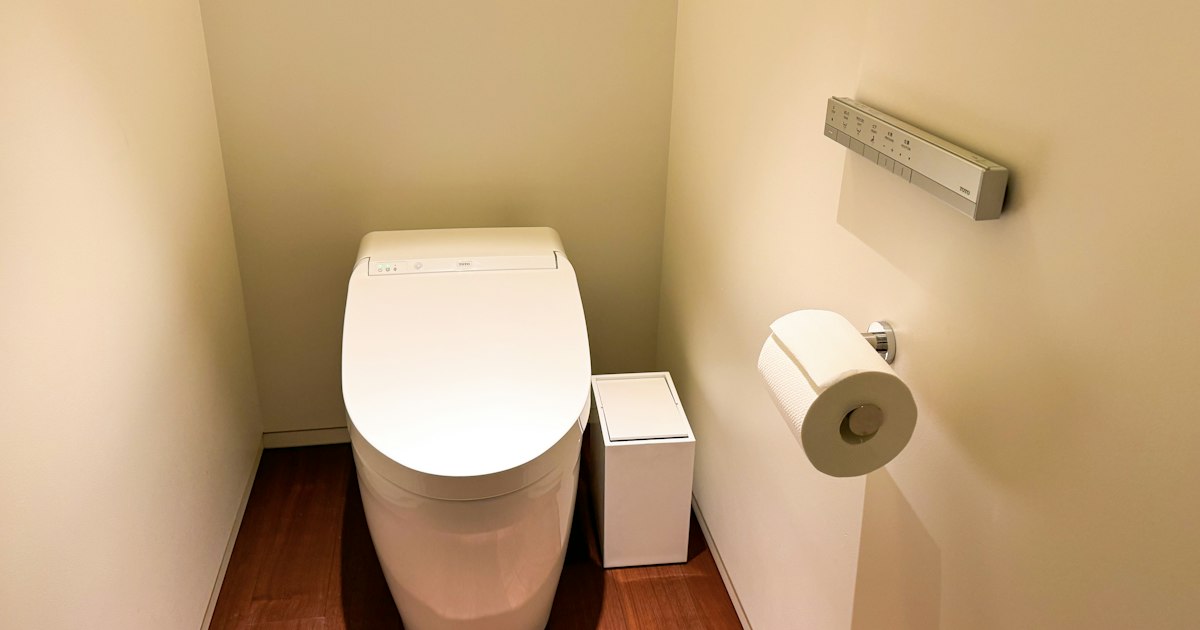
Photo by Upgraded Points on Unsplash
If you’ve used a Washlet even once — heated seat, adjustable bidet spray, warm-air dryer, sometimes a deodorizer fan — you understand why so many visitors leave Japan wanting one installed in their own bathroom. TOTO and INAX (now part of LIXIL) are the two big names, and both sell standalone Washlet seats that bolt onto almost any existing toilet bowl. Buying one isn’t complicated, but there are a few electrical and plumbing details that catch first-timers out, and shipping a toilet seat home costs more than you’d expect. Here’s what to actually check before you buy.
What you’re buying: seat vs. whole toilet
There are two very different products sold under these brands, and mixing them up is the single most common mistake.
- Washlet/bidet seat only — this is the add-on lid-and-seat unit that replaces your existing toilet’s seat. It plugs into a normal wall outlet and taps into your existing water supply line via a small diverter valve. This is the one worth shipping home.
- Integrated one-piece toilet — the whole bowl-and-tank unit with the bidet function built in. These are heavy, need Japan-spec plumbing connections, and are not realistic to ship and install overseas without a plumber familiar with Japanese fittings. Skip these unless you’re furnishing a property in Japan.
For nearly every traveler, “buying a Japanese toilet seat to ship home” means the standalone Washlet seat.
Where to buy one
You have three realistic options, in order of convenience:
- Big electronics retailers — Yodobashi Camera, Bic Camera, and Yamada Denki all stock a wall of Washlet seats in the home-appliance floor, usually near the kitchen/bath section. Staff can show you tax-free (消費税免税) checkout if you’re a short-term visitor with your passport, and these stores are used to foreign buyers shipping large items, so they often have export packing on hand. Major branches (Yodobashi Akiba, Bic Camera Yurakucho) are open roughly 9:30am–9pm or 10am–10pm daily.
- Home centers — chains like Kahma, Cainz, and Joyful Honda carry a broader range of basic-to-mid models at lower prices than city-center electronics stores, but tax-free counters are less consistent and English support is thinner.
- TOTO and LIXIL showrooms — TOTO has showrooms in major cities (Tokyo, Osaka, Nagoya) where you can see the full range and test the controls, but these function as design consultation spaces for contractors, not retail checkout counters — you’ll still buy the unit through a retailer or online.
What to budget
Prices below are for the seat unit alone, tax-free price in JPY, as commonly seen at electronics retailers:
- Budget (¥15,000–25,000): Entry-level INAX “Shower Toilet” or TOTO Washlet basic series — heated seat, adjustable spray and pressure, no dryer or deodorizer. Fine for most people.
- Mid-range (¥30,000–50,000): TOTO Washlet S or K series — adds warm-air dryer, auto deodorizer, and often an auto open/close lid. This is the sweet spot most souvenir-buyers land on.
- Splurge (¥80,000–150,000+): TOTO’s top-tier Washlet (e.g. the Zx/G series class) or INAX Satis-level units — premium nozzle self-cleaning, body-sensing auto flush, remote with full customization, premium finishes. Beautiful, but heavy and expensive to ship.
On top of the unit price, factor in shipping (see below) and, if it’s not advertised as export-compatible, a voltage/plug adapter.
The voltage and plumbing problem
This is where plans go wrong most often, so check these three things before you pay:
- Voltage: Japan runs on 100V. Most of North America is close enough (110–120V) that a Washlet will usually run fine, often even a bit more efficiently, with just a plug adapter — but Europe, the UK, Australia, and most of Asia run 220–240V, which can burn out the heating element or control board. Ask the retailer directly whether the specific model has a dual-voltage or export version; TOTO does make export-spec units for some markets, sold through authorized overseas distributors rather than Japanese retail stores. If your home country isn’t 100–120V, buying a step-down transformer rated for the seat’s wattage (easily 500W+ with the dryer running) is usually more realistic than hoping the stock unit survives.
- Water connection: Washlets tap into the toilet’s water supply through a T-valve fitting sized for Japanese plumbing standards. Overseas plumbing (especially UK and some European setups) may use different thread standards, so you’ll likely need an adapter fitting or a plumber who can improvise one — budget for this as a small extra cost, not a free afterthought.
- Seat shape: Japanese toilet bowls are a fairly standard elongated shape, close to the US “elongated” bowl standard, but not identical to every bowl shape used abroad. Measure your toilet’s bolt spacing and bowl length before buying if you want a guaranteed fit.
Shipping it home
A Washlet seat in its box typically weighs 4–8kg depending on the model, and the box is bulky — roughly 50x45x20cm is common. Three ways to get it home:
- Checked luggage: Cheapest if you have the space and weight allowance, but the box is awkward and airlines don’t love fragile electronics with a water reservoir inside tossed around baggage handling. Pack it well-padded in a hard suitcase if you go this route.
- Japan Post EMS or courier (Yamato/Sagawa) international shipping: Retailers near tourist areas are often set up to ship bulky purchases directly, or you can take it to a post office yourself. Expect somewhere in the ¥8,000–20,000 range for international parcel shipping depending on destination and speed — get a quote before committing, since rates vary a lot by country and box dimensions.
- Tax-free export counter: If you’re a tourist on a temporary visa, ask about the consumption tax exemption at checkout (passport required, item typically must leave Japan unopened/unused and within the stated window). This saves 10% on the sticker price, which on a mid-range unit is a real discount.
If you’re combining this purchase with a broader shopping trip and want to compare where else large household items are sold cheaply, it’s worth reading up on Costco Japan’s membership rules and exclusive items — Costco occasionally stocks Washlet seats at bulk-discount pricing, and the membership can pay for itself on big-ticket home goods alone.
Timing and common mistakes
There’s no real seasonal pricing swing on Washlets — unlike seasonal goods, availability and price stay fairly flat year-round, though big electronics stores sometimes run promotions around Japanese New Year (early January) and the May “Golden Week” shopping season. The mistakes that actually cost people money are almost always logistical, not timing-related:
- Buying a top-tier model without confirming voltage compatibility first — the splurge units draw the most power and are the most likely to need a transformer.
- Assuming the seat will “just fit” without checking bolt spacing against their home toilet.
- Skipping the tax-free paperwork because the counter line looks long — on a ¥40,000 purchase that’s a ¥4,000 mistake.
- Packing it in checked luggage without padding, then discovering a cracked lid at home with no local warranty support, since TOTO’s Japan warranty generally doesn’t extend overseas.
If electronics shopping is on your itinerary alongside this, it’s also worth reading how to get from the airport into the city efficiently — see our guide on the Tokyo Monorail vs. Keikyu Line from Haneda — so you can budget time for a stop at Yodobashi or Bic Camera on the way to your hotel rather than making a separate trip.
Done right, a Washlet is one of the few souvenirs from Japan that genuinely changes your daily life back home. Just treat it like the appliance it is: check the voltage, check the fit, and ship it like something you actually want to arrive in one piece.