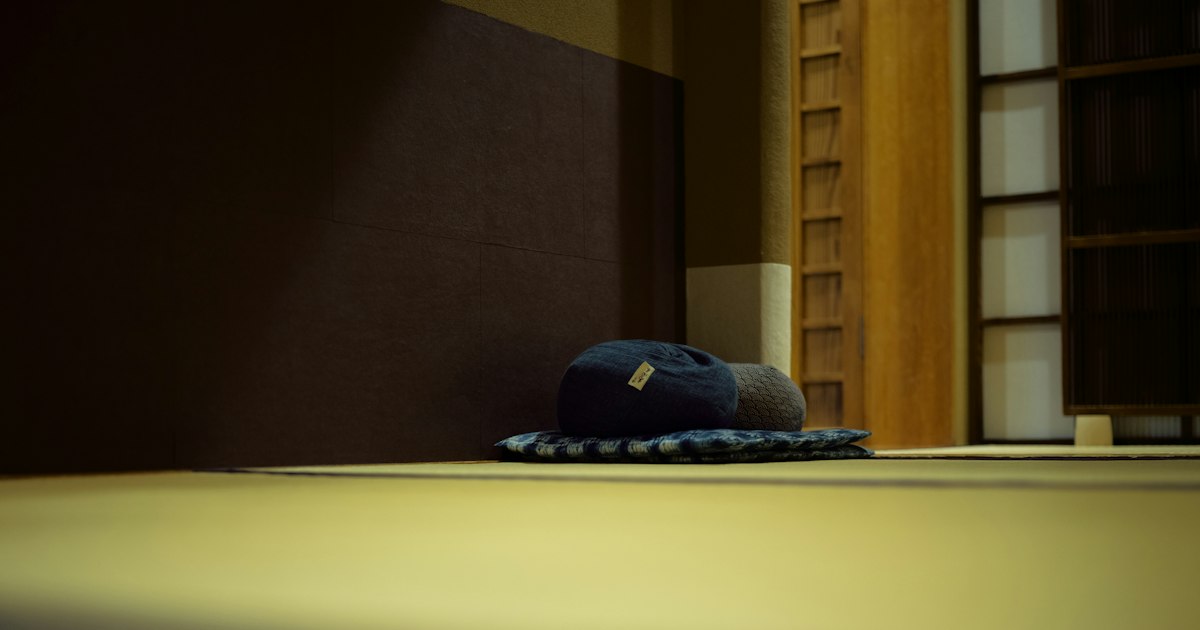
Photo by Heng Chiu on Unsplash
If you’ve sat down for a meal at a ryokan, a temple lodging, or a friend’s tatami-floored living room in Japan, you’ve probably already used a zabuton without knowing its name. These flat floor cushions are the quiet workhorses of Japanese home life — cheap enough to buy on a whim, but surprisingly varied once you start comparing fillings, fabrics, and sizes. This guide covers what makes a good zabuton, what you should expect to pay, and exactly where to buy one, whether you’re furnishing a tatami room back home or just want a better souvenir than another keychain.
What Exactly Is a Zabuton?
A zabuton (座布団) is a thick, usually square cushion meant for sitting directly on tatami or wood flooring, typically used with low tables (kotatsu or chabudai) or during tea ceremony and formal seating (seiza). It’s distinct from a futon, which is for sleeping, and from a cushier Western throw pillow — a proper zabuton holds its shape under body weight for hours without going flat, thanks to dense cotton or synthetic batting stitched down at intervals (the little tufted knots you see on top are called “tomari”).
Standard sizes are measured in Japanese shaku/sun units but sold in centimeters: 55×59cm is the common “daiza” size for everyday use, 59×63cm for guests, and a bulkier 68×70cm “zabuton-ban” or oversized cushion for elderly guests or formal settings. For a first purchase, 55×59cm fits most adults comfortably and stacks easily in a closet when not in use.
Cotton vs. Synthetic: What’s Actually Inside
This is where price and quality diverge the most. Traditional zabuton are stuffed with pressed cotton batting (wata), which breathes well, holds up for years, and can be re-fluffed by a futon shop, but it’s heavier and needs occasional airing to prevent moisture buildup. Budget and mass-market zabuton use polyester fiberfill, which is lighter, machine-washable in many cases, and dries faster — a real advantage in humid regions or small apartments without good ventilation.
If you’re buying for a tatami room you actually plan to use daily (not just display), cotton-filled zabuton from a specialty futon shop last noticeably longer and keep their shape better over years of sitting. If it’s for occasional guests or a casual low table, a synthetic-fill cushion from a home goods chain is perfectly fine and much easier to maintain.
Budget, Mid-Range, and Splurge Options
- Budget (¥1,000–¥3,000): Simple polyester-fill zabuton in solid colors or basic prints, sold at home centers and chains like Nitori. Fine for everyday use, not built for decades of wear.
- Mid-range (¥4,000–¥10,000): Cotton or cotton-blend fill with better fabric (chirimen crepe, tsumugi weave) from futon specialty shops or department store home floors. This is the sweet spot for most visitors buying something to actually use.
- Splurge (¥15,000–¥40,000+): Hand-tufted, fully cotton-stuffed zabuton from artisan futon makers, often using traditional textile patterns (e.g., Kyoto-dyed fabric or indigo-dyed cotton). These are the kind given as wedding gifts or used in tea ceremony rooms, and they’re genuinely built to be re-stuffed and reused for 20+ years.
Where to Buy Them in Japan
Nitori is the most reliable one-stop option for budget-to-mid-range zabuton if you’re also furnishing a whole room — they carry washable covers, seasonal fabrics (cooling for summer, fleece-backed for winter), and sets that match cushion covers to kotatsu blankets. See our full rundown of the chain in Nitori: Japan’s IKEA-Style Furniture and Home Goods Chain — most stores are on the outskirts of cities and easiest to reach by car or a short taxi/bus ride from the nearest station.
For traditional, higher-quality pieces, look for a futon-ten (futon specialty shop) — these are old-fashioned family businesses found in most neighborhoods and shopping streets, often with a workshop in back where they re-stuff and repair cushions on request (a service worth asking about even if you don’t buy there, since it’s hard to find outside Japan). Department stores like Takashimaya, Daimaru, and Isetan also stock curated zabuton on their home goods floors, usually mid-range to splurge tier, with English-speaking staff more likely in flagship Tokyo and Osaka branches.
If you’re already navigating a train station for other shopping, it’s worth checking the home goods corners of underground station malls — some Gransta and Echika locations stock compact, travel-friendly cushions and covers, as covered in Ekinaka Shopping: Inside Japan’s Underground Station Malls. Don’t expect artisan quality there, but it’s convenient for a last-minute gift-sized zabuton or cover.
Timing, Shipping, and Common Mistakes
Zabuton shops don’t really have a “season” the way outdoor gear does, but kotatsu-and-zabuton sets get heavy promotional pushes from late September through November as stores roll out winter home goods — that’s the best window for discounts if you’re shopping mid-trip. Summer (June–August) is when breathable, cooling-fabric covers (often linen or a cooling gel-weave) show up, useful if you’re buying for a humid climate back home.
The most common mistake foreign buyers make is buying a cushion without checking fill weight or re-stuffing options, then finding it’s gone flat within a year — ask specifically “wata wa men desu ka?” (is the filling cotton?) if quality matters to you, since labels aren’t always in English. The second mistake is sizing: a zabuton that looks generously sized in a tatami showroom can feel oddly small on a Western-style floor or sofa base, so measure your intended spot before buying, especially if you’re shipping internationally and can’t easily return it.
On shipping: most department stores and larger futon-ten can arrange overseas shipping for a fee, but it’s often cheaper and safer to pack a single zabuton in checked luggage (they compress reasonably well in a vacuum storage bag) than to pay international freight on something bulky and low-value per kilo. If you’re buying multiple or a large splurge-tier set, ask the shop about EMS or courier rates before committing — prices vary a lot by destination country.
A Quick Buying Checklist
- Decide fill type first (cotton for longevity, synthetic for easy care) — it affects both price and how it packs for travel.
- Measure your tatami room or low-table seating area before choosing a size.
- Ask about re-stuffing service if buying from a futon-ten — it’s a feature you won’t get back home.
- Shop late September–November for seasonal discounts bundled with kotatsu goods.
- Pack it compressed in checked luggage rather than paying for international shipping on a single item.
A good zabuton isn’t flashy, but it’s one of those souvenirs that earns its shelf space by actually getting used — on a tatami floor, under a kotatsu, or just as a reading cushion wherever you land it.