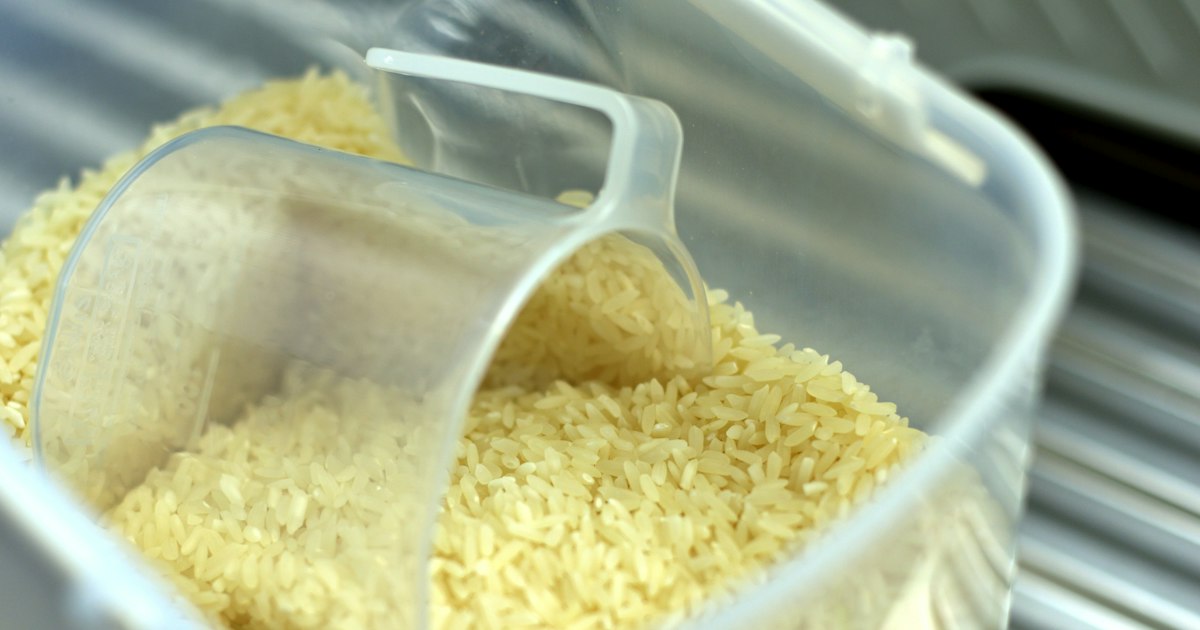
If you’ve ever opened a bag of rice in Japan to find tiny dark weevils crawling out of it, you already understand why almost every Japanese kitchen has a kome bitsu (米びつ) — a dedicated rice storage container built to keep moisture, light, and insects out. They’re cheap, compact, sold everywhere from convenience-store-adjacent home centers to department store kitchenware floors, and they make an excellent, genuinely useful souvenir for anyone who cooks rice regularly at home. Here’s what they actually do, what to look for, and where to buy a good one.
What a Kome Bitsu Actually Protects Against
The insect in question is almost always the rice weevil (kokuzou-mushi, 穀象虫) or the Indian meal moth, both of which lay eggs in rice that can already be present as larvae too small to see at the store. Those eggs hatch when rice is left at warm room temperature in a loosely closed paper or plastic bag — which is exactly how rice is sold in Japan. A kome bitsu doesn’t “kill” anything; it works by denying insects the two things they need: an entry point and the humidity to let eggs develop. A properly sealed container with a silicone or rubber gasket keeps airborne moisture out, slows oxidation (which also preserves flavor), and physically blocks adult weevils from laying new eggs even if a few eggs were already in the rice when you bought it.
How the Seal Mechanism Works
Most mid-range and premium kome bitsu use one of two sealing systems. The first is a pressure-lock lid with a rubber or silicone gasket around the rim — you press down and a row of clips or a rotating collar snaps shut, similar to a high-end food storage box. The second, found on nicer models, adds a one-way air valve so you can push out excess air after closing, creating a near-vacuum that both deters insects and slows rice from going stale. Cheaper bins skip the gasket and rely only on a tight-fitting snap lid, which is fine for short-term storage but won’t fully stop humidity or a determined weevil. If insect-proofing is your main goal, look for the Japanese phrase 防虫 (boujuu, “insect-proof”) or 密閉 (mippei, “airtight”) on the packaging — these are the two keywords that matter most when comparing products on the shelf.
Where to Buy One in Japan
You don’t need to hunt for a specialty shop — kome bitsu are stocked as a staple item:
- Nitori — Japan’s biggest home goods chain, with branches in most mid-size cities; consistently the best price-to-quality ratio for airtight rice bins. Most stores open around 10:00 and close at 20:00 or 21:00.
- Muji (無印良品) — simple, well-designed stackable rice containers in clear or opaque plastic, good if you want something that looks tidy on a counter.
- Tokyu Hands and Loft — wider variety including smaller fridge-sized bins and designer brands; useful if you want to compare several sealing mechanisms side by side.
- Don Quijote — open very late (many locations 24 hours), handy if you’re buying last-minute before a short-term rental stay.
- Home centers (Kohnan, Cainz, Komeri) — the cheapest large-capacity bins, aimed at households buying rice in bulk; typically open 9:00–20:00.
- Kappabashi, Tokyo’s kitchen-tool district — for stainless steel or professional-grade bins used in restaurants. Most shops here open 9:00 or 10:00 and close by 17:00–18:00, with some closed Sundays, so check before making a special trip. If you’re already exploring the area for cookware, it’s worth reading our guide to Japanese woodworking hand tools and where craftspeople shop for the same district’s broader shopping rhythm.
Budget, Mid-Range, and Splurge Options
Budget (¥500–1,500): Basic plastic bins with a simple snap lid, no gasket, usually 2–5 kg capacity. Fine for a weekly mansion or short stay where you’ll finish the rice in a few weeks and don’t need long-term insect protection. If you’re furnishing a short-term rental kitchen from scratch, pair this with the picks in our compact rice cookers and mini kitchen gear guide.
Mid-range (¥2,000–4,000): Airtight bins with a rubber gasket and a built-in measuring cup or sliding dispenser so you don’t need to open the main lid every time you cook — fewer openings means fewer chances for humidity and insects to get in. Capacity usually 5–10 kg, matching standard Japanese rice bag sizes. This is the sweet spot most Japanese households actually buy.
Splurge (¥5,000–9,000): Stainless steel kome bitsu, sometimes with a rotary dial dispenser that doles out exactly one rice-cooker cup (180 ml) at a time, or slim units specifically designed to fit in a refrigerator vegetable drawer. Storing rice in the fridge (ideally 10–15°C) is the single most effective way to stop weevil eggs from developing, since they can’t mature below about 15°C — this is why many serious home cooks buy a slim fridge-specific container even though it costs more and holds less rice.
Sizing It to Your Rice Habits
Standard Japanese rice bags come in 5 kg and 10 kg sizes (the old 30 kg sack is now mostly a wholesale/restaurant size). Buy a container slightly larger than your bag size, not smaller — rice expands slightly and a too-tight fit makes the dispenser mechanism jam. For a household of one or two people eating rice a few times a week, a 5 kg bin is usually enough and avoids rice sitting around long enough to go stale. If you’re buying a container as a travel souvenir rather than for daily use at home, go for the smaller fridge-door-sized bins (2–3 kg) — they pack flatter in a suitcase and double as general dry-goods storage back home.
Common Mistakes to Avoid
- Buying on looks alone. Pretty ceramic or wood rice canisters sold as décor rarely have a true airtight seal — check for the gasket, not just the aesthetic.
- Not washing the container between rice bags. Old rice bran dust left inside attracts insects and goes rancid; wash and fully dry the bin each time you refill it.
- Storing it near the stove or a sunny window. Heat accelerates both oxidation and insect egg development — a cool, shaded cupboard or the fridge is far better than an open counter.
- Overfilling a dispenser-style bin. The rotary or slide mechanisms on mid-range and premium models have a fill line; overpacking jams the dispenser and can crack the plastic housing.
Best Time to Buy and Taking One Home
There’s no strong seasonal pricing pattern for kome bitsu, but late autumn is worth noting for a different reason: newly harvested rice (shinmai) hits shelves around September–October, and that’s when Japanese households commonly buy a fresh container to go with the new rice season — so stock and selection are at their best then. For travelers, an empty plastic bin packs flat and light in a suitcase; just make sure it’s completely dry before packing to avoid any residual odor. If you’re assembling a small kitchen capsule for a Japan-based rental alongside a rice cooker and other basics, it’s also worth browsing our note on choosing quality Japanese kitchen tools for the same quality cues — gasket seals, material weight, and fit — that apply well beyond rice storage.