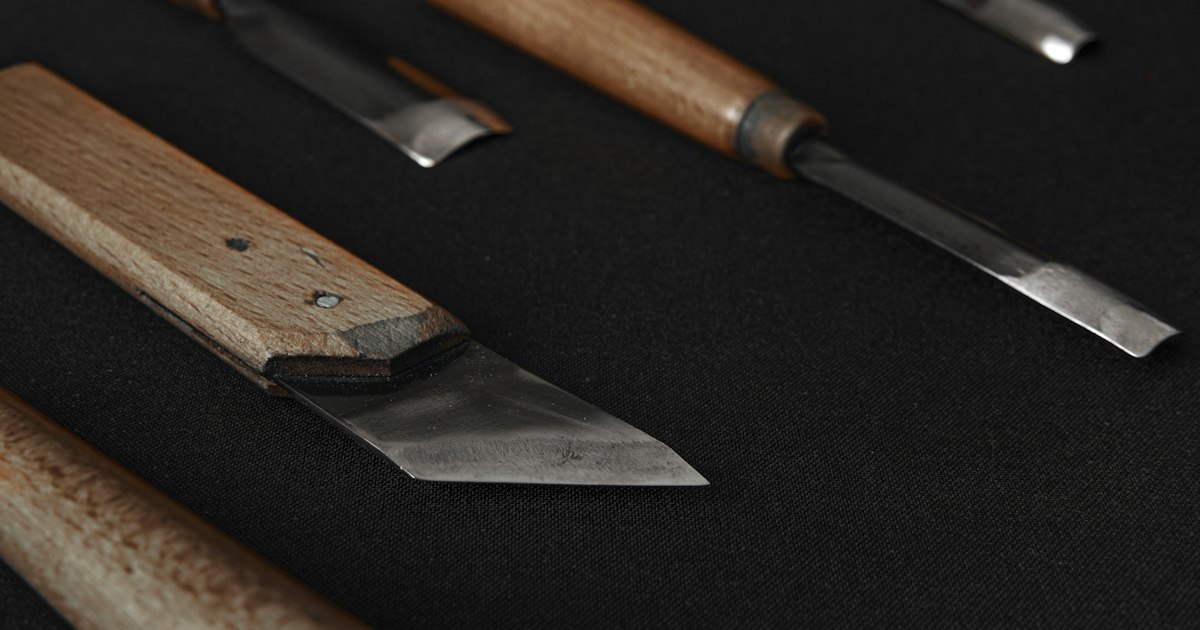
Photo by Dmitriy Demidov on Unsplash
A well-tuned kanna plane shaving a translucent curl off a cedar board, or a nomi chisel driven clean through oak with one mallet tap, tells you something a souvenir shop knife never will. Japan’s hand tool culture runs deep — many of the blacksmiths still forging blades today learned from masters whose lineage traces back centuries — and for visitors who do woodworking, furniture restoration, or just appreciate exceptional handwork, tracking down the real thing is one of the most rewarding shopping missions you can build a trip around. Here’s where to actually find it, what it costs, and how not to come home with something you can’t use.
Kanna Planes and Nomi Chisels: What You’re Actually Buying
A kanna is a pull-plane: a laminated steel blade wedged into a hardwood body (the dai), pulled toward the body rather than pushed. A nomi is a chisel, usually struck with a wooden mallet (genno), and comes in dozens of specialized shapes for mortises, dovetails, and finish paring. Nearly all quality blades use laminated construction — a hard, brittle “blue steel” (aogami) or “white steel” (shirogami) cutting edge forge-welded to a softer iron body — which is why a good one holds an edge longer than a Western equivalent but also chips if you twist it sideways.
Budget new chisels start around ¥2,000–5,000 for a single piece, or ¥8,000–15,000 for a basic six-piece bench set. Mid-range, individually forged chisels in shirogami steel run ¥8,000–20,000 each. A splurge-tier chisel from a named smith can run ¥30,000–80,000 — and the handful of legendary retired smiths’ leftover stock sometimes sells for far more at auction. Kanna follow a similar curve: a beginner kit with dai and blade is ¥6,000–12,000, a well-made mid-range plane is ¥15,000–40,000, and a hand-forged blade from a respected maker paired with a quality dai starts around ¥50,000 and climbs past ¥150,000, often with a waiting list.
Miki City: Japan’s Blacksmith Town for Blades and Planes
Miki, in Hyogo Prefecture, has been a hardware and blacksmithing center for roughly 800 years, and it’s the single best destination if you want to buy directly from the source. Dozens of small forges still operate here, many producing kanna blades, nomi, saws, and garden shears. From Kobe, take the Kobe Dentetsu line (transferring at Shin-Kaichi or Sanda depending on your route) to Miki Station — plan on roughly an hour each way. The town’s workshops are scattered and many don’t keep tourist-friendly hours, so the best time to visit is during the annual Miki Hamono Matsuri (Miki Blade Festival), held over the first weekend of November, when dozens of smiths set up direct-sale stalls with discounted, factory-second, and one-off pieces, plus live forging demonstrations. Outside festival weekend, the Miki Traditional Crafts Museum displays the town’s blacksmithing history and can point you toward workshops that accept visitors.
Sanjo, Niigata: The Other Hardware Capital
Sanjo, reachable via the Joetsu Shinkansen to Tsubame-Sanjo Station (about two hours from Tokyo), is Miki’s rival hardware town and arguably more accessible for a day trip. The Sanjo Kajiya Dojo (Blacksmith Dojo) is a working forge and gallery open to the public where you can watch smiths at the anvil and buy finished nomi, kanna blades, and kitchen knives on site — a far easier entry point than hunting down individual Miki workshops. Opening hours run roughly 9:00–17:00, with closures on some weekdays, so check ahead before building a whole day around it.
Learning Before You Buy: Takenaka Carpentry Tools Museum
Before spending real money, it’s worth an hour at the Takenaka Carpentry Tools Museum in Kobe, a short walk from Shin-Kobe Station. It’s the only museum in Japan dedicated entirely to carpentry tools, with thousands of kanna, nomi, saws, and the joinery they produce, including hands-on stations where you can try planing a board yourself. Admission is a modest few hundred yen, and it’s typically open 9:30–16:30, closed Mondays. Seeing the difference between a mass-produced blade and a hand-forged laminated one here will make you a much sharper shopper in Miki or Sanjo afterward.
Tokyo Options: Flea Markets and City Shops
If a dedicated side trip isn’t in the cards, Tokyo still delivers. The Oedo Antique Market at the Tokyo International Forum (held most first and third Sundays of the month) regularly has stalls selling used kanna and nomi from retired craftsmen’s workshops — often ¥500–3,000 for a plane that needs re-tuning but has real vintage steel underneath. Setagaya’s Boro-ichi flea market, held only in mid-December and mid-January, is another good source for secondhand tools. For new tools, Kappabashi in Asakusa is best known for kitchen knives, but several shops there stock a decent range of general-purpose carpentry tools alongside the cutlery, useful if you want something functional without a dedicated tool-town trip. Travelers mixing this kind of specialty shopping into a longer stay might also appreciate our guide to compact rice cookers and mini kitchen gear for weekly mansions, since tool-hunting trips often pair well with a longer, self-catered stay rather than hotel-hopping.
Budget, Timing, and Mistakes to Avoid
Pack sharp tools in checked luggage, never in carry-on — Japanese security staff will confiscate anything blade-like at a hand-baggage screen, airline rules or not. Carbon steel blades rust fast in humid climates; buy a small bottle of camellia oil (tsubaki oil) at the same shop and wipe blades after use. A new kanna dai is tuned for the humidity it was made in, so expect to re-flatten the sole (shitazuke) once it acclimates to your home climate — this is normal, not a defect, but it does mean a genuinely cheap “ready to use” plane from a general hardware store is often a worse buy than a mid-range one from a specialist who tunes it properly before sale. Budget for a sharpening stone too: a basic synthetic combination stone runs ¥2,000–5,000 and is non-negotiable if you actually plan to use these tools rather than display them. Finally, most shops assume a right-handed user and set blades accordingly — if you’re left-handed, say so before buying, since re-grinding a laminated blade’s bevel is not a quick fix.
For travelers building a craft-focused itinerary, the appeal of Japanese tools often connects to a wider interest in handmade objects — if that’s you, our piece on the bamboo chasen whisk and how to judge quality covers a similar craft logic in miniature, and a detour to Hita’s cedar country in Oita is a good way to see where the timber these tools shape actually comes from, with a hot spring at the end of the day.