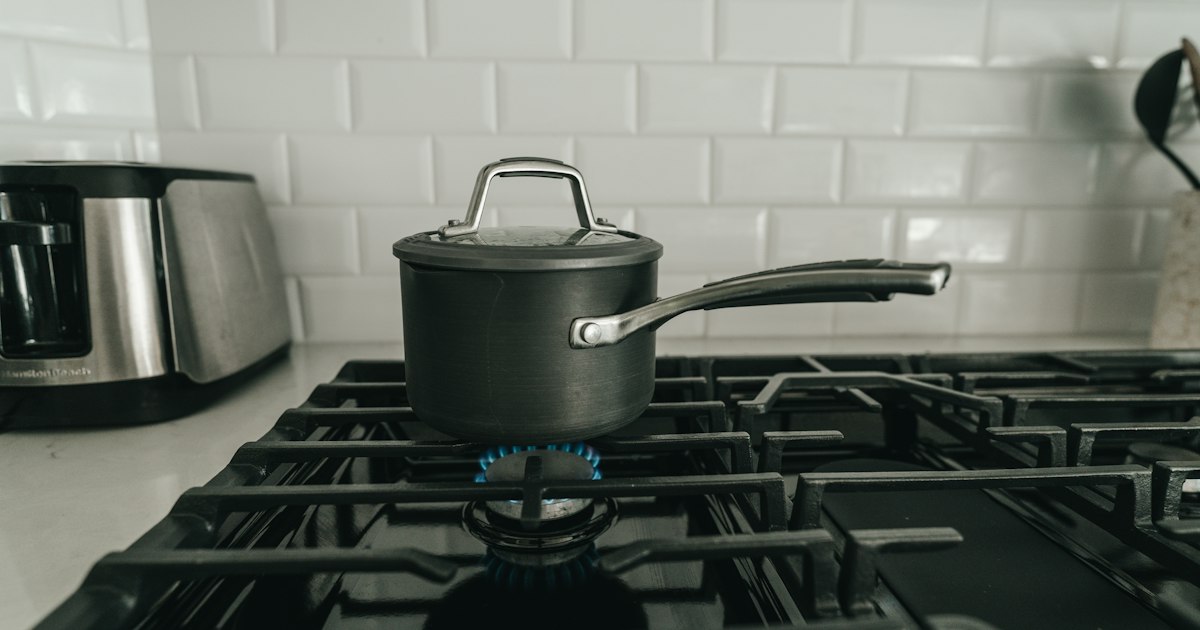
Photo by Henry Kobutra on Unsplash
Walk through any Japanese kitchenware section and you’ll notice pressure cookers, or atsuryoku nabe (圧力鍋), stacked next to the rice cookers — not tucked away as a specialty item. That’s because Japanese home cooking leans heavily on long-simmered dishes like buta no kakuni (braised pork belly), nikujaga (meat and potato stew), and the black soybeans served at New Year’s, all of which traditionally take an hour or more on the stove but cook in 15-20 minutes under pressure. If you’re building a Japanese kitchen at home or just curious why your host family’s dinner came together so fast, here’s how to actually buy one while you’re here.
Stovetop vs. Electric: Which Type Fits Your Kitchen
Japan sells two distinct categories, and they solve different problems. Stovetop pressure cookers (aluminum or stainless steel pots with a locking lid and pressure valve) are what most Japanese households use for the dishes above — they’re compact, cheap, and work on any gas burner. Many newer models are also “IH-ready” (induction-compatible), which matters if your home stove is induction; look for the 「IH対応」label on the box or you’ll end up with a pot that won’t heat on your cooktop back home.
Electric pressure cookers — often sold as multicookers that also do rice, slow-cook, and steam — are the Zojirushi, Tiger, and Panasonic style appliances you’ll see at electronics chains. They’re more convenient (set it and walk away) but bulkier to pack, and they run on Japan’s 100V current. More on that below, because it trips up a lot of travelers.
Where to Buy Them in Japan
For the widest selection of stovetop models in one place, head to Kappabashi (合羽橋), Tokyo’s kitchenware wholesale district between Asakusa and Ueno. The nearest station is Tawaramachi on the Ginza Line, about a 5-minute walk. Most shops here open around 9:30-10:00 and close by 17:30-18:00, and a fair number still close on Sundays, so don’t plan a Sunday-only visit. Prices aren’t always marked for tourists in mind, and some of the smaller family-run shops are cash-only or add a card surcharge — worth reading why foreign credit cards get declined in Japan before you go so you’re not caught short at the register.
If Kappabashi doesn’t fit your itinerary, Tokyu Hands and Don Quijote both carry budget-to-mid-range stovetop pressure cookers in their kitchen sections, and they’re far more convenient if you’re already shopping for other travel or household items — the same stores covered in our Don Quijote and Tokyu Hands shopping guide stock cookware alongside the travel gear. For electric multicookers, Bic Camera and Yodobashi Camera have entire aisles of Zojirushi, Tiger, and Panasonic models with tax-free counters for visitors spending over ¥5,000 (passport required).
Budget, Mid-Range, and Splurge Options
At the budget end, aluminum stovetop pressure cookers from domestic makers like Pearl Metal run roughly ¥3,000-5,000 for a 3-4 liter pot — fine for a single person or couple making one dish at a time, though aluminum isn’t induction-compatible unless specified. Step up to stainless steel, multi-ply construction (often sold as 5-6 liter family sizes) and you’re looking at ¥10,000-18,000; these hold heat more evenly and handle induction stoves without issue.
Electric multicooker-style pressure cookers from Zojirushi, Tiger, or Panasonic start around ¥20,000 for a basic 3-liter model and climb to ¥40,000-50,000 for larger capacity units with more cooking programs. These are genuinely excellent appliances, but remember you’re buying a 100V device in a 100V country — see the mistakes section below before you commit to carrying one home.
Best Time to Shop
Pressure cookers sell steadily all year, but there’s a real spike in late November through late December, when households are stocking up to cook osechi ryori (New Year’s food) — particularly the black soybeans and simmered root vegetables that take forever without one. Shops are busier and better stocked with seasonal bundle deals during this window, but popular sizes can also sell out closer to December 28-30. If you want calm browsing and full shelves, aim for January through October instead.
Common Mistakes Foreign Buyers Make
- Buying an electric model without checking your home voltage. Japan runs on 100V. If you live somewhere on 220-240V (most of Europe, Australia, much of Asia), a Japanese electric pressure cooker will need a step-down transformer to run safely and won’t perform as designed even then. Stovetop models have no such restriction — they’re the safer buy if you’re taking something home outside North America.
- Skipping the PSC mark. Pressure vessels sold in Japan must carry the PSC (特定製品) compliance mark, which confirms the safety valve and lid-locking mechanism meet Japanese standards. It’s printed on the box or base of legitimate products — a useful quick check at any shop, including resale or discount stores.
- Not budgeting for replacement parts. The rubber gasket (packing) around the lid wears out after a few years of regular use and needs replacing. Japanese-brand gaskets are easy to find in Japan but much harder to source abroad, so if you’re committing to a Japanese stovetop model long-term, consider buying a spare gasket at the same time — they’re inexpensive, usually under ¥1,500.
- Underestimating the weight in luggage. A stainless 5-liter pressure cooker easily adds 2-3 kg to your suitcase. If you’re already tight on baggage allowance, it may be worth having it shipped separately or ordering a similar model once you’re home — Japan’s long-running mail-order culture, the same one behind catalogs like Felissimo’s subscription boxes, extends to plenty of kitchenware retailers that will ship internationally.
What to Cook First
Once you’ve got one home, start simple. Buta no kakuni (pork belly simmered in soy, sake, and sugar until it falls apart) is the classic beginner dish — 20 minutes under pressure versus 2+ hours on the stove. Nikujaga (beef or pork with potatoes, carrots, and onion in a sweet-savory broth) is even faster and more forgiving if you’re new to timing a pressure release. For something distinctly seasonal, dried black soybeans (kuromame) that would otherwise need overnight soaking and hours of slow cooking go from rock-hard to tender in under 30 minutes — the dish that, more than any other, explains why this gadget sits in nearly every Japanese kitchen.