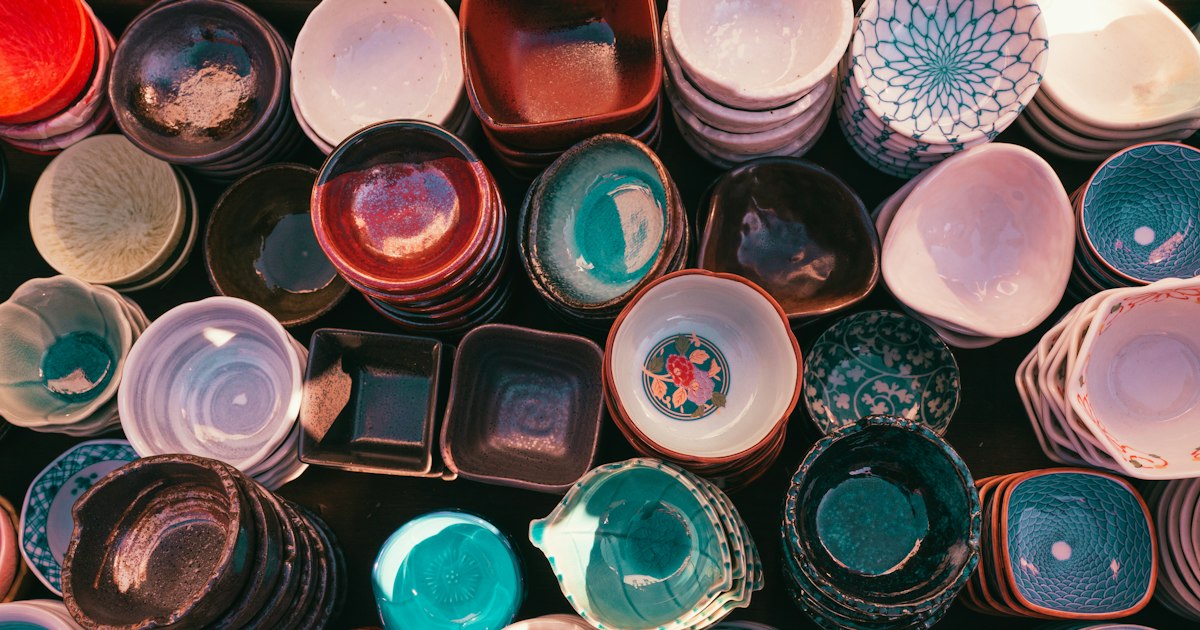
A tokkuri and a pair of ochoko make one of the easiest, most satisfying souvenirs to bring home from Japan — small enough to pack, functional enough to use every week, and available in styles ranging from a 500-yen craft-fair find to a museum-quality piece of cut glass. But the sheer variety of shapes, materials, and regional traditions can be overwhelming if you don’t know what you’re looking at. Here’s how to shop for sake drinkware like you know what you’re doing.
Know Your Vessels: Tokkuri, Ochoko, Guinomi, and Sakazuki
A tokkuri is the flask you pour from — typically holding one go (180ml), though smaller 90ml and larger 300ml sizes exist. Its narrow neck isn’t just decorative; it slows the pour and helps retain heat when serving warmed sake (atsukan). A ochoko is the small cup you drink from, usually 30-60ml, often sold in mismatched sets at pottery towns because traditionally each guest chooses their own. A guinomi is essentially a larger, more substantial ochoko (60-120ml), designed to be held and appreciated as a standalone art object — potters often sign these. A sakazuki is the flat, shallow saucer-shaped cup used at weddings and formal ceremonies; beautiful, but impractical for everyday drinking since it’s easy to spill.
If you’re buying for daily use rather than display, guinomi are the best value: substantial enough to feel special, versatile enough to double as a small teacup or condiment dish.
Materials and Regional Styles
Ceramic is the classic choice. Mashiko ware (Tochigi) has a rustic, earthy glaze and is widely available and affordable. Bizen ware (Okayama) is unglazed stoneware fired at high heat for days, giving each piece unique reddish-brown mottling — no two are alike, and prices reflect the labor involved. Hagi ware (Yamaguchi) uses a porous, pale clay that changes color slightly with use as sake soaks into micro-cracks in the glaze, a prized effect called “Hagi’s seven transformations.” Arita/Imari ware (Saga) is fine white porcelain with cobalt-blue or colorful overglaze painting — more delicate and formal-looking.
Glass is the other major category, and it’s where things get visually striking. Edo Kiriko, Tokyo’s faceted cut-glass tradition, produces guinomi with deep geometric patterns that catch light beautifully — a step up in both craftsmanship and price. Ryukyu glass from Okinawa offers a completely different mood: thick, bubbly, hand-blown glass in vivid blues and greens, originally made from recycled bottles after WWII. Both are excellent for chilled or on-the-rocks sake (reishu), since glass shows off the drink’s clarity in a way ceramic can’t.
Metal cups — tin (suzu) or silver — are a smaller niche but worth knowing about; tin is said to soften sake’s flavor and is traditionally used for warmed sake. If you’re already interested in Japanese metalwork, it’s worth comparing to Nambu Tekki cast ironware from Iwate, which occasionally produces small sake sets alongside its famous kettles.
Where to Buy in Japan
Kappabashi (Tokyo) is the country’s largest kitchenware wholesale district, in Taito-ku near Tawaramachi Station (Ginza Line) or a 10-minute walk from Asakusa. Most shops open around 10:00am and close by 5:00 or 6:00pm, and many are closed on Sundays, so plan a weekday visit if you want the full range of stores open. Dozens of shops here stock ceramic and glass sake sets at wholesale-adjacent prices, alongside the plastic food replicas the street is also known for — see our guide to sampuru if you’re browsing the same street.
Sake breweries and their museums are another great source, and buying there means the cup comes with a story. In Fushimi, Kyoto, the Gekkeikan Okura Sake Museum (open 9:30am-4:30pm, last entry 4:00pm, admission 600 yen including a tasting) sells house-branded tokkuri and cups in its shop. In Nada, Kobe, several brewery museums (Hakutsuru, Kikumasamune) offer similar tasting-plus-shopping visits.
Department store basements and craft floors (depachika and the upper “kogei” floors) in Tokyo, Kyoto, and Osaka carry curated selections from named potters, with English-speaking staff at flagship stores like Takashimaya or Isetan. Prices are higher than at the source, but selection and quality control are excellent, and shipping overseas can usually be arranged on the spot.
Pottery towns themselves** — Mashiko, Bizen, Hagi, Arita — are worth the detour if you have an extra day and want to see kilns and studio shops directly. Prices there are often 20-30% below what you’d pay in Tokyo for the same maker’s work.
Budget, Mid-Range, and Splurge Picks
- Budget (¥800-2,500): A simple Mashiko-style ochoko or a mass-produced glass guinomi from a Kappabashi shop or department store basement. Perfectly good for daily use, and light enough to buy several as gifts.
- Mid-range (¥3,000-8,000): A named-kiln Hagi or Bizen guinomi, or a small tokkuri-and-cup set from a brewery shop. This is the sweet spot for a meaningful souvenir that still feels reasonable.
- Splurge (¥10,000-30,000+): A signed Edo Kiriko cut-glass guinomi or a one-of-a-kind Bizen piece from a known potter. At this level you’re buying a small art object, and reputable shops will provide a wooden box (tomobako) and sometimes a certificate of authenticity — ask before you buy if this matters to you.
Best Time to Buy
There’s no strict season for shopping, but timing affects what’s on offer. Many sake breweries release new-season sake (shinshu) in late autumn through winter, and museum shops often stock limited seasonal tokkuri designs alongside it. Summer is when glass cups and sets are pushed hardest in stores, since chilled sake (reishu) is the seasonal favorite — good timing if you want Edo Kiriko or Ryukyu glass at its most visible and well-stocked. If your trip includes a winter destination like Hakuba or a hot spring town, warmed sake sets with a tin or ceramic tokkuri make a fitting cold-weather souvenir.
Common Mistakes to Avoid
- Buying a set without checking capacity. Ochoko sizes vary wildly (30ml to 90ml); a set that looks similar in the shop can pour very differently at home.
- Assuming all ceramic ware is microwave- or dishwasher-safe. Hand-glazed and unglazed pieces (especially Bizen) often aren’t — ask before you buy if this matters for how you’ll actually use it.
- Skipping the wooden box. For mid-range and splurge pieces, the box isn’t just packaging — it protects the piece in transit and is expected if you ever want to resell or gift the item formally.
- Not asking about hand-carry safety. Ceramic and cut glass are fragile; reputable shops will wrap pieces securely for a suitcase, but it’s worth requesting bubble wrap specifically rather than just tissue paper.
- Confusing decorative sakazuki for everyday cups. They look elegant in photos but spill easily — fine for a toast, frustrating for regular drinking.
Bringing It Home
Ceramics and glass travel best in carry-on luggage, wrapped in clothing inside a hard-sided case if you have one; checked bags see rougher handling. If you’re buying multiple sets, most Kappabashi shops and department stores can arrange international shipping (typically ¥3,000-6,000 depending on weight and destination), which is often cheaper and safer than trying to fit fragile pieces into an already-full suitcase.