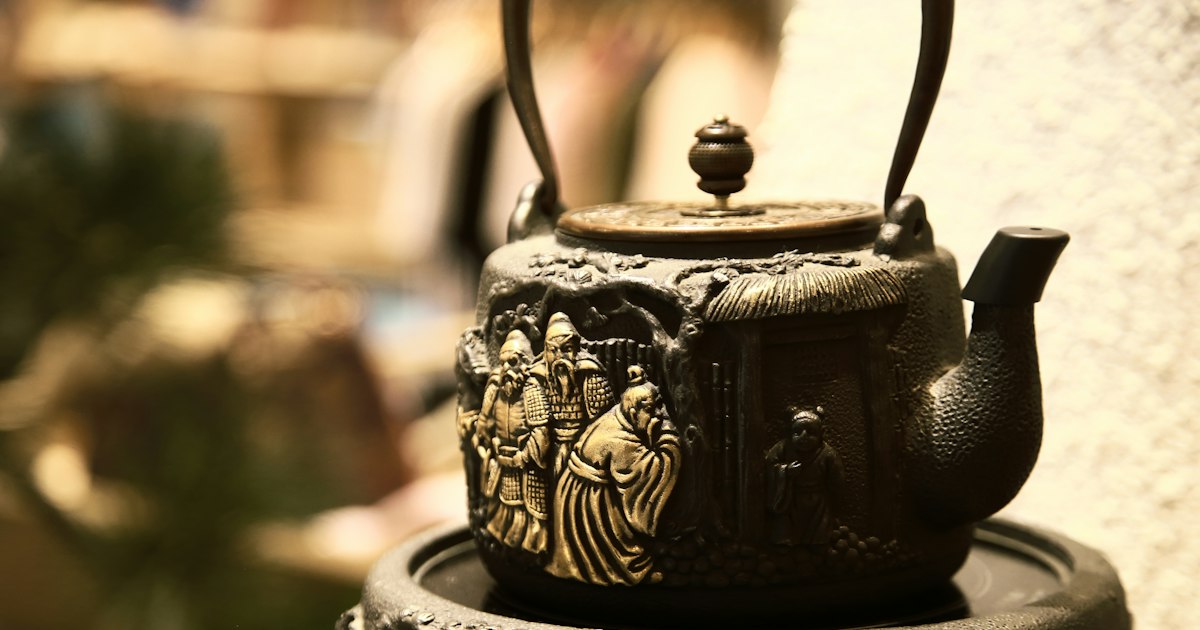
If you’ve ever seen a heavy, dimpled black kettle in a Kyoto tea shop or a Tokyo department store’s kitchenware floor, chances are it was Nambu Tekki (南部鉄器) — the cast iron ware that has come out of Iwate Prefecture for around 400 years. These kettles are functional heirlooms: they distribute heat evenly, soften tap water by releasing trace iron, and, with basic care, last for generations. This guide covers what actually makes Nambu Tekki different from generic cast iron, what to expect to pay, and where to buy it — both in its Iwate homeland and back in Tokyo if your itinerary doesn’t stretch that far north.
What Makes Nambu Tekki Special
Nambu Tekki traces back to the 17th century, when the Nanbu clan that ruled the Morioka domain invited tea-ceremony kettle casters from Kyoto to produce chagama (tea kettles) for the local elite. A second, separate tradition of everyday cast-iron cookware developed around the same era in Mizusawa, in what’s now Oshu City, further south in Iwate. The two lineages eventually merged under the single “Nambu Tekki” name, and in 1975 the craft was designated a traditional craft (dentō kōgei) by Japan’s Ministry of Economy, Trade and Industry.
What sets it apart from mass-produced cast iron is the casting process: molds are hand-carved with fine dot or arare (hail-drop) patterns, molten iron is poured at controlled temperatures, and pieces are often finished with a lacquer-like oxidized coating (called “shibu-nuri” or similar treatments) rather than paint, which is part of why the surface ages gracefully instead of just rusting. Look for two major workshop names as you shop: Iwachu (岩鋳), founded in 1902 in Morioka and now the most internationally recognizable name, and OIGEN (及源鋳造), founded in 1852 in Oshu, known for a slightly more rustic, artisanal look. Suzuki Morihisa Workshop, with roots going back over 400 years, is the oldest still-operating studio and focuses on traditional tea-ceremony pieces.
Tetsubin vs. Cast-Iron Cookware: Know the Difference Before You Buy
This trips up a lot of first-time buyers. A tetsubin (鉄瓶) is a kettle for boiling water — most modern ones sold to tourists have an enamel coating on the inside, which means you never need to season them and they won’t rust from water contact. A traditional chagama or unlined tetsubin has bare cast iron inside; it needs to be dried immediately after each use and occasionally “seasoned” with a light film of oxidation, or it will rust. Meanwhile, Nambu Tekki also makes cast-iron skillets, grill pans, and rice pots (kamado-style), which behave like any raw cast-iron cookware — season with oil, never soak, dry thoroughly.
If you just want a nice-looking, low-maintenance souvenir for boiling water, buy an enamel-lined tetsubin and say so explicitly to the shop staff, who are used to the question. If you’re a tea enthusiast wanting the “real” unlined experience, expect more upkeep and ask about seasoning instructions in English — most shops that cater to foreign buyers keep a printed sheet.
Where to Buy in Iwate: Morioka and Oshu
Buying at the source gets you the widest selection and the chance to watch casting in progress. In Morioka, Morioka Handi-Works Square (もりおか手づくり村), a short bus ride from Morioka Station, houses dozens of craft workshops under one roof, including a Nambu Tekki foundry with a viewing area and a shop selling pieces directly from the studios — it’s typically open daily from around 9:00 to 17:00. Iwachu also runs its own showroom and factory shop on the outskirts of Morioka city, worth calling ahead about hours since it can vary with production schedules.
In Oshu (formerly Mizusawa), reachable via the Tohoku Shinkansen to Mizusawa-Esashi Station (about 2 hours 40 minutes from Tokyo), OIGEN operates a factory shop near its foundry where you’ll find their full catalog plus factory-second pieces at a discount. This area is quieter and far less touristed than Morioka, so it’s worth combining with a stop at Morioka rather than a dedicated day trip. Both cities are compact enough to cover on foot or by short taxi from the station.
Where to Buy Nambu Tekki in Tokyo
If Iwate isn’t on your route, you don’t have to skip Nambu Tekki entirely. Kappabashi, Tokyo’s kitchenware wholesale district near Asakusa, has several shops stocking tetsubin and cast-iron cookware from Iwate makers, often at prices comparable to Iwate itself. The Japan Traditional Crafts Aoyama Square, near Aoyama-Itchome Station, curates traditional crafts from across the country, including Nambu Tekki, and is a good one-stop option if you’re also craft-shopping for other regional goods — it pairs well with a stop by Shigaraki Ware or other pottery pieces if you’re building out a Japanese kitchen and tableware collection. Major department stores like Isetan Shinjuku and Takashimaya Nihonbashi also carry curated Iwachu lines in their kitchenware sections, particularly the colorful enamel-exterior tetsubin designed for the export market.
What to Expect to Pay: Budget, Mid-Range, and Splurge
Prices scale with size, pattern complexity, and whether a named artisan signed the piece. As a rough guide:
- Budget (¥3,000–¥8,000): Small trivets, chopstick rests, mini teapots, and furin wind chimes — good lightweight souvenirs.
- Mid-range (¥8,000–¥25,000): Standard 0.5–1.4 liter enamel-lined tetsubin from Iwachu or OIGEN, including the popular colorful export-market designs. Most everyday cast-iron skillets and small pots also fall in this band.
- Splurge (¥30,000–¥100,000+): Larger unlined tea-ceremony chagama, intricately patterned tetsubin, or pieces signed by a recognized craftsperson at a workshop like Suzuki Morihisa. Museum-quality historical pieces can run well beyond this.
A common mistake is buying an unlined kettle without realizing it needs regular care, then being surprised when it develops rust spots within weeks — always ask “enamel-lined or not?” (hōrō-biki, in shop terms) before purchasing.
Timing, Getting There, and Getting It Home
Iwate is pleasant most of the year, but late April to early May (cherry blossoms) and mid-October to early November (autumn foliage, easily combined with a side trip to nearby gorges) are the most scenic times to visit Morioka. Morioka’s Sansa Odori festival in early August is also a lively time to be in town, though accommodation books up. Morioka is reached via the Tohoku Shinkansen in about 2 hours 10 minutes from Tokyo, making it a very doable day trip or overnight add-on to a Tohoku itinerary.
One practical note before you buy: cast iron is heavy — even a modest 1-liter tetsubin can weigh 1.5–2 kg — and most shops will wrap it securely but won’t ship internationally as standard. If you’re bringing one home in checked luggage, wrap it in clothing to prevent rattling, and if you’re traveling onward by bullet train with a suitcase that’s grown a size larger, check the current Shinkansen oversized luggage rules before you book your seat. And if cast iron has you thinking about upgrading your kitchen game more broadly, it’s worth a look at Japan’s other iconic kitchen exports — from traditional whetstones for sharpening knives to the rice cookers that pair naturally with a Nambu Tekki kettle on the same countertop.