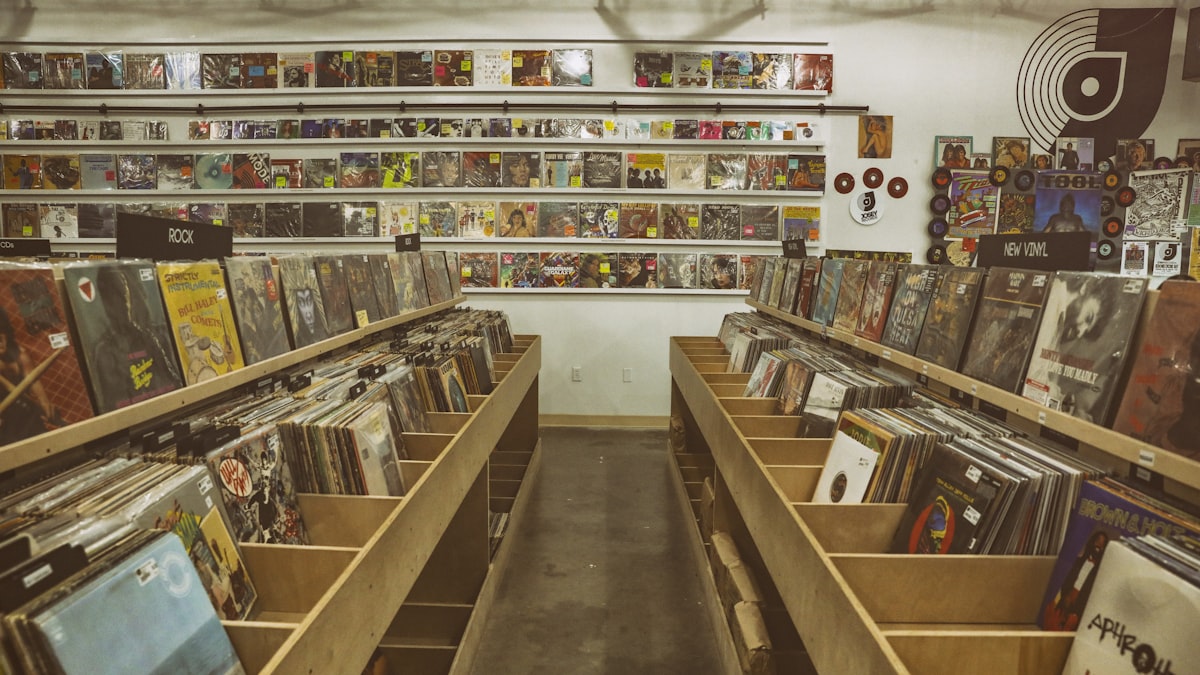
Japan is a paradise for record collectors — pristine pressings, deep back catalogs, legendary city pop, and some of the best-stocked shops on earth. Here’s a collector’s guide to buying vinyl in Japan.
Why Japan is a vinyl mecca
Japanese pressings are famous for their quality and careful handling, and the country’s used-record scene is unrivaled — meticulously graded, often near-mint, and organized to a fault. From jazz to city pop to Western rock, the digging is world-class.
What to hunt for
- City pop & Japanese jazz — the sought-after genres that draw collectors worldwide.
- Japanese pressings (OBI strips) — the paper “obi” band adds value; keep it intact.
- Audiophile pressings and rare Western imports in mint condition.
Where to shop
- Disk Union — the legendary chain with genre-specific stores (Tokyo especially).
- Shimokitazawa & Koenji — Tokyo neighborhoods packed with independent record shops.
- HMV record shops, Face Records, and countless indies.
- Akihabara & Nakano for collectibles; see our Akihabara guide.
Buying tips
- Learn the grading — shops grade sleeve and vinyl separately; conditions are honest.
- Keep the OBI — it matters for value.
- Bring your passport for tax-free on bigger hauls.
- Pack carefully — records are heavy and warp in heat; consider forwarding or a proxy service to ship home.
Tip
Give yourself time — the best finds come from patient digging in the indies. A rare record makes a unique souvenir.
What records typically cost
- Common used Western rock and pop pressings run JPY 500-2,000 in good condition, genuinely cheap by international collector standards, especially at large chains like Disk Union that turn over huge volumes.
- Sought-after city pop and Japanese jazz pressings, especially with an intact OBI strip, can run JPY 5,000-30,000+ depending on rarity — prices have risen sharply over the past decade as international collector interest grew.
- New reissue vinyl from Japanese pressing plants typically runs JPY 3,000-4,500, often praised for pressing quality even when the underlying release is a foreign artist.
Common mistakes to avoid
- Buying a record with a damaged OBI expecting full value — collectors pay a real premium for an intact strip, so a torn or missing OBI should be reflected in a lower price; ask if it’s unclear.
- Skipping the genre-specific Disk Union branches — the chain splits stock across specialized stores (jazz, rock, club music, etc.) in the same neighborhood, and browsing the wrong branch means missing most of the relevant stock.
- Not asking to hear a needle-drop on an expensive used record — most shops will play a portion on request, which is standard practice, not an imposition.
Shipping records home safely
Vinyl warps in heat and can crack if bent, so pack purchases flat, never at an angle, and avoid leaving a bag of records in a hot car or direct sun while sightseeing. For a large haul, a specialist shipping service or your hotel’s front desk can often arrange a properly padded box home cheaper than checking them as fragile airline luggage.
Where digging pays off most
Shimokitazawa’s dense cluster of independent shops rewards slow, unhurried browsing over a single big-name store, since small owner-run shops often price stock more idiosyncratically than the chains — genuine bargains and mispriced rarities still turn up. Set aside at least half a day if crate-digging is a trip priority rather than treating it as a quick errand between other stops.