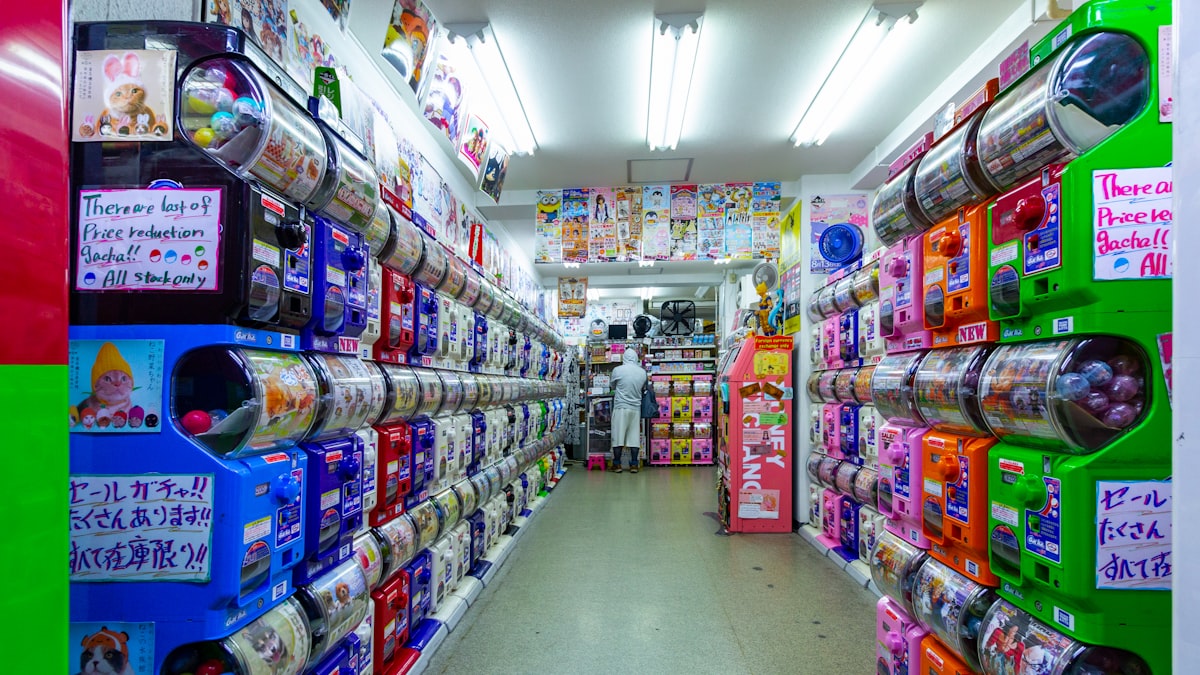
Gachapon (capsule toys) are one of Japan’s most addictive little pleasures — rows of machines dispensing surprisingly high-quality miniatures for a few hundred yen. Here’s the guide to collecting them.
What is gachapon?
Called gachapon or gashapon (after the crank-and-drop sound), these vending machines dispense a random toy in a plastic capsule. Prices are typically 200–500 yen. The quality and creativity are astonishing — from cute characters to hyper-realistic miniatures and delightfully weird novelties.
What you’ll find
- Anime & character goods — Pokémon, Sanrio, Gundam, and more.
- Realistic miniatures — tiny food, furniture, animals, and everyday objects.
- Novelty humor — the famously strange ones Japan is known for.
- Seasonal & limited series that rotate constantly.
Where to find the machines
- Gachapon halls — huge rooms with hundreds of machines (Akihabara has famous ones); see our Akihabara guide.
- Department stores, arcades, and stations — machines are everywhere.
- Specialty spots like Gashapon Bandai Official Shops.
How to play
- Insert coins (machines often need exact change — keep 100-yen coins handy; change machines are nearby).
- Turn the crank; collect your capsule from the tray.
- Each series shows the possible variants — but which you get is random.
Tips
- Bring coins. This is the one place cash is king.
- They make cheap, fun gifts and souvenirs — grab a few for friends.
- Capsules are bulky; pop the toys out and flatten capsules to save luggage space.
- Chasing a specific one? Some shops sell “opened” gachapon items individually.
What gachapon typically costs
- Most capsules run JPY 200-500, though premium and detailed collectible series (life-like miniatures, licensed character figures) can run JPY 500-800 per capsule.
- A single large gachapon hall can house 300-500+ machines, so budget for the temptation — a “quick” 20-minute stop easily turns into JPY 2,000-3,000 in change spent chasing a specific figure.
- If you’re hunting one specific item from a set rather than accepting any random result, secondhand shops like Mandarake sell individual “opened” gachapon figures for a set price, often cheaper than repeatedly gambling on the machine itself.
Common mistakes to avoid
- Not carrying enough 100-yen coins — most machines are coin-only and don’t accept bills or IC cards directly; large gachapon halls have coin-change machines, but smaller standalone machines on the street may not.
- Assuming you can choose your result — gachapon is genuinely random within the shown set; if getting a specific figure matters, buying it secondhand or from a completed-set reseller is more reliable than repeated tries.
- Throwing away capsules on the street — pop the toy out and dispose of the plastic capsule properly, or better, keep a few as their own quirky souvenir since some series design them to interlock or display.
Best gachapon halls to visit
Akihabara has some of the largest and most famous gachapon halls in the country, often spanning multiple floors — worth an hour of dedicated browsing on its own merits, separate from the district’s electronics and anime shopping covered in our Akihabara guide.
Setting a budget before you start
Because the format is designed to be repeatable and slightly addictive, it helps to decide on a coin budget before approaching a wall of machines rather than deciding in the moment — many visitors find a self-imposed limit of JPY 1,000-2,000 per stop keeps the activity fun rather than turning into an unplanned expense.