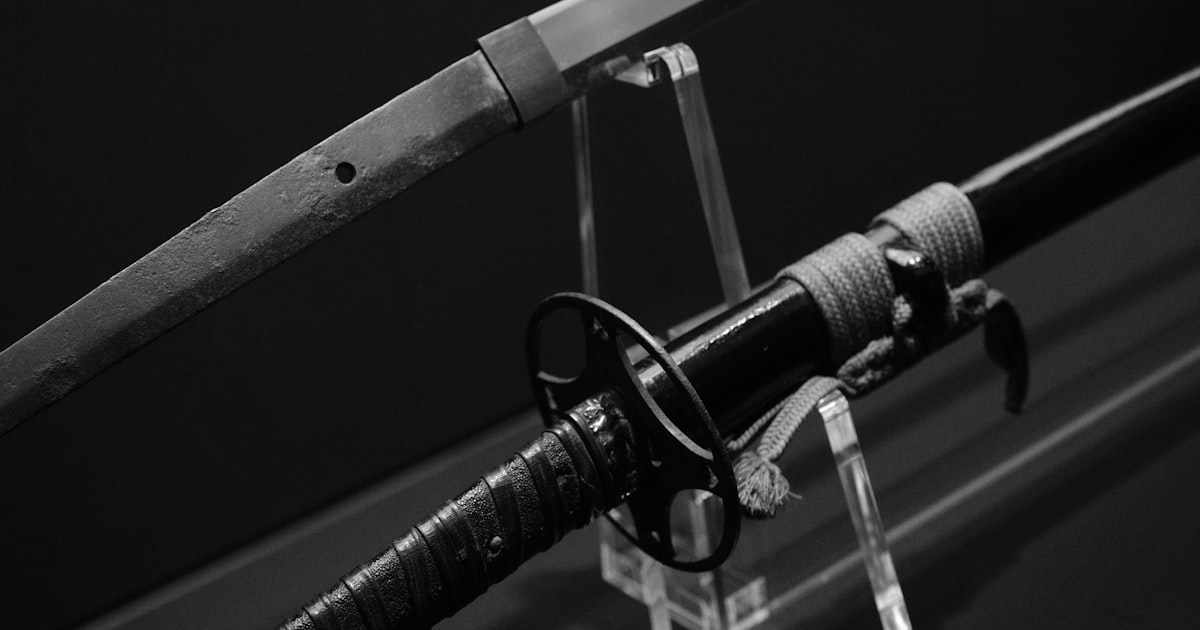
Photo by Seiya Maeda on Unsplash
A katana is one of the few souvenirs that comes with actual paperwork attached to it. Buy the wrong kind, or skip a step, and you can end up with a sword you legally aren’t allowed to take out of the country — or one that gets confiscated at customs on the way home. Buy the right way, and it’s genuinely one of the most memorable things you can bring back from Japan. Here’s how the market actually works.
Real Swords vs. Replicas: Know What You’re Buying
Almost everything sold as a “katana” in Japan falls into one of three categories, and the differences matter a lot for price and legality.
- Shinken (real swords, nihonto): Hand-forged from folded steel, with a genuine cutting edge. These are legally classified as art objects in Japan, not weapons, and every one must be registered with a prefectural Board of Education. Antique blades (pre-1876, when the samurai class lost the right to carry swords) make up most of what’s for sale; there are also living swordsmiths producing new, registered blades.
- Iaito: Unsharpened practice swords used for iaido and other sword arts, usually made from a zinc-aluminum alloy rather than steel. They look the part but have no edge and aren’t legally classified as swords at all — no registration, no export permit needed.
- Decorative replicas: Stainless-steel or die-cast “display” katana sold in souvenir shops and anime/pop-culture stores, often unsharpened and sometimes not even functional as a sword shape past the guard. Fine for wall display, not for iaido practice, and not investment pieces.
If a shop can’t tell you clearly which of these three a sword is, that’s a red flag — walk away.
Where to Buy
Tokyo has the country’s biggest concentration of specialist sword dealers, many clustered in and around the Ginza and Nihonbashi areas, with English-speaking staff used to dealing with overseas collectors and full export-paperwork support built into the price. These shops carry everything from lower-cost antique blades to museum-grade pieces with certification papers from the NBTHK (the Society for the Preservation of Japanese Art Swords), which authenticates the smith, era, and quality of a blade — always ask whether a sword comes with NBTHK papers, since it materially affects both price and resale value.
For something more hands-on, Seki City in Gifu Prefecture has been a center of Japanese swordsmithing for roughly 700 years and still bills itself as the “City of Blades.” It’s a reasonable day trip if you’re already routing through the Japan Alps region near Matsumoto, and its local museum runs live forging demonstrations on select days — check the schedule before you go, as these aren’t daily. If you’re connecting through Nagoya or the Kansai region by rail, the regional IC card guide is worth a look before you set off: IC Cards Beyond Tokyo.
If you just want a fun, affordable prop or cosplay-grade replica rather than a real blade, skip the specialist dealers entirely and head to Nakano Broadway in Tokyo, where several shops sell anime and pop-culture replica swords alongside toys and collectibles at souvenir prices.
What a Real Katana Actually Costs
Prices vary enormously based on age, smith, condition, and papers:
- Budget replica (decorative, unsharpened): ¥3,000–15,000
- Iaito practice sword: ¥30,000–90,000
- Entry-level antique blade, unsigned or minor smith: ¥150,000–400,000
- Mid-range, signed blade with NBTHK papers: ¥500,000–1,500,000
- Splurge — Juyo Token (“Important Sword”) designation or named master smith: ¥3,000,000 and up, sometimes well up
A sword’s mounting (koshirae — the scabbard, hilt wrap, and fittings) is usually priced separately from the blade itself and can range from simple and inexpensive to elaborate pieces that cost as much as the blade. Don’t assume an ornate scabbard means an ornate — or even genuine — blade underneath it.
The Legal Paperwork: Registration and Export Permits
Every authentic Japanese sword in the country must carry a torokusho, a registration certificate issued by a prefectural Board of Education. This isn’t optional paperwork for collectors — it’s illegal to possess an unregistered real blade in Japan, tourist or not, so never buy a “real” sword from an unlicensed seller or without seeing its registration card.
To take a registered sword out of Japan, you need an export permit from the Agency for Cultural Affairs (Bunkacho), which the seller applies for on your behalf using the sword’s registration details. Build in lead time: this typically takes one to a few weeks to process, so if you’re buying late in a short trip, ask the shop up front whether they can turn it around before you fly out, or whether they’ll need to ship the sword to you afterward. A small number of nationally designated masterpieces (Important Cultural Properties and above) cannot be exported at all — reputable dealers will know this and won’t sell you one to take home.
Iaito and non-bladed decorative replicas skip all of this — no registration, no export permit, just pack and go.
Getting It Home: Customs and Destination Rules
At Japanese customs, carry the export permit together with the sword — it should never go in carry-on luggage; pack it well-protected in checked baggage or arrange courier shipping through the shop, which many Tokyo dealers offer as a standard service for international buyers.
Just as importantly, check your home country’s rules before you buy, not after. Import restrictions on bladed weapons vary widely: some countries treat genuine antique or hand-forged traditional swords more leniently than mass-produced blades, while others require an import permit or restrict swords altogether. A shop that regularly ships internationally can usually tell you what paperwork past customers from your country have needed — ask before you commit to a purchase, especially an expensive one.
Common Mistakes to Avoid
- Assuming any “real-looking” sword is a real sword. Plenty of very convincing stainless-steel replicas are sold as souvenirs; they’re not nihonto and shouldn’t be priced like one.
- Buying without seeing the registration card. No torokusho, no legal sword — regardless of how good a deal it looks like.
- Leaving the export permit until the last minute. If you’re flying out in two days, a genuine antique blade almost certainly won’t clear paperwork in time — plan the purchase earlier in your trip or arrange shipping.
- Skipping NBTHK papers to save money. An unpapered blade can still be genuine, but you’re relying entirely on the shop’s word for age, smith, and quality.
- Not checking your home country’s import rules. Find out before you buy, not at your home airport.
Done right, buying a katana is a slower, more deliberate purchase than most travel shopping — closer to buying art than buying a souvenir. Budget the extra time for paperwork, buy from an established dealer who handles exports routinely, and you’ll come home with a piece that has real history behind it rather than a duty-free curiosity.