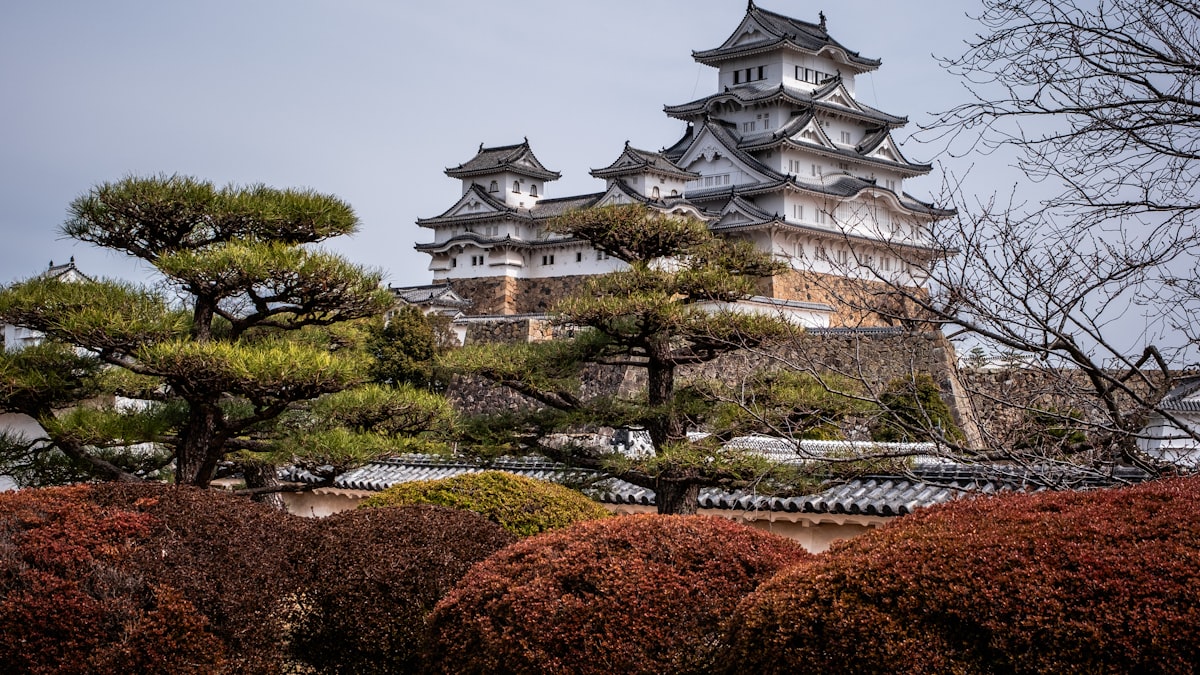
Matsumoto doesn’t get the crowds of Kyoto or the neon of Tokyo, and that’s exactly the point. This compact city in Nagano Prefecture has one of Japan’s finest original castles, a walkable old town, some of the country’s best soba noodles, and — for much of the year — it’s the easiest gateway into the Northern Japan Alps. If you’re heading to Kamikochi or Shirakawa-go, or you simply want a slower, less-touristed stop between Tokyo and Kyoto, Matsumoto earns a full day or an overnight.
Matsumoto Castle: the “Crow Castle”
Matsumoto Castle (Matsumoto-jo) is one of only twelve Japanese castles with an original wooden keep that survived war, fire, and the Meiji-era demolitions — see our guide to Japan’s original castles for the full list. Its black-and-white exterior earned it the nickname “Crow Castle,” and unlike many rebuilt-in-concrete castles elsewhere in Japan, the inside is the real, centuries-old timber structure.
- Entry fee — around 700 yen for adults; combination tickets with the nearby Nakamachi museum are sometimes available.
- Hours — typically 8:30am–5:00pm (last entry 4:30pm), extended during cherry blossom and summer weekends.
- Inside the keep — steep, narrow wooden staircases (some almost ladder-like), low ceilings, and a hidden third floor built to fool attackers. Wear socks you don’t mind showing — shoes come off at the entrance.
- Best photo spot — the moat’s edge on the castle’s north side, where the keep reflects in the water; arrive near opening time for the fewest people and the softest light.
- Cherry blossom season (late March–mid April, though timing shifts year to year) — the castle grounds fill with sakura and it’s genuinely one of the best blossom-and-castle combinations in Japan.
Nakamachi and Nawate: the old town
A 10–15 minute walk from the castle, the Nakamachi district preserves rows of white-walled kura (storehouses) that now hold cafes, sake breweries, craft shops, and a small museum. Running alongside the Metoba River, the Nawate Street market area is a shorter strip of stalls selling grilled snacks, folk crafts, and — appropriately for a “frog” pun on the river’s old name — frog-themed souvenirs. Neither district takes more than an hour or two, which is exactly why Matsumoto works so well as a single-day stop.
Eat: soba country
Nagano Prefecture is one of Japan’s best regions for soba (buckwheat noodles), thanks to the cool mountain climate that suits buckwheat cultivation. In Matsumoto, look for:
- Zaru soba — cold noodles served on a bamboo tray with dipping sauce, the classic way to judge a shop’s noodle quality.
- Togakushi-style soba — a Nagano specialty served in small bundles on a round basket, originating from the nearby Togakushi region.
- Basashi (horse sashimi) — a Nagano izakaya specialty if you’re feeling adventurous; it’s mild and lean, closer to beef tataki than you’d expect.
- A bowl of good soba typically runs 900–1,500 yen; the oldest shops near Nakamachi have been running for generations and often sell out of noodles before dinner.
Getting to Matsumoto
- From Tokyo (Shinjuku) — the JR Azusa or Super Azusa limited express runs directly to Matsumoto Station in about 2 hours 30 minutes to 2 hours 45 minutes, roughly 7,000–7,700 yen one-way (no shinkansen on this route).
- From Nagoya — the JR Shinano limited express takes about 2 hours direct.
- From Kyoto or Osaka — take the shinkansen to Nagoya, then transfer to the Shinano limited express; total journey is roughly 3–3.5 hours.
- The castle and old town are a 15–20 minute walk from Matsumoto Station, or a short taxi/bus ride if you’re short on time.
Why Matsumoto matters for Alps travel
Matsumoto’s bus terminal is the main departure point for Kamikochi, the dramatic alpine valley that’s one of Japan’s best hiking destinations, with direct buses taking around 1 hour 5 minutes during the open season (roughly mid-April through mid-November; the road closes to traffic in winter). It’s also a reasonable base for reaching Takayama and Shirakawa-go if you’re building a Japan Alps loop rather than backtracking through Nagoya each time. Staying overnight in Matsumoto — rather than day-tripping from Tokyo — lets you catch the castle at dusk when the crowds thin and the illumination (on select evenings) reflects in the moat.
Practical tips
- Best time to visit — early April for cherry blossoms with the castle, or October for the start of Alps autumn color; midsummer is pleasantly cooler than Tokyo or Kyoto thanks to the elevation.
- How much time to allow — a half-day covers the castle and old town; a full day lets you add a soba lunch and a slower wander through Nakamachi’s shops.
- Luggage — coin lockers at Matsumoto Station are plentiful but fill up on weekends; if you’re continuing to Kamikochi the same day, use the lockers rather than carrying bags on the mountain bus.
- Combine it — Matsumoto sits neatly between Tokyo and the Japan Alps/Takayama route, so it fits well into a two-week itinerary without much backtracking.