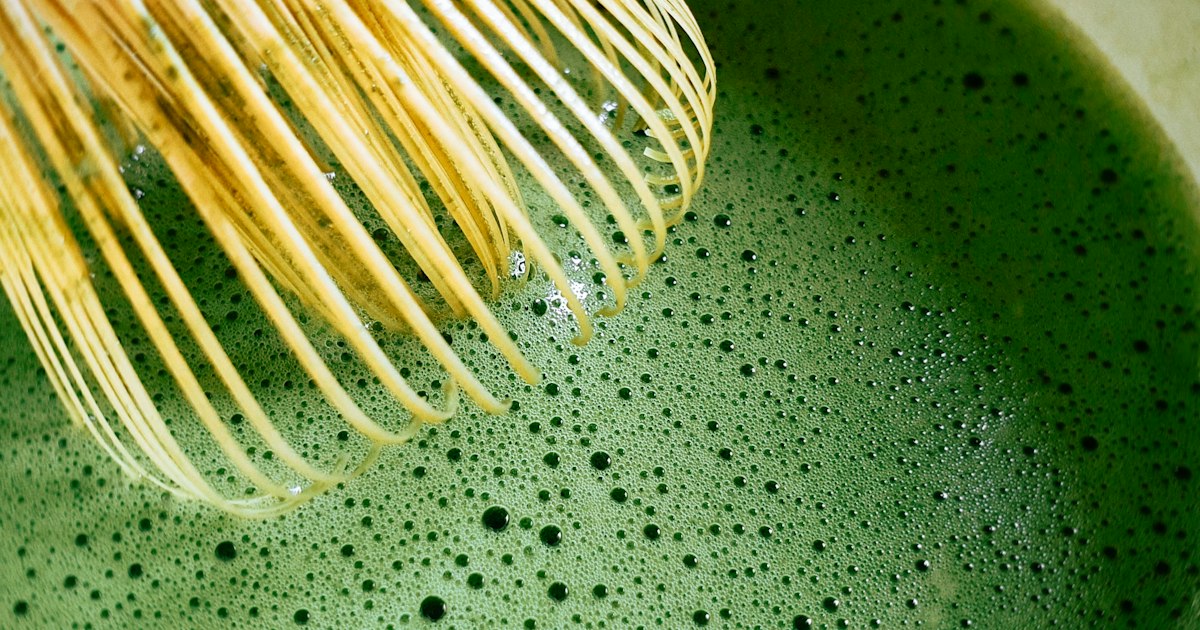
Photo by Payoon Gerinto on Unsplash
If you’ve ever watched someone whip a bowl of matcha into a pale green froth, the tool doing the work is a chasen — a single piece of bamboo, hand-split into dozens or even over a hundred fine tines. It looks simple, but a good chasen is the difference between a silky, cloud-like matcha and a gritty, clumpy one. Here’s what to know before you buy, whether you want a souvenir for your counter or a serious tool for home tea ceremony practice.
What a Chasen Actually Does
A chasen is carved from one continuous culm of bamboo — the tines, the handle, and the base are not glued-together parts but a single piece that’s been soaked, split, and shaped by hand. The fine inner tines whisk air into the matcha and water mixture, breaking up the powder’s natural clumps and creating the smooth, slightly foamy texture tea ceremony calls for. A whisk with the wrong shape, too few tines, or sloppy construction will leave your matcha lumpy no matter how good the powder is.
If you’re building out a small Japan-kitchen at home, this pairs naturally with other tools worth knowing about — see our guide to Tiger and Zojirushi electric kettles for getting water to the right temperature (matcha wants it around 80°C, not boiling), and our roundup of compact rice cookers and mini kitchen gear if you’re furnishing a short-term apartment stay.
Where Chasen Come From: Takayama, Nara
Almost all chasen sold in Japan — by most estimates, around 90% — are made in a small district called Takayama in Ikoma City, Nara Prefecture, just northeast of Nara city and within day-trip range of Osaka or Kyoto. The craft dates back roughly 500 years, tied to the rise of the tea ceremony under patrons like Murata Juko, and it’s recognized as a traditional craft of Nara Prefecture. Production is still largely done by hand by a small number of certified artisan families, which is part of why a well-made chasen costs real money rather than a few hundred yen.
Visiting the production area itself is possible but low-key — there’s no large public museum, and workshops are small family operations, so don’t expect a polished tourist attraction. Most travelers are better served buying directly from specialty tea or craft shops in Kyoto, Nara, or Tokyo, where quality is easier to judge and staff can explain the differences in person.
Tine Count and Bamboo Color: Reading the Labels
Two numbers matter most when shopping. First is the tine count, usually written as a number plus “honme” (本目) — for example, 80 honme or 100 honme. Fewer tines (roughly 16–64) are stiffer and suited to thick koicha-style tea; more tines (80–120+) are softer and better for everyday usucha (thin tea), which is what most home matcha drinkers make. If you’re whisking matcha lattes or a simple bowl of usucha at home, aim for something in the 80–100 honme range — it froths easily without being fussy.
Second is the bamboo itself. You’ll mostly see two colors: shiratake (pale, untreated white bamboo) and susudake (amber-to-brown, smoke-aged bamboo). This is largely a matter of tea-school tradition rather than performance — Urasenke practitioners commonly use white bamboo, Omotesenke practitioners commonly use the smoked variety — so pick whichever you like the look of unless you’re studying under a specific school that specifies one.
How to Spot a Well-Made Chasen
Price aside, a few physical checks tell you a lot:
- Single-piece construction — run your finger near the base where the tines meet the handle. It should feel like one continuous carved piece, not tines glued or epoxied into a separate handle. Cheap mass-produced whisks sometimes cut this corner.
- Even, springy tines — the tines should be uniform in thickness and spring back quickly when gently pressed, not feel limp or splay apart unevenly.
- A tight, neat thread wrap — the colored thread (kan-ito) binding the tines near the base should be wound tightly and evenly, with no loose loops.
- No rough or splintery edges — run a fingertip lightly along the tines; well-finished bamboo won’t feel sharp or fibrous.
Handmade Takayama chasen often come with a small paper sleeve or tag noting the honme count and sometimes the maker’s name — a reasonable signal you’re getting the real thing rather than an import.
Budget, Mid-Range, and Splurge
Expect to find three rough tiers:
- Budget (¥500–¥1,500): Machine-assisted or imported whisks sold at kitchen variety stores. Fine for casual matcha lattes; don’t expect them to last more than a few months of regular use before tines lose their spring.
- Mid-range (¥2,000–¥5,000): Handmade Takayama chasen sold at specialty tea shops and department store kitchenware floors. This is the sweet spot for most visitors — genuinely well-made, functional for daily use, and a reasonable souvenir weight and price.
- Splurge (¥8,000–¥20,000+): Tea-ceremony-grade pieces, sometimes signed by a named artisan, intended for formal practice. Worth it if you’re serious about tea ceremony; overkill for a kitchen counter.
Where to Buy One in Japan
Kyoto is the easiest city for this. Tea specialists near Teramachi and the Nishiki Market area sell chasen alongside matcha and other tea tools, and it’s worth pairing a stop there with a visit to one of Kyoto’s old-school tea-and-sweets shops — our guide to kanmidokoro and what to order covers good spots to actually taste matcha prepared properly before you buy a whisk of your own. In Nara, shops near Kintetsu Nara Station and around the Nara Park area carry chasen as a local specialty, which makes sense given the craft’s roots there. In Tokyo, department store kitchenware floors (Isetan, Takashimaya) and larger branches of Tokyu Hands or Loft stock budget-to-mid-range options. If you want to explore other Japanese teas while you’re buying, our guide to hojicha and the best brands to buy is a good companion purchase — it’s a gentler, less bitter tea than matcha and easier to bring home in bulk.
Caring for Your Chasen (and Common Mistakes)
A chasen is fragile bamboo, not a dishwasher-safe utensil, and most of the damage people do happens in the first week of ownership.
- Soak it before first use. New tines are stiff and can crack if whisked dry. Dip just the tines in water for a minute or two before the very first use, and briefly before every use after that.
- Never use soap or hot water. Rinse with lukewarm water only, right after use. Soap and heat strip the bamboo’s natural oils and make it brittle.
- Dry it upright, fully. Use a small ceramic chasen stand (kusenaoshi) if you have one, or just rest it tines-up in a cup so air circulates. Storing it wet in a closed box invites mold.
- Keep it out of direct sun and heat. A windowsill or near a stove will dry the bamboo too fast and cause splitting.
- Replace it when the tines stop springing back or start snapping off — for daily home use that’s typically somewhere between a few months and a year, not a lifetime purchase.
Treated well, even a mid-range chasen will reward you with noticeably smoother matcha than anything a metal whisk or milk-frother can produce — and it packs flat and light enough to be one of the easiest genuinely useful souvenirs to bring home from Japan.