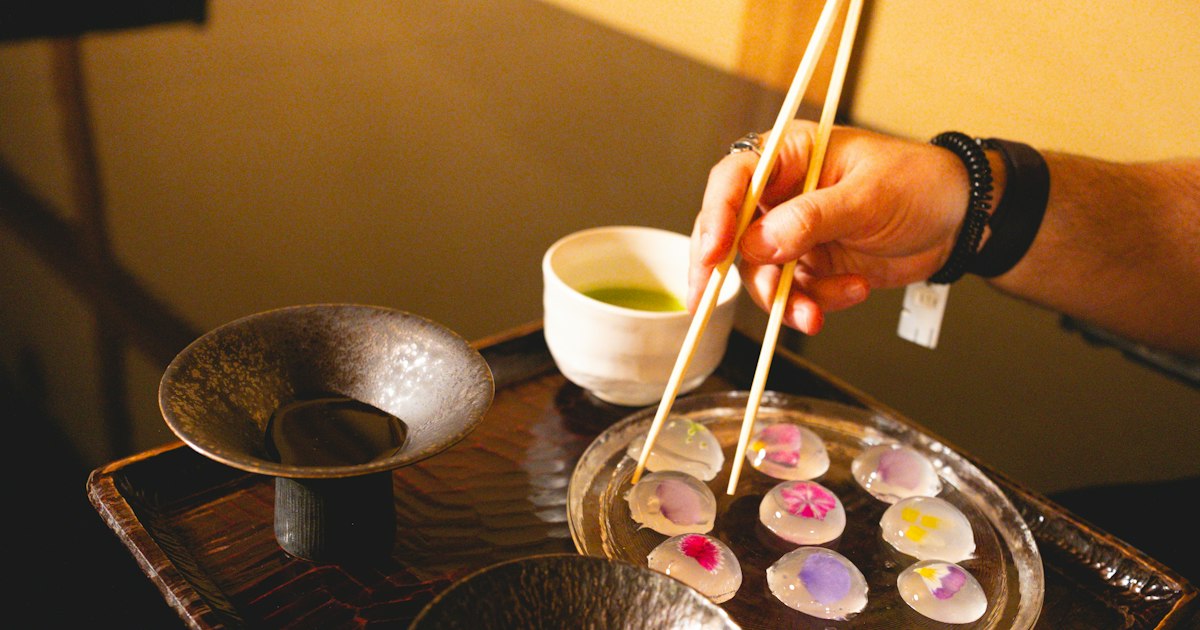
Photo by Igal Ness on Unsplash
Long before “matcha latte” meant anything outside Japan, Kyoto had kanmidokoro — small, often century-old shops that serve nothing but tea and sweets. No ramen, no souvenirs, just a quiet room, a cup of hot tea, and a single exceptional dessert that the shop has been making the same way for generations. They’re one of the best antidotes to a day of temple-hopping, and almost none of them require a reservation. Here’s what the good ones actually serve, what it costs, and how to fit a few into a Kyoto itinerary without wasting half your day in line.
What Is a Kanmidokoro, Exactly?
Kanmidokoro (甘味処) literally means “sweet place.” Unlike a wagashi shop, where you buy sweets to take home, a kanmidokoro is a sit-down space — often just 15-30 seats, sometimes with tatami seating, sometimes just stools at a counter. Most serve one or two signature items rather than a full menu, built around seasonal ingredients: kuzukiri (kudzu noodles) in summer, warm shiratama dumplings in winter, and matcha-based sweets year-round. Expect to spend 20-40 minutes and ¥800-1,800 per person. Cash is still king at the oldest shops, though more now take IC cards or credit cards than a decade ago — it’s worth carrying cash just in case.
Kagizen Yoshifusa — Gion’s 300-Year-Old Kuzukiri Specialist
Founded in 1678, Kagizen Yoshifusa sits on Hanamikoji-dori in Gion and is arguably Kyoto’s most famous kanmidokoro. The dish to order is kuzukiri (¥1,300 or so): cold, glassy noodles made from kudzu starch, served in a woven bamboo box with a side of black sugar syrup (kuromitsu) for dipping. It’s refreshing rather than sweet, and the texture — somewhere between jelly and al dente noodles — is the whole point. The shop also sells beautifully wrapped higashi (dry sweets) at the front counter if you want something to take home.
Kagizen is closed on Mondays (and occasionally for other holidays, so check ahead), and seating is limited — arrive right at opening (10am) or expect a short wait, especially on weekends. It’s a two-minute walk from the Gion-Shijo area, making it easy to combine with a morning at Yasaka Shrine or Kiyomizu-dera.
Kamo Mitarashi Chaya — Where Mitarashi Dango Was Born
Mitarashi dango — grilled rice dumplings glazed in a sweet soy-sugar sauce — is sold all over Japan, but it originated near Shimogamo Shrine, where the ritual purification spring was said to bubble up in patterns resembling the dumplings on a skewer. Kamo Mitarashi Chaya, just outside the shrine’s approach, still serves the original version: smaller, slightly charred dumplings with a thinner, saltier-sweet glaze than the mass-produced versions. A set of a few skewers runs around ¥450-500.
Because it’s attached to Shimogamo Shrine, the easiest way to visit is to pair it with a walk through Tadasu no Mori, the old-growth forest surrounding the shrine — a nice contrast to the touristy Gion area. Go in the late morning on a weekday if you want to sit without waiting.
Demachi Futaba — Kyoto’s Most Famous Queue for Mamemochi
Demachi Futaba isn’t technically a kanmidokoro (there’s no seating — it’s a takeaway shop), but no guide to Kyoto’s old-school sweets scene is complete without it. Near Demachiyanagi Station, this century-old shop makes mamemochi: pink-tinted mochi studded with whole black beans and wrapped around sweet red bean paste. Each one costs around ¥190-200, and the line regularly stretches well past the door — locals treat a wait of 20-30 minutes as normal.
The dough firms up within a few hours, so this is a same-day treat, not a souvenir to pack for later. If you want a sweet you can actually bring home, look at shelf-stable options instead — the kind of steamed rice-cake sweets covered in our guide to uiro travel far better than fresh mochi does.
Tsujiri and the Modern Matcha Parfait
If the above feel too austere, Tsujiri’s Gion main shop (also known as Saryo Tsujiri) is the kanmidokoro that bridges old and new. It’s a tea merchant first, dessert shop second, and its matcha parfaits — layered with matcha ice cream, jelly, shiratama, and a drizzle of syrup over a bowl of warm, bitter matcha pudding — run roughly ¥1,400-1,800 depending on size. It’s touristy and the wait can run 30-60 minutes on weekends, but the quality of the matcha itself (sourced from Uji, Japan’s top matcha-growing region) is real, not a gimmick.
If you’d rather drink your way through Kyoto’s tea culture than eat it, it’s worth knowing that roasted green tea — hojicha — is brewed and sold at several of these same old-school shops as the “cleansing” tea served alongside sweets. Our hojicha buying guide covers which brands to look for if you want to bring a bag home instead of just the matcha tin everyone else buys.
How to Kanmidokoro-Hop Without Wasting a Day
- Go in the off-hours. 10-11am and 2:30-4pm avoid both the lunch crowd and the after-temple rush.
- Pick one per neighborhood. Kagizen and Tsujiri are both in Gion and walkable together; Kamo Mitarashi Chaya pairs naturally with Shimogamo Shrine; Demachi Futaba sits near the Kamo River, good for a riverside snack stop.
- Summer (July-August) is kuzukiri season — the cold, jelly-like noodles are specifically a hot-weather dish and taste best then. Winter visits skew toward warm shiratama and oshiruko (sweet red bean soup) instead.
- Budget option: Demachi Futaba’s mamemochi at under ¥200. Mid-range: Kamo Mitarashi Chaya or a basic kuzukiri set, ¥450-1,300. Splurge: a full matcha parfait course at Tsujiri with extra toppings, ¥1,800-2,200.
Common Mistakes to Avoid
The biggest one is treating these like cafes with full menus — most kanmidokoro do one or two things and do them extremely well, so don’t expect variety or expect to linger over a laptop; turnover is part of how these tiny shops survive. The second is showing up right at opening on a Saturday expecting no line, especially at Kagizen or Tsujiri — go on a weekday morning instead. The third is assuming everywhere takes cards: smaller, older shops like Kamo Mitarashi Chaya are still cash-only or cash-preferred, so keep a few thousand yen in coins and small bills on hand. Finally, don’t rush the tea — it’s usually included or very cheap, and it’s there specifically to cut the sweetness of what you just ordered, so drink it alongside the dessert rather than after.