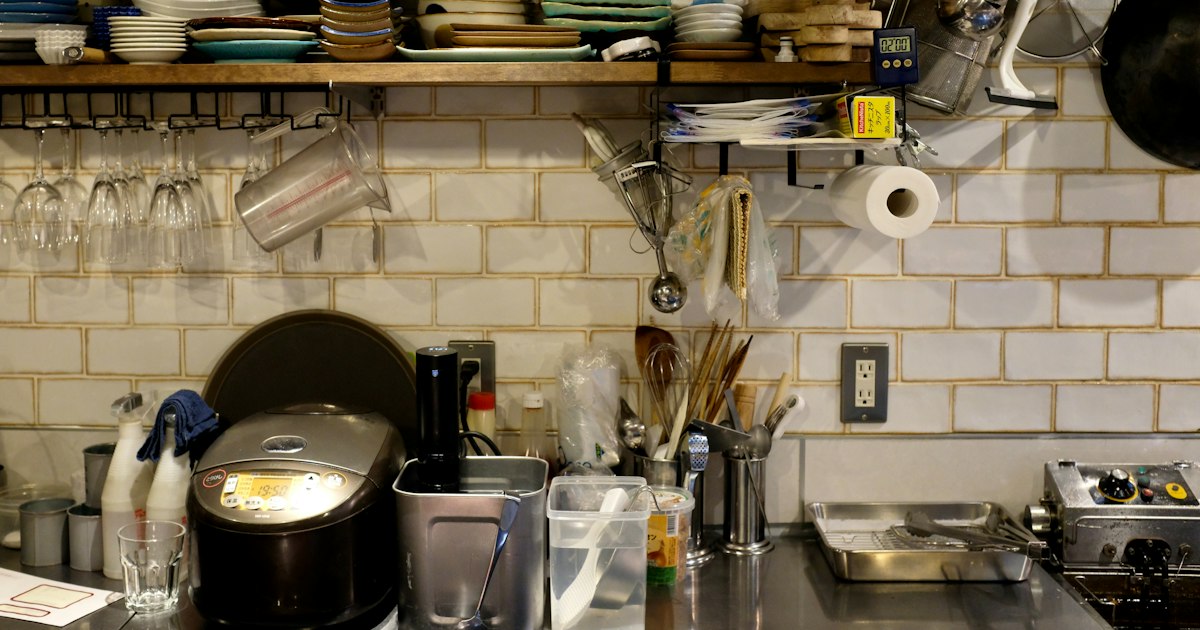
Photo by David Tip on Unsplash
Walk into almost any Japanese home, office break room, or ryokan guest room and you’ll find one: a squat, insulated electric pot quietly keeping water at a rolling boil, ready for instant tea, instant miso soup, or a pour-over coffee. These aren’t ordinary kettles — they’re “denki pot” (電気ポット) or vacuum-insulated electric kettles, and the two brands that dominate the category, Tiger (タイガー) and Zojirushi (象印), are both Osaka-born companies that have been refining hot water technology since the 1920s. If you’re furnishing a kitchen in Japan, buying a souvenir with daily-use value, or just curious why your hotel room has a machine that looks nothing like the kettle at home, here’s what you need to know before you buy.
Why Japan Runs on Hot Water on Demand
Japanese tea culture (green tea, hojicha, genmaicha) and instant food culture (cup noodles, miso soup, furikake rice bowls) both depend on water that’s hot right now, not water that needs five minutes to boil. The vacuum-insulated electric pot solves this by keeping a full liter or two at near-boiling temperature all day on minimal electricity, with a one-touch dispense button or lever. It’s a product of practicality: boiling a kettle from scratch every time someone wants tea wastes both time and power. If you want to taste what these kettles are built for, a cup of properly brewed hojicha made with water held at the right temperature is a good place to start — most of these pots let you select 98°C, 90°C, or 80°C settings specifically because different teas want different temperatures.
Tiger vs. Zojirushi: What’s Actually Different
Both companies started as thermos/vacuum-flask makers (Zojirushi in 1918, Tiger in 1923) before expanding into rice cookers and electric kettles, and today their core technology is very similar: a double-walled vacuum-insulated inner pot (like a giant thermos) paired with a small heating element and pump. In practice:
- Zojirushi tends to lead on vacuum-insulation efficiency — their flagship CV-series pots can keep water hot for 6+ hours with the power unplugged, which matters if you care about standby electricity use.
- Tiger often prices slightly lower for comparable capacity and leans into convenience features like one-push locking lids and quieter pumps.
- Both offer the same core format range: 0.8–1.2L compact pots for a desk or small kitchen, up to 3–4L pots for a family or office.
For everyday use, either brand is a safe, long-lasting choice — these are the Toyota and Honda of hot water, not a meaningful quality gap.
The Three Types You’ll See on Shelves
Vacuum-insulated electric pots (VE kettles): The classic “keeps water hot all day” style described above. Look for “VE電気ケットル” or “vacuum insulated” on the box — these use far less standby power than older boil-and-hold pots.
Cordless quick-boil kettles: Closer to what Western shoppers expect — stainless or plastic, boils in 2–3 minutes, no insulation, lifts off its base to pour. Zojirushi’s EK-series and Tiger’s PCD-series fall here. Good for travelers who just want fast boiling water, not all-day warmth.
Travel/compact kettles: Small 0.3–0.6L kettles sold for hotel rooms, dorms, or single people — cheap, light, and the easiest to carry home in a suitcase.
Budget, Mid-Range, and Splurge Picks
- Budget (¥2,500–¥4,500): A basic 0.8L cordless quick-boil kettle from Tiger (PCD-A) or a no-frills Zojirushi EK-series. Fine for a studio apartment or as a lightweight souvenir.
- Mid-range (¥8,000–¥15,000): A 1L–1.2L vacuum-insulated pot like the Zojirushi CV-GB or Tiger PVG-G series, with multiple temperature presets and child-lock dispensing. This is the sweet spot most Japanese households actually buy.
- Splurge (¥18,000–¥30,000+): Larger 2.2L–3L CV-series pots with vacuum insulation rated to hold heat 6+ hours unplugged, plus descaling reminders and quiet “non-electric” pour mode. Worth it if you’re equipping a household, less so for a single traveler.
Where to Buy Them in Japan
Large electronics retailers carry the widest range and are used to tourist shoppers:
- Yodobashi Camera and Bic Camera — major branches (Shinjuku, Akihabara, Umeda, Namba) typically open around 9:30–10:00am and close around 9:00–10:00pm, with English-speaking staff on the floor and tax-free counters for visitors spending over ¥5,000 before tax on a single receipt (passport required at purchase).
- Don Quijote — carries a smaller but cheaper range, useful for budget travel kettles, and many locations are open very late or 24 hours.
- Amazon.co.jp or Rakuten — widest selection if you have a Japanese delivery address (hotel or forwarding service), though you lose the in-store tax-free discount.
- Department store kitchen floors (Tokyu Hands, Loft) stock Tiger and Zojirushi alongside other Japanese kitchen goods — if you’re already browsing for something like a shamoji rice paddle or other kitchen souvenirs, it’s worth checking the same floor.
Best timing: Japanese retailers run clearance sales on previous-year kettle models around March and September, when new annual lineups launch — you can often get last year’s VE pot at a 20–30% discount.
Voltage, Plugs, and Using One Back Home
This is the detail that trips up the most buyers. Japan runs on 100V (with a slight 50Hz/60Hz split between eastern and western Japan), using ungrounded two-flat-pin Type A plugs. Most countries run 220–240V. A Japanese kettle plugged into a 230V socket without a step-down transformer will draw roughly double its rated power, which can burn out the heating element or trip a breaker — in some cases it’s a fire risk. If you’re bringing one home to a 220V/240V country, you need a proper step-down voltage transformer (not just a plug adapter), and even then it’s only advisable for occasional use, not daily. If your home country is also 100–120V (the US, Canada, parts of Central/South America, and Taiwan), you can use it with just a simple plug adapter and no voltage conversion needed.
Common Mistakes to Avoid
- Buying a vacuum pot for a short trip. VE pots are designed for households that use hot water constantly throughout the day — if you’re in a hotel for a week, a simple quick-boil kettle is lighter, cheaper, and more useful.
- Ignoring the Japanese-only display. Older or budget models may have button labels only in Japanese (保温 = keep warm, 沸騰 = boil, 節電 = power-save). Newer mid-range and premium models usually add icons, but check photos or ask staff before buying if you don’t read Japanese.
- Forgetting the tax-free minimum and passport. Tax-free shopping requires same-day purchase over the threshold and your passport in hand at checkout — it can’t be applied retroactively.
- Not descaling. Japan’s water is generally soft, but mineral buildup still happens over months of daily reheating. Both brands sell citric-acid descaling packets (クエン酸) cheaply at the same electronics stores — use them every 1–2 months to keep the pot efficient.
- Overpacking a full-size pot in luggage. A 1L+ vacuum pot is bulky and the inner vacuum liner can be damaged by rough handling — bubble wrap it well, or stick to a compact travel kettle if you’re flying home with carry-on only.
Whichever model you land on, a good Tiger or Zojirushi kettle is one of those unglamorous souvenirs that quietly earns its keep every single day — long after the trip that brought it home is a memory.