
Japan Trove

Category: Plan Your Trip

Itineraries, budgets, rail passes, when to go, and everything you need to plan a Japan trip.

  • First Time in Japan: 20 Things to Know Before You Go

    First Time in Japan: 20 Things to Know Before You Go

    Some links below are affiliate links. If you buy or book through them, Japan Trove may earn a small commission at no extra cost to you.

    Japan is one of the easiest countries in the world to travel — once you know a handful of local rules. Here are the things first-timers most often wish someone had told them before landing.

    Money & payments

    • Carry some cash. Cards and IC cards work widely now, but small restaurants, shrines, and rural spots are still cash-only. Convenience-store ATMs (7-Eleven, Japan Post) accept foreign cards 24/7.
    • Get an IC card. Suica or Pasmo tap you through trains and buy things at konbini — see our IC card guide.
    • Tax-free shopping exists for tourists over a spend threshold — bring your passport.

    Trains

    • Use Google Maps — it’s excellent for Japanese trains, showing platforms and exact carriages.
    • Don’t overbuy the rail pass. After the 2023 price hike, singles are often cheaper — check our JR Pass guide.
    • Be quiet on trains. Phone calls are a no; keep your voice low.

    Etiquette that matters

    • No tipping. It can cause confusion — service is included.
    • Don’t eat while walking in most places; step aside.
    • Shoes off where you see a step up and slippers (ryokan, some restaurants, homes).
    • Trash bins are rare — carry a small bag and dispose at your hotel or a konbini.
    • Queue neatly and stand on the correct side of the escalator (left in Tokyo, right in Osaka).

    Connectivity & language

    • Set up data before you fly with an eSIM.
    • Download a translation app; camera translation is a lifesaver for menus.
    • A few words go a long way: arigatou (thanks), sumimasen (excuse me/sorry).

    Practical bits

    • Konbini are your friend — food, ATMs, tickets, clean toilets. Learn to shop Japan in general and you’ll never be stuck.
    • Luggage forwarding (takkyubin) lets you send bags hotel-to-hotel cheaply — travel light on transit days.
    • Book central hotels early — see where to stay in Tokyo.

    Ready to plan the days? Follow our 7-day first-timer itinerary.

    What surprises first-timers most

    • How quiet public spaces are — trains, restaurants, and streets are noticeably calmer than most major cities, and matching that energy (lower voices, phones on silent) helps you blend in faster than any single etiquette rule.
    • How much walking a typical day involves — 15,000-20,000 steps is common even on a “relaxed” sightseeing day, given the distances between train exits and attractions; comfortable, broken-in shoes matter more than most people expect before arriving.
    • How small hotel rooms can be compared to home — even mid-range hotels often have compact rooms by Western standards; checking the room size in square meters before booking sets more accurate expectations than photos alone.

    Common mistakes to avoid

    • Overpacking the itinerary — this is consistently the single biggest first-timer regret; fewer destinations with more time in each beats a checklist approach that leaves every day feeling rushed.
    • Assuming every attraction takes walk-in visitors — increasingly, popular museums, digital art shows, and even some restaurants require advance timed booking; checking ahead avoids a wasted trip to a sold-out venue.
    • Underestimating how cash-reliant some situations remain — small restaurants, temple donation boxes, and rural areas can still be cash-only even as cities modernize; running out of cash unexpectedly is a common, easily avoided hiccup.

    Building confidence before you land

    Spending even 20-30 minutes before departure learning to read a Japanese train platform board, practicing the handful of essential phrases, and setting up your IC card and eSIM in advance removes most of the friction first-timers report feeling in their first 24 hours on the ground.

    The one habit that helps the most

    Watching what locals around you do — which side of the escalator they stand on, how they queue, how loudly they speak on the train — and simply mirroring it resolves the vast majority of etiquette uncertainty without needing to memorize every rule in advance.
  • Is the Japan Rail Pass Worth It in 2026? (Honest Math + Better Alternatives)

    Is the Japan Rail Pass Worth It in 2026? (Honest Math + Better Alternatives)

    Some links below are affiliate links. If you book through them, Japan Trove may earn a small commission at no extra cost to you.

    The Japan Rail Pass used to be an automatic “yes.” Then, in October 2023, the price jumped roughly 70% — and the easy answer disappeared. Here’s the honest 2026 math so you can decide in five minutes whether the nationwide pass, a regional pass, or just single tickets is cheapest for your trip.

    What the JR Pass is (and isn’t)

    The nationwide Japan Rail Pass gives you unlimited travel on most JR trains — including most Shinkansen — for 7, 14, or 21 consecutive days. It does not cover the fastest Nozomi and Mizuho bullet trains without paying extra, and it doesn’t cover non-JR subways and private railways. You activate it on a start date and it runs on calendar days, not “days you travel.”

    The break-even test

    Because the price rose, the pass now only pays off if you cover a lot of long-distance ground in a short window. A simple way to check: add up what your planned long trips would cost as single tickets, then compare to the 7-day pass price.

    • Tokyo ⇄ Kyoto/Osaka round trip: roughly ¥27,000–28,000 in single reserved tickets.
    • 7-day nationwide pass: around ¥50,000 (ordinary class).

    So the classic first-timer route in our 7-day Tokyo–Kyoto–Osaka itinerary — one round trip on the Shinkansen plus local trains — is usually cheaper without the nationwide pass. The pass wins when you add a far leg like Hiroshima, Kanazawa, or a Tokyo–Kyoto–Hiroshima–back loop inside seven days.

    The better option most people miss: regional passes

    JR sells regional passes that are far cheaper and often perfect for a focused trip:

    • JR Kansai / Kansai-Hiroshima Area Pass — great if you stay around Osaka, Kyoto, Nara, Himeji, Hiroshima.
    • JR Tokyo Wide Pass — covers day trips from Tokyo (Nikko, Karuizawa, Mt. Fuji area).
    • JR East / West passes — for one-region deep dives.

    If your trip stays in one region, a regional pass usually beats both single tickets and the nationwide pass.

    How to buy

    You can buy the nationwide and regional passes online before you travel and pick them up (or use a QR code) in Japan. Comparison and booking in English is easiest through Klook , which also sells individual Shinkansen tickets and airport transfers if you decide to skip the pass.

    Quick verdict

    • One round trip (Tokyo–Kyoto–Osaka)? Skip the nationwide pass — buy single tickets or a Kansai pass.
    • Covering 3+ far cities in 7 days? The nationwide pass likely pays off.
    • Staying in one region? Get the matching regional pass.

    Next, sort your data before you land — see our best eSIM for Japan guide — and lock in central hotels with our where to stay in Tokyo picks.

    Common mistakes when deciding on the JR Pass

    • Buying the pass out of habit or old advice — much online guidance predates the 2023 price increase and still recommends the pass reflexively; always run the specific math for your own route rather than trusting general “always get the JR Pass” advice.
    • Forgetting to factor in seat reservation fees and non-JR lines — the pass doesn’t cover every train you might use in a city (subways, some private railways), so your actual out-of-pocket savings can be smaller than a simple shinkansen-only calculation suggests.
    • Not considering the regional pass option before defaulting to nationwide or nothing — many travelers assume the choice is binary (nationwide pass or plain tickets) when a regional pass frequently beats both for trips confined to Kansai or Kanto.

    How to actually run the math for your trip

    List every planned long-distance train leg with its single-ticket price (available on Japan’s official rail-fare lookup tools or apps like Navitime), sum them, and compare directly against the relevant pass price for your trip length — this five-minute exercise, done before booking anything, is the only reliable way to know which option genuinely saves money on your specific route rather than a generic one.

    What if your plans change mid-trip

    Nationwide and regional JR Passes are activated on a fixed start date and can’t be paused or extended once running, so if your itinerary shifts significantly after purchase, you may end up with unused days — buying the pass only once your route is reasonably firm, rather than very early in the planning process, reduces this risk.

  • The Perfect 7-Day Japan Itinerary for First-Timers (Tokyo, Kyoto & Osaka)

    The Perfect 7-Day Japan Itinerary for First-Timers (Tokyo, Kyoto & Osaka)

    Some links below are affiliate links. If you book or buy through them, Japan Trove may earn a small commission at no extra cost to you. We only recommend things we’d use ourselves.

    Planning your first trip to Japan and staring at a blank map? This is the itinerary we give friends: seven days that hit Tokyo, Kyoto, and Osaka without rushing, using the fast trains that make Japan so easy to cross. It’s built for first-timers who want the highlights plus a few local corners the tour buses skip.

    The 7-day plan at a glance

    • Days 1–3 — Tokyo: Shibuya & Shinjuku, Asakusa & the old town, a day trip to Hakone or Nikko.
    • Day 4 — Travel + Kyoto: Morning Shinkansen to Kyoto, afternoon in Higashiyama.
    • Days 5–6 — Kyoto: Fushimi Inari at dawn, Arashiyama, plus one hidden temple most visitors miss.
    • Day 7 — Osaka: Street food in Dotonbori and Kuromon Market before you fly home.

    Days 1–3: Tokyo

    Base yourself somewhere on the Yamanote loop line so you can hop on and off easily — Shinjuku, Shibuya, or Tokyo Station areas all work. (We break down the exact neighborhoods in our guide to where to stay in Tokyo.)

    Day 1 is for the neon: the Shibuya Scramble Crossing, Harajuku’s Takeshita Street, and a sunset from a free observation deck at the Tokyo Metropolitan Government Building. Day 2, go old-town: Senso-ji temple in Asakusa in the early morning before the crowds, then the kitchenware shops of Kappabashi. Day 3 is a day trip — Hakone for hot springs and Mt. Fuji views, or Nikko for shrines in the mountains. Both are easy round trips, and you can book skip-the-line passes and tours in English on Klook .

    Day 4: Tokyo → Kyoto by Shinkansen

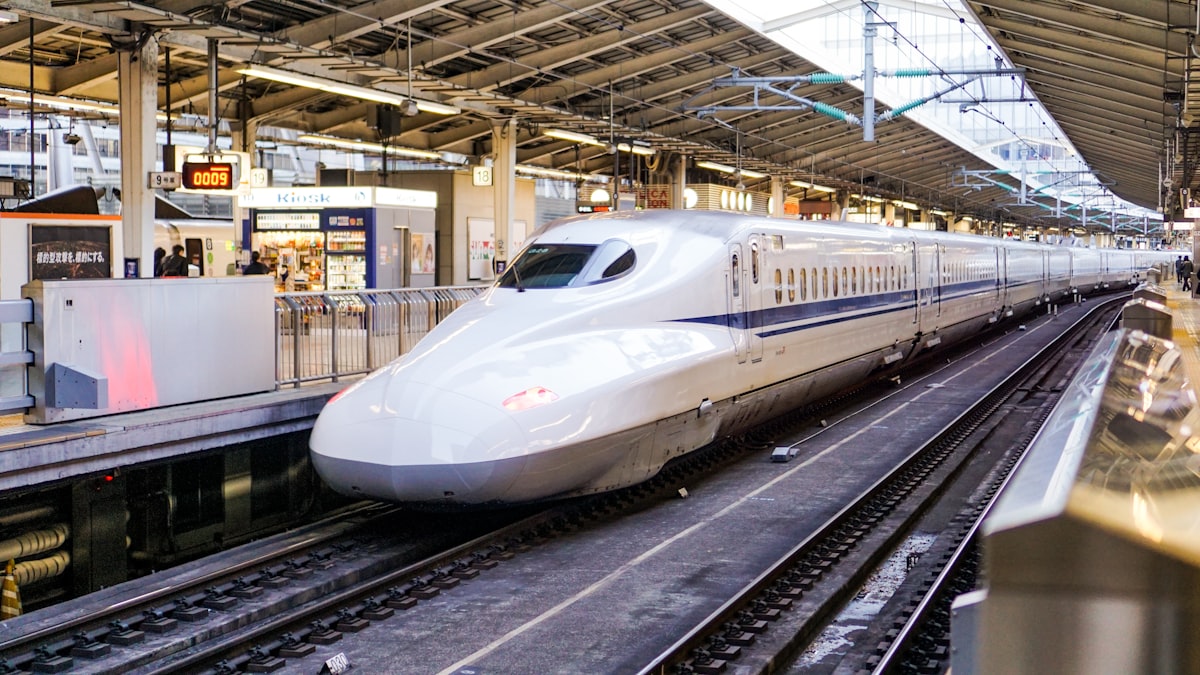
    The bullet train covers Tokyo to Kyoto in about 2 hours 15 minutes. Reserve a seat on the right-hand side (seat E) and you’ll get a Mt. Fuji view on a clear day. Before you buy any rail ticket, do the quick math in our guide to whether the JR Pass is worth it in 2026 — after the price change, a single round trip often costs less than the nationwide pass.

    Days 5–6: Kyoto

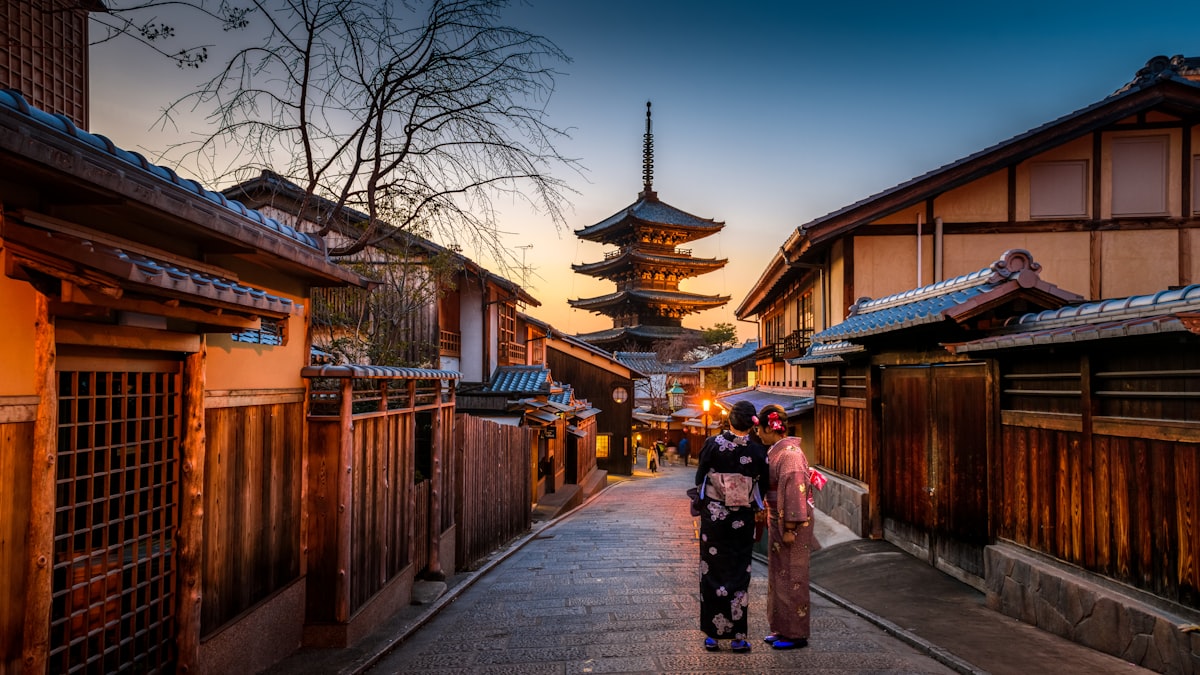
    Kyoto rewards early risers. Get to Fushimi Inari at sunrise to walk the red torii gates almost alone. Spend an afternoon in Arashiyama (bamboo grove plus the monkey park above it), and give yourself one slow morning in the Higashiyama lanes around Kiyomizu-dera. For a hidden corner, the moss garden temples of northern Kyoto stay quiet even in peak season.

    Day 7: Osaka

    Osaka is 15 minutes from Kyoto by rapid train and is all about food. Do Dotonbori at night for the giant signs and takoyaki, and Kuromon Ichiba market in the morning for fresh seafood. Both Kansai and Itami airports are an easy ride out.

    Before you go: the three things to sort early

    1. Data. Get an eSIM so your phone works the moment you land — compare options in our best eSIM for Japan guide.
    2. Trains. Decide on a rail pass (or not) using the JR Pass guide.
    3. Beds. Book central hotels early; the best-value places in Kyoto sell out months ahead. We use Booking.com and Agoda for Japan.

    That’s the whole week. Save this page, and when you’re ready to fine-tune, follow the linked guides above for the money-saving details.

    What this 7-day trip typically costs

    • A mid-range budget for the full week (hotels, food, local transport, a handful of paid attractions, excluding flights) runs roughly JPY 150,000-220,000 per person — see our fuller Japan budget guide for budget and splurge variations on this same route.
    • The single Tokyo-Kyoto shinkansen leg runs about JPY 14,000 one-way in an unreserved seat — with only one long-distance leg in this itinerary, single tickets beat the nationwide JR Pass for nearly everyone following this exact route.
    • Luggage forwarding between Tokyo and Kyoto (roughly JPY 2,000-3,000 per bag) is worth the cost on Day 4’s transfer, letting you enjoy Higashiyama that afternoon without hauling suitcases around.

    Common mistakes to avoid on this route

    • Scheduling the Hakone or Nikko day trip for Day 3 right before a travel day — if the day trip runs long or weather disrupts plans, it eats into your Tokyo-Kyoto transfer buffer; treat Day 3 as flexible and build in slack rather than a tight back-to-back schedule.
    • Trying to add a fourth city (commonly Hiroshima or Nara as a full extra base, not a day trip) into this exact 7-day frame — it’s the single most common way this itinerary gets overstuffed; if a fourth city matters to you, our 10-day itinerary handles it with proper breathing room.
    • Visiting Fushimi Inari or Arashiyama outside the early-morning window recommended above — both are dramatically more crowded by mid-morning, and this is the single easiest schedule tweak to protect the quality of your Kyoto days.

    Adjusting the pace for your travel style

    This route assumes a first-timer wanting a taste of all three cities; if you’d rather go deeper into fewer places, consider dropping the Day 3 side trip in favor of a fourth Tokyo day, or trimming Osaka to a half-day and adding that time to Kyoto instead — the itinerary’s structure flexes easily around whichever city interests you most.