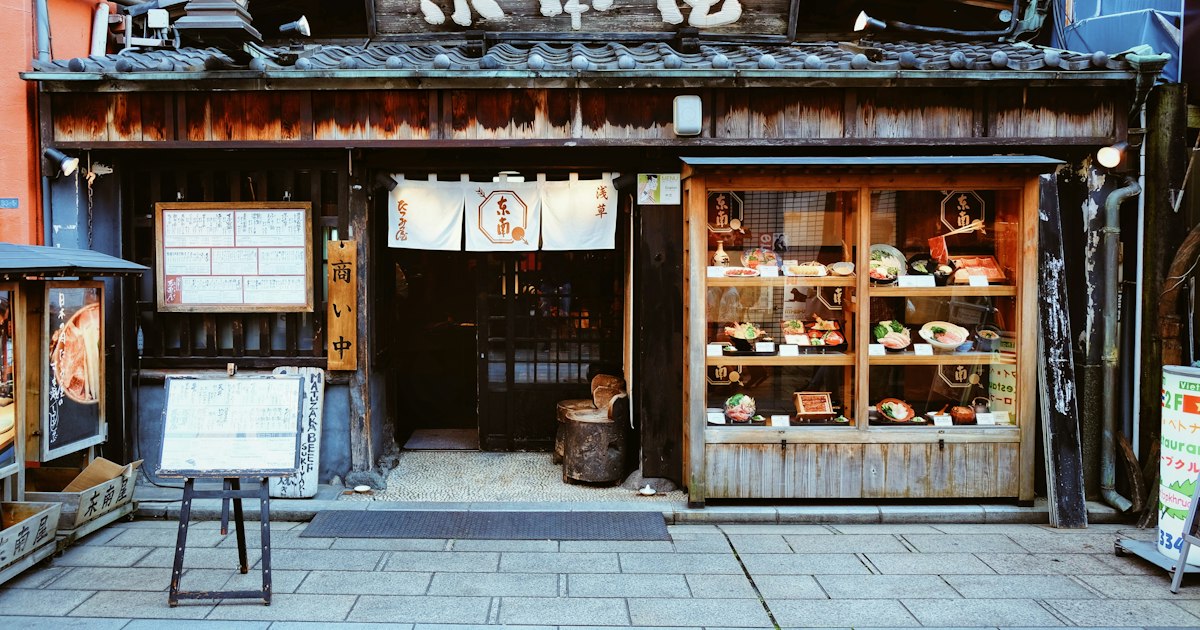
Photo by Hardik Pandya on Unsplash
Tucked between convenience stores and ramen counters, you’ve probably walked past a kampo shop without noticing it — a pharmacy with wooden herb drawers, dried roots in glass jars, or a wall of small paper sachets labeled in kanji. Kampo (漢方) is Japan’s centuries-old system of herbal medicine, and it’s not just a museum piece: it’s sold in ordinary drugstores, prescribed alongside Western medicine in hospitals, and bought daily by Japanese commuters for colds, stress, and stomach trouble. For visitors, it’s also one of the more interesting and affordable souvenirs in the country — if you know what you’re looking at.
What Is Kampo, Exactly?
Kampo medicine arrived from China more than a thousand years ago and was adapted into its own system during the Edo period. Unlike Western medicine’s single-compound drugs, kampo formulas combine several dried herbs, roots, and bark into a fixed recipe that’s brewed as a decoction or, far more commonly today, pressed into granules you dissolve in hot water or swallow dry. Formulas are known by name rather than active ingredient — kakkonto for early cold symptoms, bofutsushosan for bloating and sluggish metabolism, kamishoyosan for stress and PMS-related irritability. These aren’t fringe products: many are approved by Japan’s health ministry and covered by national health insurance when a doctor prescribes them, which is part of why kampo retains mainstream credibility here in a way herbal medicine often doesn’t elsewhere.
Where to Find Kampo: Drugstores vs. Specialty Apothecaries
You have two very different shopping experiences available, and both are worth knowing about.
Regular drugstores — Matsumotokiyoshi, Sundrug, Daikoku Drug, Tsuruha, and even Don Quijote — stock an OTC kampo section, usually near the cold medicine and digestive aisles. Boxes are made by major manufacturers like Kracie, Tsumura, and Kobayashi Pharmaceutical, come with a single fixed formula, and need no consultation. Chain drugstores typically open around 9:00 or 10:00am and close between 9:00 and 10:00pm; Don Quijote locations in big cities often run much later or 24 hours. This is also where you’ll find Japan’s well-known skincare exports, so if you’re building a beauty haul it’s worth pairing a kampo stop with a look at DHC & Fancl cleansing oils, which sit on the same shelves.
Specialty kampo apothecaries are a different thing entirely — smaller, older shops, often family-run, with staff trained to ask about your symptoms and recommend or custom-blend a formula. The single most important place to know about is Osaka’s Doshomachi district, a stretch of streets near Kitahama Station that has been Japan’s pharmaceutical and herbal medicine wholesale hub since the Edo period. Major drug companies trace their roots here, and the neighborhood is still dotted with old apothecaries and wholesalers. Doshomachi is also home to Shinnosan (the local name for Sukunahikona Shrine), dedicated to the god of medicine, with a lively festival each November where visitors are given a paper tiger charm for health. It’s a genuinely interesting half-day stop if you’re curious about the history behind the products rather than just the products themselves.
What Tourists Can Actually Buy
You don’t need a prescription or fluent Japanese to buy OTC kampo — just a general sense of what the formula is for, since most packaging has limited English. Common, tourist-friendly options:
- Kakkonto (葛根湯) — the classic “feel a cold coming on” formula, taken at the first sign of chills or a sore throat. A box of 24 single-dose granule packets runs roughly ¥900–¥1,500.
- Bofutsushosan (防風通聖풍散) — marketed for metabolism and bloating, popular as a general wellness buy. A 60-packet box is typically ¥2,000–¥3,000.
- Kamishoyosan (加味逍遥散) — aimed at stress, poor sleep, and PMS-type symptoms; a 90-packet box usually falls in the ¥2,500–¥3,500 range.
- Hochuekkito (補中益気湯) — a fatigue and immune-support formula, often bought in cold and flu season.
At specialty apothecaries, expect to pay more for a custom blend measured out for you on the spot — often several thousand yen for a short two-to-four-week supply — but you also get a consultation, which is part of the appeal even if you need to rely on gestures or a translation app.
Budget, Mid-Range, and Splurge Picks
Budget (under ¥1,500): A single box of a well-known OTC formula like kakkonto from any drugstore — easy to pack, easy to explain to customs, and genuinely useful if you catch a cold mid-trip.
Mid-range (¥2,000–¥4,000): A multi-week box of a wellness-focused formula like bofutsushosan or kamishoyosan, or a nicely packaged kampo-infused skincare or bath product — several Japanese cosmetics brands now fold kampo herbs into creams and bath salts, which make better gifts than raw medicine for people back home who won’t know how to dose it.
Splurge (¥5,000+): A custom-blended formula from a specialty apothecary in a district like Doshomachi, or a kampo consultation itself as an experience — some shops will talk you through your “type” according to kampo theory even if you don’t buy anything large.
Timing, Mistakes, and Taking It Home
There’s no strong seasonal pattern to kampo shopping — cold-and-flu formulas sell more in winter, diet-focused ones see a bump around New Year’s resolutions, but the shops themselves are a year-round, any-weather activity, which makes them a good rainy-day or jet-lagged-morning stop. A few things trip up visitors:
- Buying without knowing the use. Formula names tell you nothing in English, and generic “kampo” boxes aren’t one-size-fits-all — look for the katakana/kanji symptom list on the box or use a translation app on the packaging before buying.
- Assuming it’s regulated the same way at home. Some herbal ingredients common in kampo are restricted or require declaration in certain countries (the EU and Australia are stricter than the US on this). If you’re buying several boxes, check your home country’s customs rules on herbal supplements before you fly.
- Overpacking. Kampo boxes are light but bulky if you buy in bulk at a specialty shop. If you’re already tight on space or weight, it’s worth checking ANA and JAL’s excess baggage fees before loading up your suitcase with souvenir boxes.
- Skipping the consultation out of shyness. Many specialty shop staff are used to tourists and happy to point with a translation app rather than talk you out of the experience — it’s one of the more memorable things you can do in a district like Doshomachi.
If you’re combining kampo shopping with a broader beauty run in Tokyo, the @cosme Store in Harajuku is a good contrast stop — modern, ranked, English-friendly skincare versus kampo’s old-world herbal approach. And if you’re based outside the city center, suburban drugstores inside an AEON Mall almost always carry the same major OTC kampo brands, so you don’t need a special trip just to find a box of kakkonto.
The Takeaway
Kampo isn’t a tourist trap dressed up as tradition — it’s a working part of Japanese healthcare that happens to be sold in approachable, affordable boxes right next to the cold medicine. A ¥1,000 box of kakkonto is a far more useful souvenir than most keychains, and an afternoon in Osaka’s Doshomachi gives you the history to go with it.