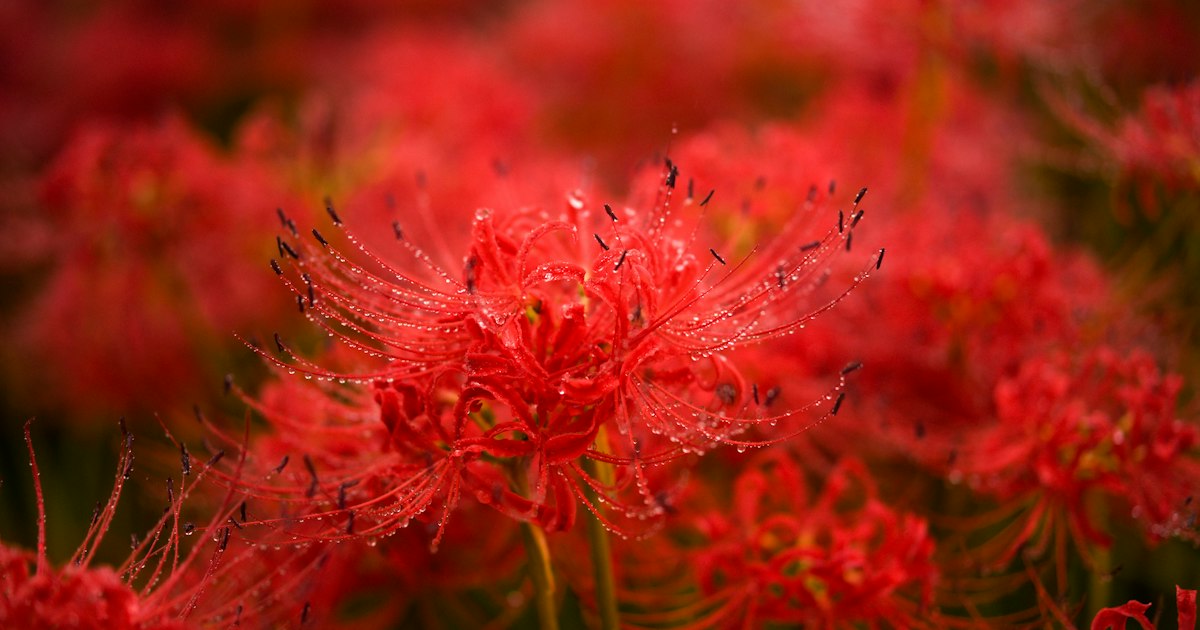
Photo by Diana Bondarenko on Unsplash
For about two weeks every autumn, roadsides, rice paddy edges, and riverbanks across Japan erupt in a startling, almost otherworldly red. These are higanbana (彼岸花), the red spider lily — a flower so closely tied to the autumn equinox that its name literally means “equinox flower.” If you time a trip right, you can walk through fields where millions of them bloom at once. Time it wrong by even a week, and you’ll find nothing but green stalks. Here’s how to actually catch the bloom.
What Is Higanbana, and Why Does It Bloom on a Schedule?
Higanbana (Lycoris radiata) is unusual among flowers in that it blooms almost entirely in response to temperature drop, not calendar date or rainfall alone. After the brutal heat of a Japanese summer finally breaks in mid-to-late September, the bulbs send up a bare stalk topped with a spidery, deep-red bloom — with no leaves at all. The foliage appears later, after the flowers die back, which is part of why the plant feels so eerie and sudden in the landscape.
The flower carries heavy cultural weight. It’s traditionally associated with the Buddhist equinox memorial period (higan), and you’ll often see it growing near graveyards and temple grounds, since farmers historically planted the toxic bulbs around rice fields and burial mounds to deter rodents and wild boar from digging. That history is also why it carries folklore warnings — it’s sometimes called “the flower you should never bring home,” supposedly bad luck, and more practically, every part of the plant contains lycorine, a toxic alkaloid. Don’t eat it, don’t let pets dig up the bulbs, and wash your hands after handling it. If you’re bringing a dog along for the day, it’s worth a quick read of our pet-friendly travel guide before letting them off-leash near any colony.
When to Go: A Tight, Weather-Dependent Window
Nationwide, the bloom runs roughly from mid-September to early October, with the peak almost always clustering around the autumnal equinox (September 22–23). But this is not a flower you can pin to a date months in advance — a hot, dry early September can push the peak later, while an early cold snap can bring it forward by a week. Realistically:
- Early-to-mid September: Too early almost everywhere; stalks are just emerging.
- Last week of September: The sweet spot most years, especially in Saitama and the Kanto plain.
- First week of October: Still viable, especially in the north (Tohoku) or in shaded, cooler valleys where blooming lags.
Because the window is so short, check real-time bloom reports rather than relying on “best time to visit” articles written in a different year. Major spots like Kinchakuda post weekly (sometimes daily) bloom-status updates on their official tourism sites and social media in the two weeks leading up to the equinox — look for terms like “見頃” (mikoro, “in peak bloom”) versus “咲き始め” (sakihajime, “just starting”).
Kinchakuda Manjushage Park: Japan’s Largest Colony
If you only visit one spot, make it Kinchakuda Manjushage Park (巾着田曼珠沙華公園) in Hidaka City, Saitama. The park sits inside a horseshoe-shaped bend of the Koma River, and during peak bloom the forest floor turns into a near-continuous red carpet — commonly cited at around 5 million individual flowers spread across the riverside grove, including a smaller patch of rarer white higanbana that tends to bloom slightly later than the red ones.
Access: From Ikebukuro, take the Seibu Ikebukuro Line to Hanno Station (about 50 minutes; faster on the Limited Express “Red Arrow,” which requires a supplemental fee), then transfer to a local train and get off at Koma Station (高麗駅), followed by a roughly 15-minute walk to the park entrance. Alternatively, JR’s Kawagoe/Hachiko lines reach Komagawa Station (高麗川駅), also around a 15–20 minute walk. During festival weekends, shuttle buses often run from the nearest stations.
Cost and timing: The park is free to enter most of the year, but during the flowering period it charges admission — around ¥500 for adults, with children typically free — to fund maintenance of the colony. Gates generally open around 8:30am and close by 5pm during the festival. The “Koma Manjushage Festival” runs alongside the bloom, with food stalls selling local produce and grilled snacks, so budget a little extra cash beyond the entry fee.
Budget tip: Weekday mornings right at opening are dramatically less crowded than weekend afternoons, when the paths can bottleneck. If you’re coordinating multiple regional train legs on this trip, it’s worth checking a discount ticket shop before buying full-fare tickets for the Seibu or JR legs — savings are modest per ticket but add up on a day trip involving transfers.
Gokuraku-ji and Smaller Kamakura-Area Spots
If you’re based around Tokyo and don’t want to dedicate a full day to Saitama, Kamakura offers a smaller-scale but still worthwhile option. Gokuraku-ji Temple, right by Gokurakuji Station on the Enoden line (one stop from the Hase/Great Buddha area), has red spider lilies lining its thatched-roof gate approach each autumn. It’s quiet, free to view from the approach path, and easy to fold into a day that also covers Hase-dera and the Great Buddha — the temple’s main hall and treasure hall are only open on limited days with a separate small fee, so don’t plan around getting inside, just the exterior bloom.
This is a good illustration of a broader point: you don’t need a famous “spot” at all. Higanbana grows wild along rice paddy edges, irrigation ditches, and riverbanks across rural Japan in late September, especially in Kansai and Kyushu farmland. If you’re driving or cycling through the countryside during the window, slow down near paddy borders — you’ll likely spot clusters for free, with zero crowds.
Common Mistakes to Avoid
- Locking in dates too far ahead. Booking a non-refundable hotel around a guessed peak-bloom weekend is risky — the window shifts year to year. Build flexibility into the itinerary, or plan the visit as one flexible day within a longer Tokyo/Kanto trip.
- Stepping off the boardwalks for photos. At Kinchakuda especially, staff actively enforce path boundaries to protect the bulbs; trampling the colony for a better angle gets you stopped (and the flowers don’t regrow once crushed).
- Treating it as a temple-only flower. Some travelers only look for higanbana at famous gardens and miss that it’s often just as striking — and free — along ordinary roadsides nearby.
- Forgetting cash. Entry fees at seasonal parks like Kinchakuda are typically collected at simple gate booths that may not take cards.
- Underestimating battery drain. A field of a million red flowers invites a lot of photography; if you’re out shooting all afternoon, a portable charger or a quick rental from a ChargeSPOT kiosk near the station can save you from a dead phone before the train home.
Planning the Day Trip
For most visitors based in Tokyo, Kinchakuda works best as a half-day-to-full-day excursion: leave by mid-morning, aim to arrive at the park by early afternoon on a weekday if possible, and allow an hour or two just to walk the riverside loop at an unhurried pace. Pack comfortable, closed-toe shoes rather than sandals — the riverside paths can be uneven and occasionally muddy after rain — and bring a hat, since much of the colony sits in open sun near the river. Combine the trip with nearby Hanno’s hiking trails if you want to extend the day, or save your energy and treat it as a dedicated flower pilgrimage. Either way, the narrow window is the whole point: higanbana rewards travelers willing to check bloom reports and move fast, not those locking in plans months in advance.