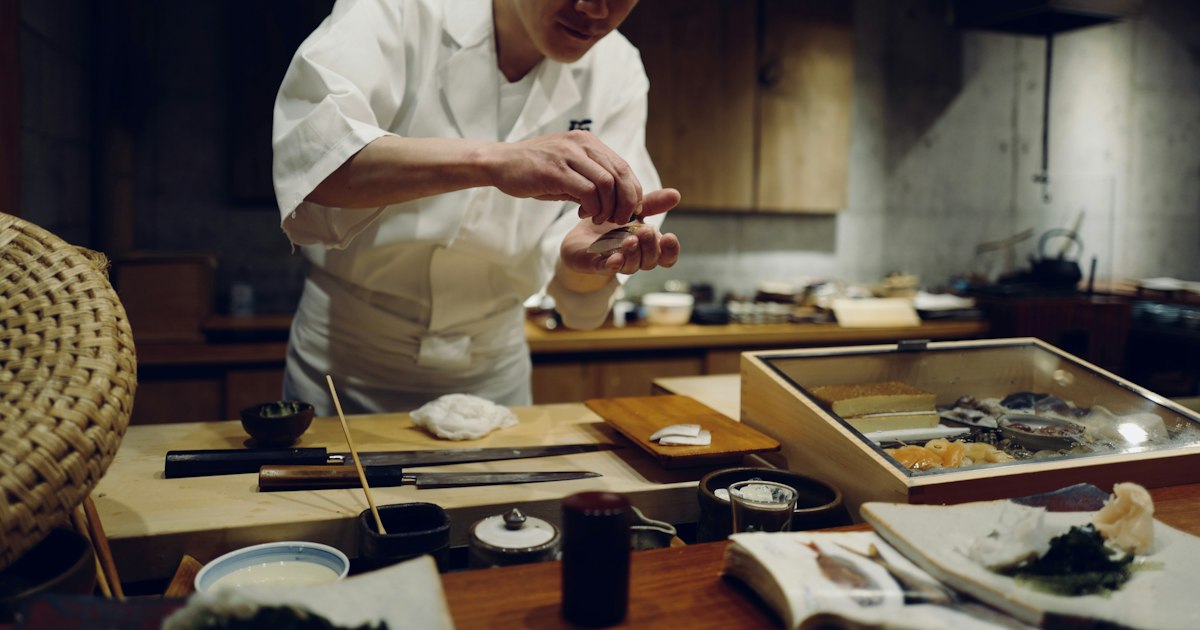
Photo by Thomas Marban on Unsplash
If you’ve ever watched a Japanese grandmother cook, or caught a glimpse of a school lunch worker ladling soup into trays, you’ve probably seen a kappougi (割烹着) without knowing its name. It’s the white, sleeved smock that covers the whole torso and arms, tying at the back like a lab coat — not the half-apron tied at the waist that most visitors picture when they hear “apron.” If you want to bring one home as a practical souvenir or a genuinely useful kitchen item, here’s what it is, why it looks the way it does, and exactly where to find one.
What Makes a Kappougi Different From a Western Apron
A standard apron (エプロン, “epuron” in Japanese) covers the front of the body and ties at the waist. A kappougi has long sleeves, covers the chest and back, and usually fastens with a tie at the collar and another at the waist — closer to a doctor’s coat or a painter’s smock than a bib apron. The design dates back to the Meiji and Taisho eras, when women cooking in kimono needed full-arm coverage to keep both the kimono sleeves and the fabric itself clean from oil splatter, miso, and soy sauce. Even though most people cook in Western clothes today, the kappougi stuck around because it’s simply more protective — it’s standard issue for school kyushoku (lunch) staff, bento shop workers, and home cooks who want to save their clothes during big New Year’s cooking sessions.
Culturally, the kappougi is also shorthand for a certain image of domesticity — the stock cartoon mother figure in Japanese comics is almost always drawn in one. Buying a well-made kappougi is buying a piece of that visual language, not just a cooking tool.
Where to Buy a Kappougi in Tokyo
The single best place to shop for one is Kappabashi Dougu Gai (合羽橋道具街), Tokyo’s kitchenware wholesale district in Asakusa — confusingly, the name is a coincidence and unrelated to “kappougi.” The street runs about 800 meters and is lined with restaurant-supply shops selling everything from sushi knives to noren curtains, and several stock plain cotton or poly-cotton kappougi and chef’s smocks aimed at working kitchens.
- How to get there: Tawaramachi Station on the Ginza Line, exit 3, about 5 minutes on foot. It’s also a 10-minute walk from Asakusa Station if you’re combining it with a Senso-ji visit.
- Hours: Most shops open around 9:30–10:00am and close by 17:30–18:00. A good number close on Sundays, so aim for a weekday or Saturday morning before the street gets crowded with tour groups in the afternoon.
- Timing tip: Kappabashi holds an annual kitchenware festival in early October with street-wide discounts across participating shops — if your trip lines up, it’s worth checking current dates once you’re in Tokyo, since kappougi and other textile goods often get marked down alongside knives and tableware.
Outside Kappabashi, general household goods chains are the easiest fallback: Hands (formerly Tokyu Hands) and Loft both carry kappougi in their kitchen sections in most major branches, and department store basement floors (depachika-adjacent housewares sections, not the food floor) sometimes stock seasonal or branded versions around New Year, when big-batch cooking at home spikes demand.
Budget, Mid-Range, and Splurge Options
Prices vary a lot depending on fabric and where you shop:
- Budget (¥330–¥700): Daiso and Seria, Japan’s 100-yen shop chains, sell simple polyester kappougi in the kids’/school supplies aisle — these are the ones used for kyushoku duty — and sometimes a plain adult version in the kitchen goods aisle. Thin fabric, but genuinely functional and a fun, cheap souvenir.
- Mid-range (¥2,000–¥5,000): Cotton or cotton-blend kappougi from Kappabashi shops, Hands, or Loft. These are heavier, better stitched, and come in adult sizing with actual size charts — worth it if you plan to use it regularly rather than display it.
- Splurge (¥8,000–¥15,000): Heavier canvas or linen versions from Japanese workwear and textile specialty brands, sometimes dyed with traditional indigo (aizome) patterns. These are closer to a piece of craft than a disposable kitchen item and are usually sold online or through specialty craft shops rather than mass retailers.
Sizing and Common Mistakes
A few things trip up first-time buyers:
- Asking for an “apron” gets you the wrong item. If you ask staff for an “apron” in English or epuron in Japanese, you’ll be shown waist aprons. Say “kappougi” specifically, or point to a photo — most kitchenware shop staff in Kappabashi know the word immediately.
- Japanese sizing runs smaller than US/EU standard. Most kappougi are sold as “free size” (one-size-fits-most) but are cut for an average Japanese adult frame — if you’re tall or broad-shouldered, check the shoulder-to-sleeve-end measurement on the tag rather than trusting “free size” blindly.
- Cheap cotton shrinks. Budget and mid-range cotton kappougi can shrink noticeably on a hot wash/dry cycle the first time. Wash cold and air dry if you want it to keep fitting as bought.
Buying Online if You’re Not Visiting Kappabashi
Both Amazon Japan and Rakuten carry a wide range of kappougi, searchable with the Japanese term 割烹着 — useful if you want to compare sizing charts before committing, or if you’re not routing through Tokyo at all. Note that if you’re buying in person during your trip, Japan’s consumption tax rules mean sticker prices in regular shops already include tax, but tax-free counters for cumulative purchases over a threshold are usually aimed at bigger-ticket items. For general guidance on how pricing and tax-free shopping works in Japanese stores, see Japan’s Consumption Tax: Why Sticker Prices Don’t Match What You Pay at Checkout.
Pairing It With Other Traditional Souvenirs
A kappougi makes an easy, packable addition if you’re already building out a small collection of traditional Japanese goods rather than just plastic trinkets. It sits well alongside other craft-leaning souvenirs like the uchiwa paddle fan or an embroidered sukajan jacket — all three are everyday Japanese items with real history behind them, rather than souvenir-shop novelties, and all three are light enough to pack flat in a suitcase.
Whether you pick up a ¥330 Daiso version just to say you have one, or go for a heavier cotton piece from Kappabashi to actually use at home, the kappougi is one of the few souvenirs that’s both historically interesting and something you’ll genuinely reach for the next time you’re cooking something messy.