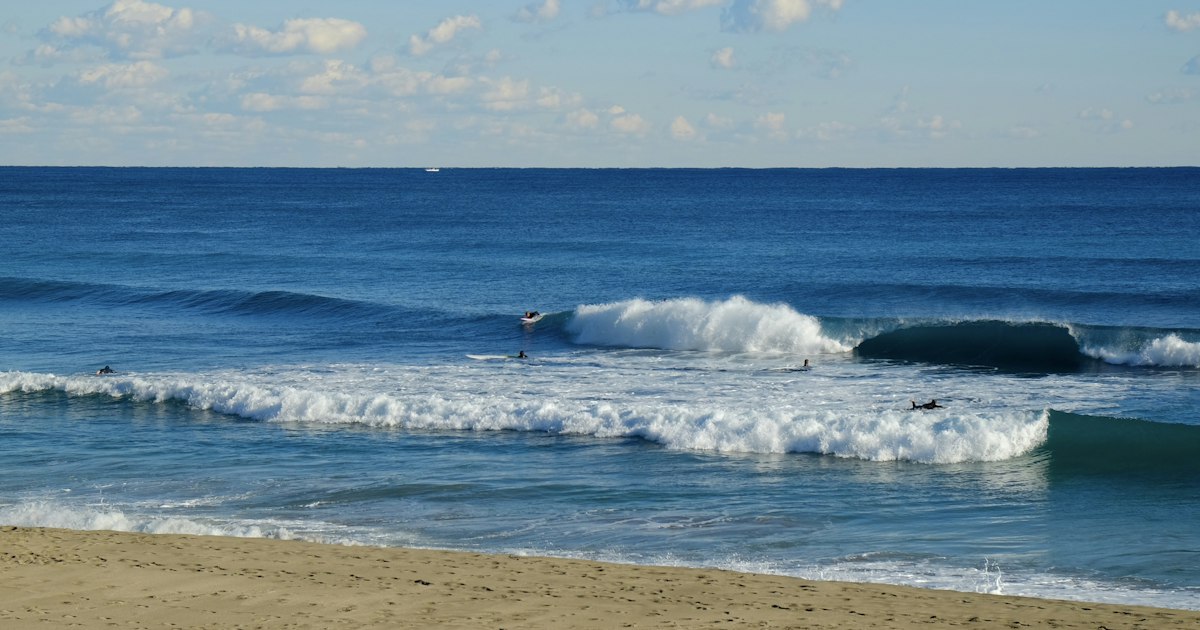
Japan’s surf coast runs from the sandy points of Shonan, an hour south of Tokyo, to the long beach breaks of Chiba’s Kujukuri coastline — home to Tsurigasaki Beach, the venue for surfing’s Olympic debut at the Tokyo 2020 Games. Both areas have dense local surf populations who buy, sell, and trade gear constantly, which means a steady supply of secondhand boards and wetsuits at prices well below what you’d pay new. If you’re visiting for more than a few days and want to actually surf rather than rent, or you just want a quirky, well-priced souvenir, here’s how to shop it properly.
Why Shonan and Chiba Are the Places to Look
Unlike a lot of countries where used gear is scattered across classified ads, Japan’s secondhand surf economy runs largely through physical shops — partly because many surfers don’t want to deal with meeting strangers for a cash handoff, and partly because resale shops here are genuinely well organized. Shonan (covering Chigasaki, Fujisawa, Kamakura, Zushi, and Oiso) has the country’s highest concentration of surfers relative to population, so boards and wetsuits turn over fast as people upgrade each season. Chiba’s Ichinomiya and Kujukuri area is flatter, more beginner-friendly, and has a younger surf scene with a lot of entry-level gear changing hands.
Where to Actually Shop
You have three realistic options, and it’s worth hitting more than one:
- Nationwide secondhand chains — 2nd Street (セカンドストリート) has multiple branches in Chigasaki, Fujisawa, and across Chiba, and its larger stores stock a sporting-goods corner with wetsuits, boardshorts, and occasionally boards. Most locations are open roughly 10:00–21:00 daily. The Hard Off group’s Off House and Garage Off stores do the same thing and are worth checking for board fins, leashes, and roof racks as well as the suits themselves.
- Murasaki Sports — Japan’s biggest surf/skate/snow retailer, with shops in Shonan (Chigasaki and Fujisawa) and near Ichinomiya in Chiba. It mainly sells new gear, but its outlet-style clearance racks and end-of-season sales (ask staff for “ワケあり” or “アウトレット” items) are the closest thing to new-condition stock at used prices.
- Independent local shops — small, owner-run surf shops near the beach in Chigasaki, Hiratsuka, and around Kazusa-Ichinomiya Station often take trade-ins and consignment boards from local surfers. These don’t always have English signage or websites, so the best approach is simply to walk the beach road and pop into any shop with boards racked outside — most owners are used to foreign customers browsing.
Prices and stock change constantly at all three, so if you’re set on a specific size or brand, call ahead if you can, or build in a spare day to check a second location.
What You’ll Actually Pay
Rough but realistic ranges based on typical secondhand stock in this area:
- Budget: A used foam-top beginner board runs roughly ¥10,000–20,000; a basic used spring suit or rash guard set is often ¥3,000–8,000.
- Mid-range: A decent used fiberglass shortboard or fish in good condition is typically ¥25,000–50,000; a full used wetsuit (3/2mm or 4/3mm) from a known Japanese or import brand runs ¥10,000–20,000.
- Splurge: A barely-used or demo board from a well-regarded shaper, or a near-new premium wetsuit, can run ¥60,000–120,000 — still a meaningful discount versus buying new in Japan.
Haggling isn’t really part of the culture at chain stores, but at independent shops a polite, friendly ask about the price — especially if you’re buying more than one item — sometimes gets you a small discount or a free leash thrown in.
Best Time of Year to Shop
Stock is at its deepest in early autumn (September–October), right after the summer surf season winds down and locals who bought new gear in spring start offloading last year’s boards and suits before winter. Late winter (February–March) is the second good window, when shops clear out cold-water wetsuits ahead of the new season’s stock arriving. Avoid peak summer (July–August) if you want selection — that’s when locals are buying, not selling, and the best used items get picked over fast.
Getting There from Tokyo
Shonan is the easier trip: take the JR Tokaido Line or Shonan-Shinjuku Line from Tokyo or Shinjuku Station to Fujisawa or Chigasaki Station, about 55–70 minutes each way. From either station, shops and the beach road are a short walk, bus, or rental-bike ride away. For Chiba’s Ichinomiya/Kujukuri area, take the JR Sotobo Line (the Wakashio limited express is faster) from Tokyo Station to Kazusa-Ichinomiya Station, roughly 70–90 minutes, then a short taxi or bike ride to the beach and surf shops clustered nearby. If you’re mapping out where to sleep for a multi-day gear hunt, it’s worth comparing options on a site like Rakuten Travel, Jalan, or Booking.com — Chigasaki and Ichinomiya both have simple business hotels and guesthouses aimed at surfers, usually cheaper than anything in central Tokyo.
Common Mistakes to Avoid
- Not checking the leash plug and fin boxes. Cosmetic dings are easy to see; a cracked leash plug or stripped fin box screw is the thing that actually ruins your trip. Ask to inspect these before buying.
- Trusting Western wetsuit sizing. Japanese wetsuit sizing (S, M, MB, BL, etc.) is cut for a different average build than US/European sizing — always try it on rather than matching your home size.
- Forgetting shipping reality. A board longer than about 160cm generally needs an oversize/sports-equipment fee on flights home, and some airlines refuse boards over a certain length entirely. Check your airline’s policy before buying a board you can’t easily bring home, or plan to leave it with a local shop on consignment.
- Skipping the smell test on wetsuits. Humidity in coastal storage sheds degrades neoprene — a used suit with a strong mildew smell or visible cracking at the knees and armpits isn’t worth even a bargain price.
Make a Day of It
Both areas reward a full day rather than a quick in-and-out. In Shonan, you can combine shop-hopping with a stop at Yokohama’s Hakkeijima Sea Paradise if you’re traveling with family and need a non-surfing activity nearby. If the weather or tide isn’t cooperating and you want a shopping fix without the trip south, Futako-Tamagawa back in Tokyo has a more polished, boutique take on riverside shopping — not surf gear specifically, but a good backup plan on a rained-out day.