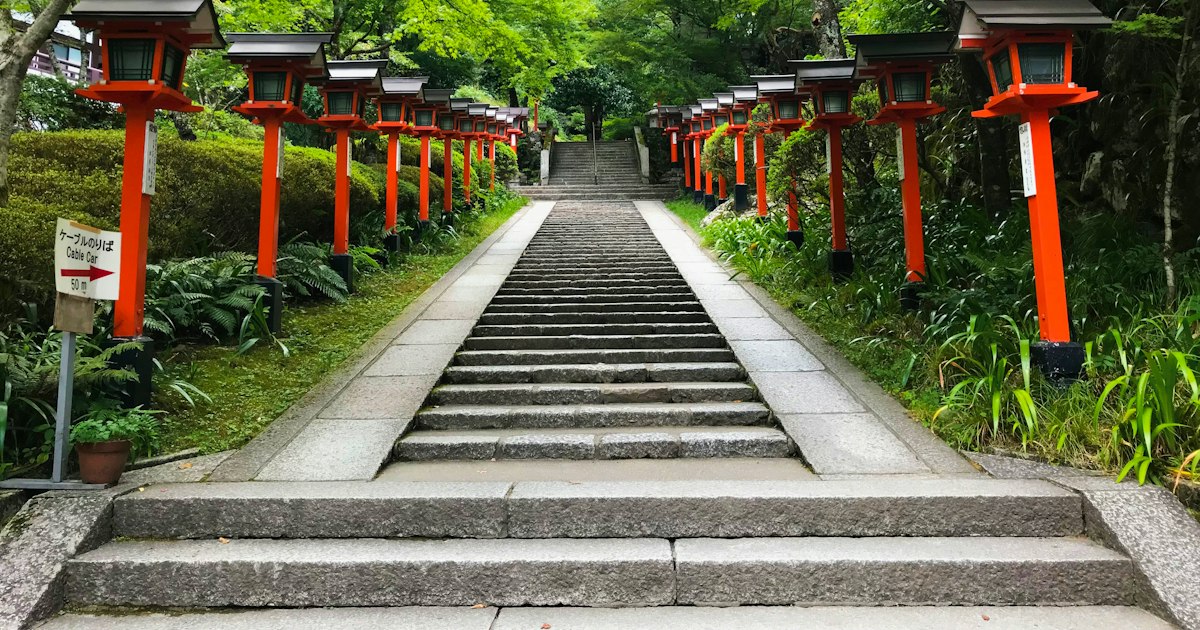
Photo by yoshie yokouchi on Unsplash
Less than an hour from central Kyoto, the twin villages of Kurama and Kibune sit on opposite sides of a forested mountain, connected by a hiking trail that most visitors to Kyoto never discover. On one side is Kurama-dera, a temple with a legend involving tengu and a cable car that climbs through cedar forest. On the other is Kibune, a single-street hamlet where restaurants build wooden dining platforms directly over a mountain river every summer. You can do both in a day, and if you time it right, you’ll eat lunch with your feet practically dangling over rushing water while the rest of Kyoto sweats in the heat below.
Getting There: The Eizan Railway
Kurama and Kibune are both stops on the Eizan Railway, a small two-car line that starts at Demachiyanagi Station in northeast Kyoto (reachable via the Keihan Main Line from Gion-Shijo or Sanjo). From Demachiyanagi, it’s about 30 minutes to the end of the line at Kurama Station, with Kibuneguchi Station one stop before it. One-way fare from Demachiyanagi to Kurama runs around ¥470; to Kibuneguchi it’s slightly less. If you’re doing the full Kurama-to-Kibune hike, buy a one-way ticket to Kurama and you can either walk back down to Kibuneguchi or, if you skip the hike, just ride both legs — the Eizan Railway’s one-day pass (around ¥1,200) pays for itself if you’re also detouring to Mt. Hiei’s cable car on the same line. From Kibuneguchi Station, it’s a 20-25 minute walk (or a seasonal shuttle bus) up to the Kibune restaurant street itself, so don’t assume the station drops you right at the river.
Kurama-dera: Temple, Cable Car, and Tengu Legend
Kurama-dera is the reason most people start on this side of the mountain. Founded in 770, it’s wrapped in local legend — this is supposedly where the young warrior Minamoto no Yoshitsune trained swordsmanship under a tengu (a mythical mountain spirit), and the temple still leans into that mystique with tengu statues scattered along the approach. From Kurama Station, it’s a short walk uphill to the Niomon gate, where you pay the mountain entry fee (aizan-ryo) of ¥500. From there you can either climb a long stone staircase on foot (20-30 minutes, steep in places) or ride the Kurama-yama Cable, a tiny funicular that covers the steepest stretch for around ¥200 one-way. The cable car only shortens part of the climb — you’ll still walk the rest to reach the main hall (Honden), which has sweeping views over the Kurama valley. The temple grounds are generally open from around 9:00 am to 4:30 pm; the cable car and sub-halls keep slightly shorter hours, so arrive before mid-afternoon if you want to ride up and still have time to hike over the mountain. If hillside temples with staircases are your thing, this pairs naturally with Kyoto’s more famous hillside temple, Kiyomizu-dera — though Kurama-dera draws a fraction of the crowds.
The Hike Over the Mountain
This is the part that makes Kurama-Kibune special: instead of taking the train back down, you can walk straight through Kurama-dera’s grounds and continue over the ridge to Kibune on the other side. From the main hall, the trail continues past Yuki Shrine and the Sojo-ga-tani Fudo-myoo hall before descending steeply through cedar forest to Kifune Shrine on the Kibune side. The full route from Kurama Station to Kibune takes roughly 1.5 to 2 hours of walking, and it’s a real hike, not a paved path — expect tree roots, uneven stone steps, and some mud if it’s rained recently. Wear proper walking shoes, not sandals; this is the single most common mistake visitors make here. There are no shops or vending machines on the trail itself, so carry water, especially in summer. The trail is well-marked and safe for most reasonably fit travelers, but it’s not stroller- or wheelchair-accessible, and there’s no shortcut once you’re committed partway across.
Kibune’s Riverside Dining Platforms (Kawadoko)
You emerge from the forest almost directly at Kifune Shrine, a quiet, atmospheric shrine dedicated to a water deity, with a photogenic row of vermilion lanterns lining its stone steps. Just below it runs the short main street of Kibune, where roughly a dozen restaurants and ryokan build kawadoko — wooden platforms suspended just above the Kibune River — from around May 1 through late September. Sitting on one, you eat with the river rushing directly beneath the floorboards, and the water keeps the air several degrees cooler than the city even in August, which is the whole point: Kyoto’s summer heat is brutal, and kawadoko season exists specifically to escape it.
- Budget: A few restaurants offer nagashi somen (noodles that slide down a bamboo flume for you to catch with chopsticks) for around ¥1,300-1,800, the cheapest way to experience the kawadoko novelty.
- Mid-range: A seasonal kaiseki-style lunch on the platforms typically runs ¥5,000-8,000 per person.
- Splurge: Dinner kaiseki at the nicer riverside inns can run ¥12,000-20,000+ per person, often requiring reservations weeks in advance for July and August weekends.
Reservations are essential, not optional — walk-ins are routinely turned away on summer weekends, and some restaurants require advance booking (often by phone, sometimes through a hotel concierge or Japanese-speaking contact). If you’re staying in Kyoto and arranging this from your hotel, it’s worth asking the front desk to call ahead; this is also where the convenience of a self check-in hotel cuts both ways — you’ll have flexibility with your schedule, but no staff on hand to make reservation calls for you.
Best Time to Go
Kawadoko season (roughly May through September) is the obvious draw for the riverside dining experience, with July and August being the most popular for the cooling effect, though also the most crowded and humid on the hike itself. June brings fresh green foliage and fewer crowds but also Kyoto’s rainy season, so check forecasts before committing to the mountain trail. Autumn (mid-November) turns the hillside red and gold and is arguably the most beautiful time to hike, but the kawadoko platforms are dismantled for the season by early October, so you’ll eat at regular indoor tables instead. Winter is quiet and atmospheric but cold, and some mountain sections can be icy. Whatever the season, start early — last trains back from Kurama on the Eizan Railway run at a reasonable hour but not late, and you don’t want to be racing the clock on a forest trail at dusk.
Common Mistakes to Avoid
- Assuming it’s a quick stroll. The Kurama-Kibune hike is a genuine 1.5-2 hour mountain trail, not a park path. Budget a half-day minimum for temple, hike, and lunch.
- Skipping kawadoko reservations. Especially on weekends from July-August, tables fill up days or weeks ahead.
- Arriving too late in the day. Kurama-dera’s cable car and inner halls close mid-afternoon, and you need daylight for the forest trail — start by late morning at the latest.
- Wrong footwear. Sandals and the stone-and-root trail do not mix; bring real walking shoes.
- Forgetting cash. The mountain entry fee, cable car, and many Kibune restaurants are cash-friendly but don’t all take cards — carry enough yen for the day.