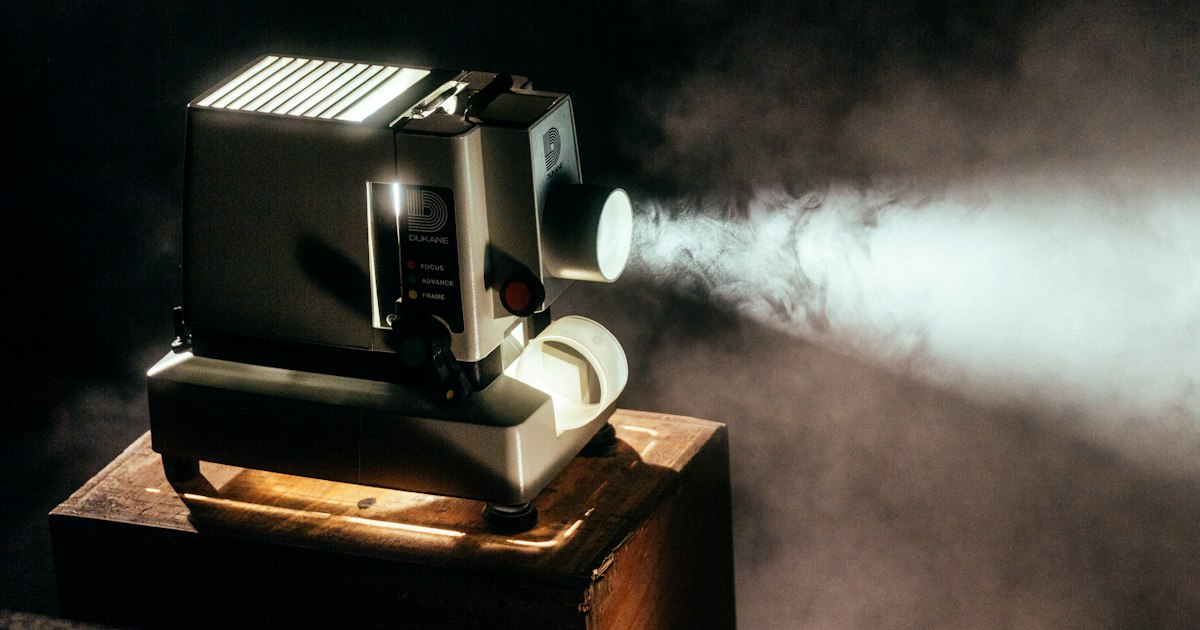
Photo by Jeremy Yap on Unsplash
Japan never fully let go of film. Decades after most of the world switched to digital, Tokyo’s secondhand shops are still stacked with 8mm and Super 8 projectors, carousel-style 35mm slide projectors, and the small handheld slide viewers that Japanese families used to flip through vacation photos before prints came back from the lab. If you want one — for a design project, a retro home theater, or just because a working Elmo projector is a genuinely beautiful object — two neighborhoods in Tokyo are worth building an afternoon around: Nakano and Jimbocho. Here’s what’s actually there, what things cost, and how not to get burned.
Why Nakano and Jimbocho, Not Akihabara
Akihabara gets the tourist traffic, but its camera stalls lean toward digital bodies and lenses, not analog projection equipment. Nakano and Jimbocho developed differently. Nakano built up around Nakano Broadway, a multi-floor shopping complex that became a magnet for collectors of every kind of secondhand object — cameras and optics among them. Jimbocho grew as Tokyo’s used-book district, and old-book dealers have always traded in adjacent ephemera: photo albums, lantern slides, stereoscopes, and the viewers and projectors that went with them. Neither neighborhood markets itself as a “camera town” the way Shinjuku does, which is exactly why prices stay more reasonable and why you can still find oddities that have been sitting in a glass case for years.
Nakano Broadway and Fujiya Camera: Tokyo’s Densest Row of Secondhand Optics
Nakano Broadway (a 4-minute walk north from Nakano Station’s north exit, reachable on the JR Chuo Line or Tokyo Metro Tozai Line) is best known for Mandarake’s manga and anime floors, but tucked among the retro-toy and record stalls are several secondhand camera dealers, with Fujiya Camera the anchor name in the area — it runs multiple branches around Nakano, not just inside Broadway, split by category (bodies, lenses, movie/projection equipment). This is where you’re most likely to find 8mm and Super 8 projectors from Elmo, Fujica, and Canon, along with slide projectors and viewers, usually with a handwritten condition tag and a price in the glass.
Most of these shops open around 11:00 and close by 19:30–20:00, with no fixed weekly closing day but occasional irregular holidays — check the shop’s shutter sign rather than assuming. Weekday mornings are noticeably quieter than weekend afternoons, when Nakano Broadway fills with both tourists and local collectors browsing the same cases.
If you’re the type who enjoys hunting down specialist secondhand gear shop by shop rather than buying online, this is the same instinct that works for tracking down a used drum kit at Tokyo’s percussion specialists — small shops, handwritten tags, and staff who’ll happily plug something in and demonstrate it if you ask.
Jimbocho: Where Book Hunters Stumble Onto Magic Lanterns and Slide Viewers
Jimbocho Station (Tokyo Metro Hanzomon, Toei Mita, and Toei Shinjuku lines, exit A7) puts you directly on Yasukuni-dori, the main strip of used bookshops. This isn’t a projector district in the way Nakano is — don’t go expecting rows of 8mm equipment — but antique and curio dealers mixed in among the bookstores regularly carry Meiji- and Taisho-era magic lanterns, glass lantern slides, stereoviewers, and mid-century handheld slide viewers as part of their general secondhand-goods trade. Think of it as a side door into analog photo gear rather than a main entrance: you’re browsing for books and cameras turn up anyway.
Many of the old-book specialists close on Sundays, and the smaller curio stalls tend to follow similar hours, roughly 10:00–18:30. If a working projector matters more to you than a decorative antique, treat Jimbocho as a bonus stop after Nakano rather than your primary destination — the inventory turns over slowly and depends entirely on what’s come in from a house clearance that month.
What You’ll Actually Pay: Budget, Mid-Range and Splurge
- Budget (¥500–¥3,000): Simple handheld slide viewers, often plastic, battery or light-box powered. Common at both Nakano and Jimbocho curio stalls. Also where you’ll find basic table-top slide projectors in rougher cosmetic condition.
- Mid-range (¥5,000–¥20,000): Working 8mm projectors from Elmo, Fujica, or Canon in decent cosmetic shape, and better-condition 35mm slide projectors from Japanese manufacturers. This is the sweet spot most buyers land in at Fujiya Camera.
- Splurge (¥20,000–¥60,000+): Super 8 projectors with built-in sound, well-preserved carousel-style projectors, or rare antique magic lanterns sold as collectible objects rather than functional gear. Pristine, boxed examples with original manuals push toward the top of this range.
These are street prices at physical shops, not online auction prices — Yahoo Auctions and Mercari often run cheaper but you lose the ability to test before buying, which matters enormously with projection equipment.
Testing Before You Buy — the Mistakes That Ruin a Purchase
The single biggest mistake foreign buyers make is skipping a live test. Ask the shop to plug the unit in and run it — nearly every shop in Nakano will do this without hesitation, and it’s the only reliable way to catch a dead bulb, a seized motor, or a perished rubber belt (the classic 8mm projector failure point: old belts stretch and slip, causing flicker or film jams even when the motor itself is fine).
Voltage is the second trap. Japan runs on 100V, 50/60Hz. A plug adapter alone won’t help — most old projectors have transformers or bulbs rated specifically for 100V, and running one on a step-up converter designed for phones or laptops can be unreliable or risk the bulb. If you’re taking the projector home to a 220–240V country, budget for a proper step-down voltage transformer, not just a plug shape adapter.
Third, check bulb and belt availability before you fall in love with a specific model. Some Elmo and Fujica projector bulbs are still produced or stocked by specialist dealers; others were discontinued years ago. Ask the shop directly — staff at Fujiya Camera and similar dealers usually know which models still have parts support and which are effectively “display only” once the current bulb dies.
Finally, confirm the slide format if you’re buying a viewer or slide projector rather than a movie projector. Standard 35mm slide mounts are universal, but older Japanese consumer formats and half-frame slides won’t sit right in a standard carousel. A shop will tell you if you ask; they won’t necessarily volunteer it.
Getting There and Timing Your Visit
Pair both neighborhoods in one day: start in Nakano in the late morning when shops have just opened and foot traffic is light, spend an hour or two working through Fujiya Camera’s branches and Nakano Broadway’s stalls, then take the Tozai Line toward Jimbocho in the afternoon for a slower browse through the book district’s curio shops. Avoid the first few days of January and mid-August (Obon), when many independently run shops close for the holidays with little notice. Outside of that, there’s no strong seasonal advantage — unlike flea markets, these are permanent shops with rotating stock, so the best time to go is simply whenever you’re in Tokyo and the shutters are up.