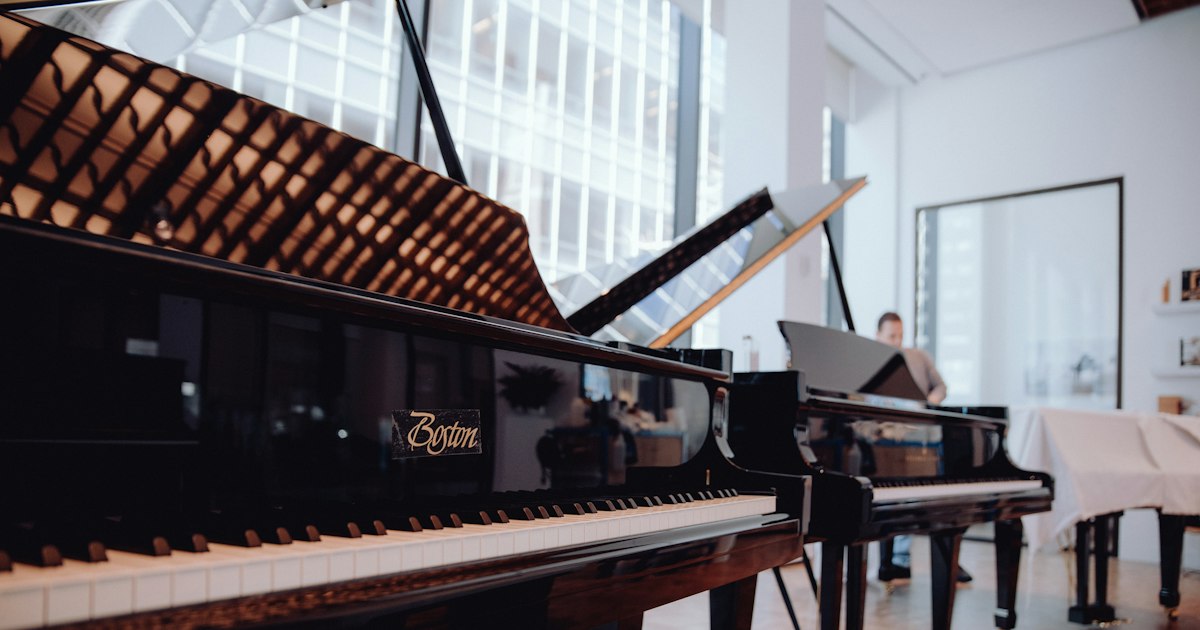
Photo by Bailey Alexander on Unsplash
Japan is one of the best places in the world to buy a used piano. Decades of near-universal piano ownership among middle-class families, a shrinking and aging population, and a cultural preference for owning new goods over keeping heirlooms mean that enormous numbers of lightly-played Yamaha and Kawai instruments come onto the secondhand market every year — often for a fraction of what an equivalent piano costs in North America, Europe, or Australia. The catch isn’t finding a good piano. It’s getting it out of the country in one piece, with the right paperwork, without cracking the soundboard on a container ship.
Why Japan’s Secondhand Piano Market Is So Good
Japanese households historically bought a piano when a child started lessons, kept it immaculately maintained (shoes off, humidity controlled, serviced annually), and then sold it when the child grew up, the family downsized into a smaller apartment, or a parent passed away. Because indoor climate control is consistent and pianos are rarely left in damp garages or direct sun, a 20-year-old Japanese-market Yamaha U1 or Kawai BL-series upright is frequently in better mechanical condition than a Western piano half its age. Dealers also take trade-ins directly from Yamaha and Kawai’s own retail networks, so provenance and service history are easier to verify than in private-sale markets elsewhere.
What You’ll Actually Pay
Prices vary by brand, age, cabinet condition, and whether a shop has reconditioned the action and strings.
- Budget (¥50,000–¥150,000): Older upright pianos (1970s–80s Yamaha or Kawai), cosmetic wear, original but serviceable action. Fine for a beginner instrument, but budget for a tuning on arrival.
- Mid-range (¥150,000–¥400,000): Well-maintained 1990s–2000s uprights, or entry-level secondhand grands (Yamaha GB1, Kawai GE/RX series baby grands) with reconditioned hammers and fresh regulation. This is the sweet spot for most buyers.
- Splurge (¥500,000–¥2,000,000+): Fully restored Yamaha C-series or Kawai RX-series grand pianos, or secondhand Steinway, Bechstein, and Bösendorfer instruments that were imported new into Japan decades ago and are now resold through specialist dealers. These come with full rebuild documentation and are genuinely competitive with new-instrument prices back home.
On top of the piano price, expect a separate line item for domestic transport within Japan to the port or crating warehouse — typically ¥20,000–¥60,000 for an upright and ¥50,000–¥120,000 for a grand, depending on distance and whether stairs or a crane are involved.
Where and When to Shop
Large music retail chains and the used-instrument divisions of Yamaha and Kawai operate showroom-warehouses in and around Tokyo, Yokohama, Nagoya, and Osaka, often with dozens of pianos under one roof, organized by price tier. Most keep shop hours around 10:00–19:00 and are closed irregularly on weekdays, so check before making a special trip. Staff will usually let you play every instrument on the floor, and many have at least one English-speaking staff member or will use a translation app without fuss.
Timing matters more than most buyers expect. Inventory peaks from late February through April, when households move or downsize before the Japanese fiscal/school year starts on April 1 and sell pianos they no longer have room for. September, after the summer moving season, is a secondary peak. If you’re flexible, plan your shopping trip around one of these windows rather than mid-summer, when stock is thinnest and prices firmest.
The Ivory Key Problem — Don’t Skip This
This is the single most common mistake foreign buyers make. Pianos made before roughly the late 1970s, and some higher-end models into the 1980s, may have real ivory key coverings rather than plastic. Under CITES (the international treaty regulating trade in endangered species products), exporting elephant ivory — even as a decorative strip on 88 keys of an otherwise ordinary piano — generally requires a CITES export permit from Japan and a matching import permit in your destination country, and in some countries ivory import is effectively banned outright regardless of age. Securing these permits can take weeks and isn’t guaranteed. Before you fall in love with a vintage instrument, ask the dealer directly whether the keytops are ivory or plastic; reputable shops know and will tell you. If you want zero paperwork risk, stick to pianos built from the 1980s onward, which almost universally use plastic key coverings.
Getting It Home: Crating and Freight
Once you’ve bought the piano, the dealer rarely ships internationally themselves — you’ll need a freight forwarder experienced with musical instruments. The process is similar in spirit to how surfers arrange oversized sports equipment through domestic carriers, as covered in our guide to shipping a surfboard through Japan’s takkyubin system, except a piano is too heavy and fragile for parcel courier networks and needs proper export crating and ocean freight instead.
A typical process: the dealer or a specialist crater builds a custom wooden crate around the piano (uprights are usually shipped upright and braced; grands are laid on their side with the legs and pedal lyre removed and padded separately), the crate goes by truck to a port (Yokohama, Kobe, and Nagoya handle most of this traffic), and then by sea freight to your destination port. Ocean freight for a single piano, as part of a less-than-container-load (LCL) shipment, commonly runs the equivalent of $400–$1,200 depending on destination and whether you consolidate with other cargo; a full container is far more cost-effective if you’re also shipping furniture or other large goods. Transit time by sea is typically 4–10 weeks depending on the route, plus customs clearance at the other end. Expect to pay import duty and/or sales tax on arrival in most countries — rules vary enough by destination that you should confirm them with your own customs authority or a local customs broker before committing, rather than assuming the piano will clear duty-free as a personal effect.
Paperwork is where many shipments stall. You’ll typically need a commercial invoice, a packing list, and sometimes an export declaration, and if any of this needs to be translated or notarized for customs on either end, a document translation service can save real time — the kind covered in our guide to same-day document translation services near Japanese immigration offices is a reasonable model for the speed you want, even though that piece is written for visa paperwork specifically.
After It Arrives
A piano that has spent two months in a shipping container has been through dramatic swings in humidity and temperature, even when well-packed. Let it sit in the room where it will live for at least one to two weeks before tuning — wood and felt need time to re-equilibrate, and tuning too early just means paying for a second tuning once it settles. Budget for a full tuning (often two visits a few weeks apart for a piano that’s traveled this far) and, for grand pianos especially, a post-move regulation check. If you’re buying your first secondhand instrument in Japan at all and want a sense of how locals navigate used-goods purchases and paperwork more generally, our piece on buying a secondhand moped or 50cc scooter in Japan covers a similar used-market mindset, even though the registration specifics obviously don’t apply to a piano.
Done carefully, buying secondhand in Japan can land you a genuinely excellent instrument — often one that would cost two or three times as much new — for a total landed cost, including shipping, that still beats local secondhand prices in many Western markets. The time spent confirming key material, dealer service history, and a trustworthy freight forwarder is what separates a great deal from an expensive mistake.