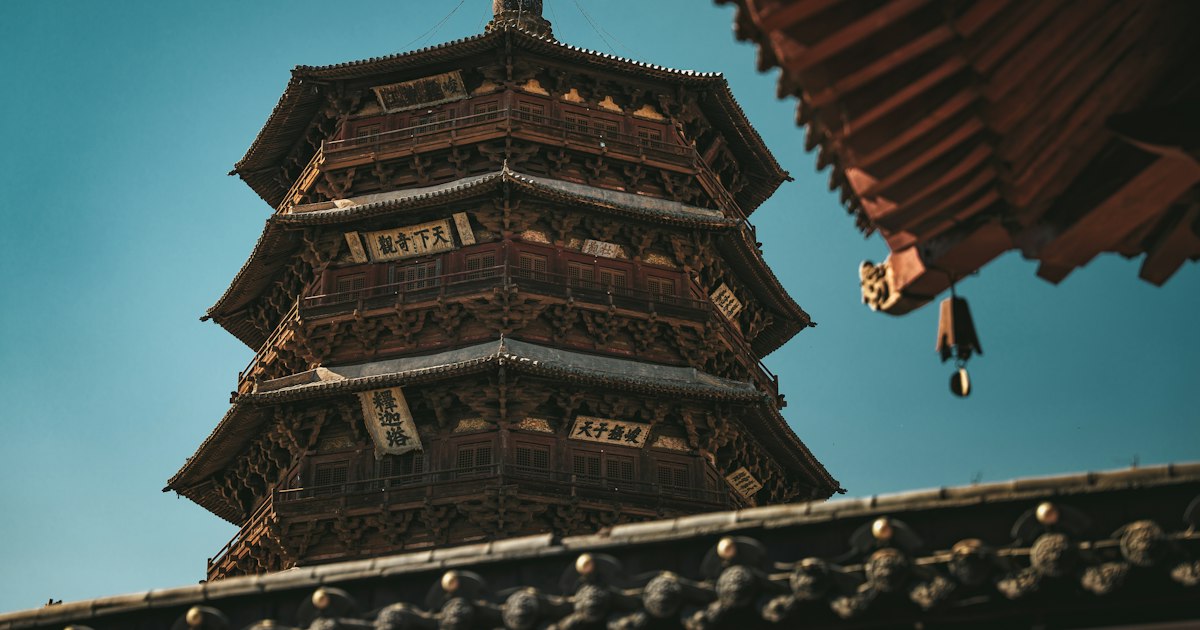
Most visitors to Nara head straight for the deer and Todai-ji’s giant Buddha, leaving Horyu-ji as a half-forgotten footnote. That’s a mistake. Horyu-ji’s five-story pagoda and main hall, built in the early 600s and rebuilt by around 711 after a fire, are the oldest wooden buildings on Earth — older than most of Europe’s great cathedrals, and still standing through earthquakes, wars, and centuries of Nara’s humid summers. The complex is a UNESCO World Heritage Site, quieter than central Nara, and genuinely worth the extra half-day it takes to reach.
Why Horyu-ji matters
Horyu-ji was founded around 607 by Prince Shotoku, a formative figure in early Japanese Buddhism and state-building. The original Sai-in (Western Precinct) compound — including the five-story pagoda, the Kondo (main hall), and the covered corridor connecting them — dates to the early 8th century rebuild, making these the world’s oldest extant wooden buildings, predating Kyoto’s oldest temples by centuries. The Kondo’s interior murals and the bronze Shaka Triad inside are themselves over 1,300 years old. Unlike many Japanese temples that were rebuilt after fires in the Edo period or later, what you’re looking at here is largely original Asuka- and Nara-period construction, repaired but not replaced.
Getting there from Nara, Kyoto, and Osaka
Horyu-ji sits about 10 km southwest of central Nara, in a quieter part of Ikaruga, so it takes some deliberate planning:
- From JR Nara Station: Take the JR Yamatoji Line to Horyuji Station (about 10 minutes, local train). From there it’s a 20-minute walk or a short bus ride (bus bound for Horyuji-mae) to the temple gate.
- From Kyoto Station: JR Nara Line to Nara, then transfer to the Yamatoji Line toward Horyuji Station — roughly 70-80 minutes total.
- From Osaka (Tennoji): JR Yamatoji Line direct to Horyuji Station, about 35-40 minutes, no transfer.
There’s no need for a rental car or scooter here — the train-plus-short-walk route is simple and well-signed in English. If you’re island-hopping or doing rural day trips elsewhere in Japan and considering a secondhand moped for flexibility, Horyu-ji doesn’t require it — the station is close enough to walk.
Hours, tickets, and what’s included
Horyu-ji is open daily, 8:00 am to 5:00 pm from February 22 to November 3, and 8:00 am to 4:30 pm from November 4 to February 21 (last entry 30 minutes before closing). Admission is 1,500 yen for adults, which is higher than most Nara temples because the single ticket covers three separate areas: the Sai-in precinct with the pagoda and Kondo, the Daihozoden Gallery (treasure hall, housing statues and artifacts), and the Toin precinct centered on the octagonal Yumedono (Hall of Dreams). Budget at least 90 minutes to see all three properly, longer if you want to read the English information panels. There’s no advance booking required — just buy tickets at the entrance.
Best time to visit and avoiding crowds
Horyu-ji draws far fewer visitors than Todai-ji or central Nara Park, but tour buses do stop by, especially late morning. Arriving right at 8:00 am opening gives you close to an hour of near-solitude around the pagoda before groups arrive. Weekday mornings are consistently quietest. Seasonally, early November and early April bring pleasant temperatures and some autumn foliage or cherry blossoms around the temple grounds, though Horyu-ji isn’t a dedicated flower-viewing spot the way Nara Park or Yoshino is. Summer visits are workable but hot and humid with little shade between buildings; bring water, as the temple itself sells only limited drinks near the entrance.
What to actually look at
Don’t just photograph the pagoda from outside and leave. Inside the Kondo, look up at the cloud-pattern bracket supports under the eaves — this bracketing style is a textbook example of early Asian temple engineering, and docent panels explain how it’s distinct from later Japanese construction. The entasis (slight swelling) of the wooden pillars, similar in principle to Greek Doric columns, is often pointed out as a sign of continental influence via Korea and China during the Asuka period. In the Daihozoden Gallery, the Kudara Kannon statue — a tall, slender wooden Bodhisattva figure — is one of the most important pieces, alongside miniature shrines and ancient textiles. The Toin’s Yumedono is smaller and less crowded than the Sai-in, worth the extra walk across the complex.
Budget, mid-range, and splurge options nearby
- Budget: The temple’s own precinct has a few simple rest areas but limited food. Pack a convenience-store lunch from the station area in Horyuji or Nara and eat it in the temple’s outer garden area (not inside the halls).
- Mid-range: Small local soba and udon shops near Horyuji Station serve set lunches for roughly 900-1,300 yen. If you’re continuing to central Nara afterward, it’s also worth trying regional specialties there rather than chain restaurants.
- Splurge: Combine Horyu-ji with a stay at a traditional ryokan in central Nara or nearby Kyoto rather than day-tripping from Osaka — it lets you see Horyu-ji at opening time without an early train scramble, and gives you a relaxed onsen evening afterward.
Common mistakes to avoid
The biggest mistake is treating Horyu-ji as a quick 20-minute stop tacked onto a Nara Park day — the travel time alone makes that rushed, and you’ll miss the Toin precinct entirely. Second, don’t assume the single ticket is optional-by-section; it’s one price covering all three areas, so skipping the Daihozoden Gallery wastes part of what you paid for. Third, photography is restricted inside the Kondo and Daihozoden Gallery to protect the murals and artifacts — exterior shots of the pagoda and grounds are fine, but leave cameras down indoors. If you’re serious about architectural or low-light photography on this trip and plan to use a tripod at other temples or stations, check the rules first, since permit requirements vary by site.
Horyu-ji rewards visitors who treat it as a destination in its own right rather than an afterthought. Pair an early-morning visit with lunch in Nara or a return into Kyoto, and you’ll have seen wooden architecture older than almost anything else standing on the planet.