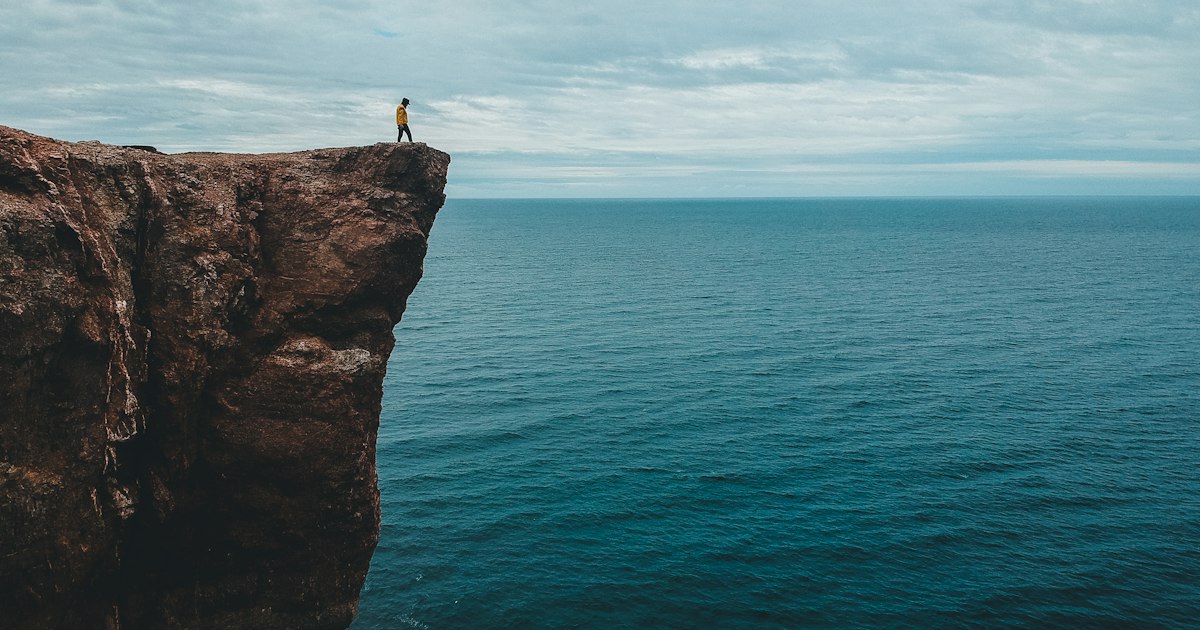
Photo by Erik Mclean on Unsplash
On a citrus-covered hillside above Sagami Bay, the photographer and architect Hiroshi Sugimoto built something that is part museum, part Shinto shrine, part observatory, and part open-air sculpture garden. Enoura Observatory (江之浦測候所, Enoura Sokkosho) rewards visitors who are willing to plan ahead — it’s reservation-only, it has no walk-in tickets, and it sits far enough off the beaten path that most Tokyo day-trippers have never heard of it. For anyone interested in contemporary Japanese art, architecture, or just a dramatically quiet view of the Pacific, it’s one of the best-designed small museums in the country.
What Is Enoura Observatory
Enoura Observatory is run by the Odawara Art Foundation, which Sugimoto established using decades of his own art-sale proceeds, art collection, and a personal fascination with how ancient people tracked the sun. The site opened in October 2017 on a slope in Odawara, Kanagawa Prefecture, overlooking Sagami Bay. Rather than a conventional building, it’s a sequence of stone stages, a 100-meter underground gallery, a glass-floored viewing platform, a reconstructed Noh stage, and a tea ceremony room, threaded through a working mikan (mandarin orange) orchard. Several structures incorporate genuine salvaged materials — old torii gate stones, foundation stones from demolished historic buildings, and stone from a Kyoto railway bridge — so the “new” architecture is built directly on top of recovered fragments of old Japan.
The key design idea is solar alignment: the long underground tunnel gallery and the stone stage above it are oriented so that sunlight enters them precisely at sunrise on the winter and summer solstices. You don’t need to visit on a solstice to appreciate the architecture, but it explains why the whole site feels less like a sculpture park and more like a functioning astronomical instrument.
Getting There
From Tokyo, take the Tokaido Shinkansen (Kodama) or a JR Tokaido Line train to Odawara Station — about 35 minutes by Shinkansen or roughly 75–90 minutes on the regular JR/Odakyu lines. At Odawara, transfer to a local JR Tokaido Line train bound for Atami and ride one stop to Nebukawa Station (about 7–8 minutes). Nebukawa is a tiny seaside station with almost nothing around it except the sea and the hills.
From Nebukawa, the Observatory runs a free shuttle bus that is timed to your reserved entry slot — you cannot just show up and catch a random bus, and you book the shuttle seat along with your ticket. The ride up the hill takes about 7–10 minutes. Walking up is possible (roughly 30–40 minutes on a steep road) but isn’t recommended with no shoulder on parts of the route; most visitors take the shuttle both ways. There’s no taxi rank at Nebukawa, so don’t plan on hailing a cab on a whim.
Tickets, Hours, and Reservations
Enoura Observatory operates entirely on advance, timed reservations through its official website — there is no ticket booth and no same-day admission. Entry is split into timed sessions per day (historically a morning and an early-afternoon slot), each capped at a limited number of visitors, and you select your shuttle time when you book. Standard adult admission runs around ¥3,300, with reduced pricing for students; exact current pricing, the booking calendar, and the month tickets go on sale are all listed on the Odawara Art Foundation’s site, and you should check it directly before planning your trip since the rates and schedule are periodically revised.
The site is closed on set weekdays (Mondays and Tuesdays, historically, plus occasional maintenance closures), and tickets for popular dates — especially weekends and the weeks around the solstices — tend to sell out within days of release. Book as soon as a date opens rather than waiting. Plan on 1.5–2 hours on-site; there’s no restaurant, just a small tea room with limited service, so eat before you go or bring water.
What You’ll See
The visit moves through a deliberate sequence rather than a free-roaming floor plan. Highlights include the Stone Stage, a cantilevered platform of Indian stone jutting toward the bay; the 100-meter tunnel gallery built into the hillside, aligned to the winter solstice sunrise; an optical glass stage that appears to float above the citrus trees; a reconstructed Noh stage used for occasional performances; and a teahouse incorporating recycled materials from a historic Kyoto structure. Throughout, you’re walking among actual mikan trees — this is a working orchard, not landscaping dressed up to look like one.
If you appreciate the same unhurried, materials-focused approach to Japanese design elsewhere in Tokyo, the Nihon Mingeikan is a useful comparison — a much smaller, quieter museum built around the same reverence for honest materials and craftsmanship, just in a very different, folk-art context.
Best Time to Visit
Enoura Observatory is open-air and entirely exposed to the weather, so clear days matter more here than at most museums. Winter mornings often deliver the sharpest views across Sagami Bay, and on a very clear day you can see Mount Fuji from parts of the site. Spring brings citrus blossoms through the orchard; midsummer is hot with little shade, so bring a hat and water. The solstice dates (around June 21 and December 21–22) are the architectural highlight, when sunlight tracks directly down the tunnel gallery, but those special early sessions are rare, booked out almost instantly, and not the same as the regular visiting slots — don’t assume you can casually time a normal ticket to catch it.
Common Mistakes to Avoid
- Assuming you can buy a ticket at the gate. There is no walk-in admission. Arriving without a reservation means you won’t get in, full stop.
- Wearing the wrong shoes. The paths involve stone stairs, uneven surfaces, and exposed stage edges. Flat, closed-toe walking shoes are worth the trade-off over anything stylish.
- Bringing small children expecting a casual stroll. The Foundation does not admit very young children (historically elementary-school age and under), partly because of cliffside drops and unguarded stone edges — check current age policy before booking if traveling with kids.
- Missing the shuttle window. Because the bus from Nebukawa Station is tied to your entry time, arriving late to the station can mean missing your slot entirely with no flexible rebooking on the spot.
- Not checking the photography rules in advance. Camera and tripod policies at architecturally sensitive sites like this one change and are often stricter than visitors expect; if serious photography is part of your trip, it’s worth reading up on how permits and tripod use generally work at Japanese cultural sites, as in our guide to renting a tripod and getting a camera permit before you go, then confirming Enoura’s specific rules on its official site.
Budget Notes and Pairing It With a Bigger Trip
This is an inexpensive stop by Japan museum standards — admission in the low thousands of yen, free shuttle, no required add-ons — but the time cost is real: between Shinkansen or train transfers, the Nebukawa shuttle, and the 1.5–2 hour visit itself, budget most of a half-day. It pairs naturally with a longer Odawara–Hakone itinerary, since Odawara Station is the gateway to the Hakone hot-spring region. If a soak is on the agenda afterward, it’s worth checking which nearby towns are comfortable for visitors with tattoos before you go, covered in our guide to onsen towns where tattooed travelers can soak without a cover-up sticker. For a splurge version of the day, combine the Observatory with a kaiseki lunch or a stay at a Hakone ryokan; for a strict budget version, it’s entirely feasible as a self-contained day trip from Tokyo using ordinary JR trains instead of the Shinkansen.