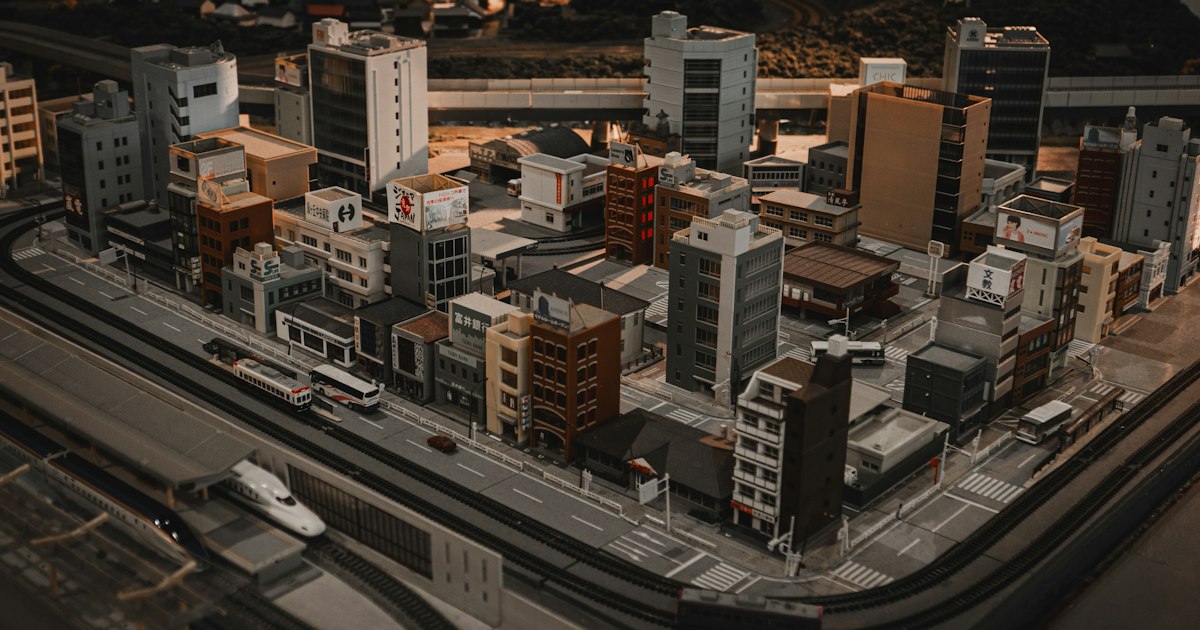
Walk into almost any hobby shop in Japan and you’ll find a wall of tiny, impossibly detailed trains — not toys for children, but a serious adult collecting culture built around N gauge, the scale that fits Japan’s small apartments and even smaller train tables. If you’ve ever been curious about picking up a Shinkansen model or a regional commuter set as a souvenir, here’s what the hobby actually involves and exactly where to go shopping for it.
What N Gauge Is, and Why Japan Runs on It
“N gauge” refers to the 9mm track gauge, but in Japan the trains themselves are built to 1:150 scale — slightly larger than the 1:160 scale used for N gauge in the US and Europe. This is a common trap for overseas hobbyists: the track is physically compatible, but a Japanese 1:150 train parked next to a European 1:160 train on the same layout will look visibly oversized. If you’re building a Japan-themed layout, stick to Japanese-brand rolling stock throughout.
N gauge dominates in Japan for a practical reason: Japanese apartments are small, and a workable N-gauge oval can fit on a dining table, while the equivalent HO-scale layout cannot. It’s also the scale used for most of the realistic station dioramas and detailed Shinkansen sets you’ll see in shop windows, which is why it’s become the default entry point for new hobbyists and the scale with by far the widest selection of Japanese trains.
The Big Names: Kato, Tomix, and Micro Ace
Three manufacturers make almost everything on Japanese shop shelves. Kato (カトー) is generally considered the most reliable runner, with smooth motors and a huge back catalog of Shinkansen and JR commuter lines. Tomix (トミックス, made by Tomytec) competes closely on detail and has its own loyal following, especially for private railway and regional liveries. Micro Ace (マイクロエース) fills in rarer or more obscure rolling stock — older diesel locomotives, discontinued liveries, oddities the bigger two skip — though quality control is a little less consistent, which collectors generally accept as the tradeoff. A fourth name worth knowing is GreenMax, which mostly sells unpainted plastic kits for people who want to paint and assemble their own commuter trains rather than buy them ready-made.
Where to Buy in Tokyo: Akihabara
Akihabara is still the center of gravity for the hobby in Tokyo. Yodobashi Camera’s flagship Akiba store, just outside the Electric Town exit of Akihabara Station, stocks current Kato and Tomix releases on its hobby floor alongside track, scenery materials, and tools — a good one-stop shop if you just want a starter set and don’t need anything rare. For a shop that specializes specifically in railway models, look for Popondetta (ポポンデッタ), a chain built entirely around N-gauge trains, accessories, and secondhand stock, with a branch in the Akihabara area; staff are used to foreign customers browsing, even if English is limited.
For something more old-school, Tenshodo in Ginza is one of the oldest model shops in Japan, trading since the late 1800s. It’s best known for high-end brass locomotives in larger scales, but its shelves also carry N-gauge stock and it’s worth a visit for the atmosphere alone if you’re already in the area — it sits a short walk from Ginza Station. If you’re hunting for discontinued or limited-run items, secondhand hobby shops around Akihabara turn over stock constantly, and prices on out-of-production models can run well above the original retail price, so it pays to know what something cost new before buying used.
Where to Buy in Osaka: Nipponbashi
Osaka’s equivalent district is Nipponbashi, sometimes called Den Den Town, a few minutes’ walk from Namba Station. It’s smaller than Akihabara but has its own Popondetta branch plus several independent hobby and electronics shops that carry Kato and Tomix lines. If your trip doesn’t include Tokyo, Nipponbashi is a perfectly good substitute and tends to be less crowded, making it easier to actually get a staff member’s attention to ask about availability.
What It Actually Costs
Budget: A basic Kato or Tomix starter set — one or two powered train cars, an oval of track, and a simple power pack — typically runs from around ¥8,000 to ¥15,000. This is the easiest entry point and includes everything needed to run a train on a tabletop immediately.
Mid-range: Buying rolling stock individually to build out a specific train (say, a 4 or 8-car commuter set) usually costs ¥3,000–¥7,000 per car for standard current-production models, meaning a realistic multi-car set can land anywhere from ¥15,000 to ¥35,000 depending on length and detail level.
Splurge: Limited-production liveries, anniversary editions, and brass models (especially at a shop like Tenshodo) can run from ¥20,000 well into six figures for serious collector pieces. Character-liveried trains — JR West’s Hello Kitty Shinkansen being the most famous real-world example, a theme that pairs naturally with Japan’s wider character-goods culture (see our Sanrio shopping guide if that side of things interests you) — are produced in limited runs and often resell above retail once discontinued.
Timing, and Mistakes Worth Avoiding
There’s no strict seasonal “best time” to shop, but two things affect availability. First, new tooling and announcements cluster around JAM, the international model railway convention held every August at Tokyo Big Sight, with new releases shipping through the following months — good timing if you want the newest liveries. Second, many Kato and Tomix items are sold by pre-order (予約) months before release; a shop’s display sample isn’t always purchasable stock, so ask before assuming something is available to take home that day.
Weekends and national holidays bring noticeably heavier crowds to Akihabara’s hobby floors, which makes it harder to get staff attention or browse comfortably — if your schedule is flexible, checking our 2026 Japanese public holidays guide before picking a shopping day is worth the five minutes. The other common mistake is purely electrical: Japanese power packs are built for 100V input, which matters if you plan to actually run the set at home rather than just display it — our guide to Japanese outlets and voltage covers what kind of converter you’d need. Finally, pack models carefully: pantographs, railings, and roof detail parts snap easily, so keep items in their original foam packaging and put fragile boxes in carry-on luggage rather than checked bags.
A Quieter Kind of Collecting
N-gauge modeling sits in the same category as some of Japan’s other patient, detail-obsessed hobbies — if the appeal is the quiet, decades-long collecting culture rather than the trains specifically, it’s worth also reading about Omiya Bonsai Village, another Japanese hobby built on small scale and long-term devotion. Whether you leave Japan with a single starter set or a suitcase full of rolling stock, the shops in Akihabara and Nipponbashi are set up to welcome a browsing tourist just as readily as a lifelong modeler.