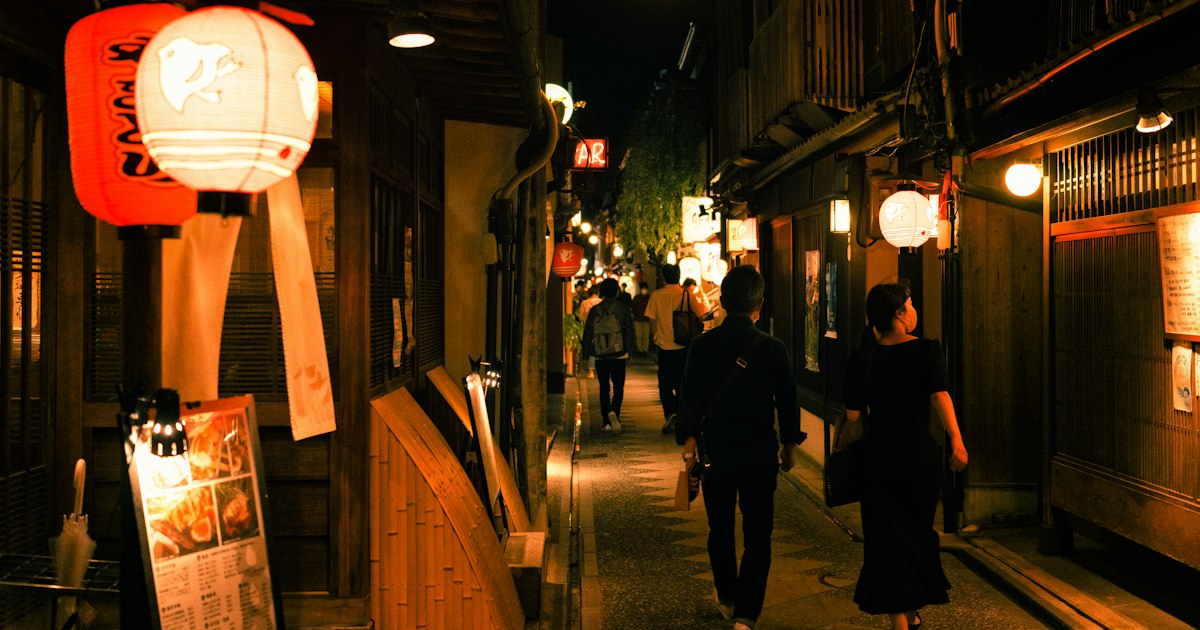
Photo by ayumi kubo on Unsplash
Squeezed between the Kamo River and Kiyamachi Street, Pontocho (先斗町) is a single stone-paved alley barely wide enough for two people to pass side by side, yet it packs in more than a hundred restaurants and bars behind wooden facades and paper lanterns. It’s one of the most photographed streets in Kyoto, and also one of the most misunderstood — plenty of visitors walk its full length and leave without eating anything because the menus aren’t posted and the doors look intimidating. Here’s how to actually use the alley, not just photograph it.
Where Pontocho Is and How to Get There
Pontocho runs parallel to the Kamo River on its west bank, connecting Shijo-dori to Sanjo-dori, right across the water from the Gion district. The easiest approach is on foot from Kyoto’s Keihan Main Line — get off at Gion-Shijo Station and it’s a 3-minute walk across Shijo Bridge. From Kyoto Station, take the city bus (around 230 yen) toward Gion or hop on the Karasuma subway line to Shijo Station, then walk roughly 10 minutes east to the river. Taxis from Kyoto Station run about 1,200–1,500 yen depending on traffic. The alley itself has no vehicle access, so once you’re there, everything is on foot.
Best Time to Visit
Pontocho is at its most atmospheric just after sunset, when the lanterns come on but there’s still enough light to see the alley’s wooden architecture — roughly 6:00–7:00pm depending on the season. Most restaurants open for dinner between 5:00pm and 6:00pm and stay busy until around 11:00pm; a handful of izakaya-style spots stay open past midnight. Lunch service exists but is far sparser, with many places only doing dinner. If you want photos without a wall of people, go on a weekday just before 6pm — Friday and Saturday nights get genuinely crowded, with the alley reduced to a slow shuffle. In summer (June–September), ask about kawadoko or noryoyuka seating — raised platforms built over the river where select restaurants serve dinner with a breeze off the water; these are seasonal and usually need reservations.
How to Choose a Restaurant Without Overpaying
The single biggest mistake visitors make here is walking into a place with no visible pricing and ending up with a bill far larger than expected. Many traditional establishments, especially ones with a noren curtain but no menu board, are geared toward regulars and can run 10,000–20,000 yen per person with drinks. That’s not a scam — it’s simply a different kind of restaurant — but it catches people off guard. A few rules of thumb:
- Budget (1,500–3,000 yen): Look for yakitori counters and casual izakaya with laminated or photo menus posted outside, often on the Kiyamachi-dori side streets branching off the alley. These are pay-as-you-order with clear prices.
- Mid-range (4,000–8,000 yen): Many kaiseki-lite or kyo-ryori restaurants offer a fixed-course dinner at this price, usually bookable same-day or with a few hours’ notice by phone or through your hotel.
- Splurge (15,000 yen+): Formal kaiseki or ryotei-style dining, often requiring an introduction or at minimum an advance reservation, sometimes only taken in Japanese. Hotel concierges can usually arrange this for you.
If a shopfront has no posted price and no English, that’s usually a signal it’s an introduction-only or regulars’ spot — not necessarily unfriendly to tourists, but worth a quick “do you have an English menu?” at the door before sitting down, so you’re not guessing at the bill afterward. For those with dietary restrictions, it’s worth preparing in advance — Pontocho’s older, smaller kitchens aren’t always set up for substitutions, so a card explaining allergies or dietary needs helps avoid misunderstandings; see this guide to food allergy cards and menu translation in Japan for templates you can show staff.
What to Expect Once You’re Seated
Many Pontocho restaurants are tiny — some seat fewer than 15 people — so expect close quarters and, in traditional spots, tatami seating where shoes come off at the entrance. A per-person seating charge (otsumami or otoshi, typically 300–800 yen) is common at izakaya-style places and isn’t optional; it’s simply built into the bill, similar to a cover charge. Cash is still king in some of the older establishments, though card and IC card payment has spread considerably since the pandemic — it’s worth carrying at least 10,000 yen in cash as backup for smaller spots.
Common Mistakes to Avoid
- Treating it as a walk-through, not a destination. The alley is narrow and many restaurants’ entrances are easy to miss if you’re focused on photographing the lanterns overhead — slow down and actually read the small signs.
- Showing up at 7pm on a Saturday without a reservation. Popular spots fill fast on weekends; call ahead or ask your hotel to book same-day in the afternoon.
- Assuming geisha sightings are guaranteed. Pontocho is one of Kyoto’s five remaining geisha districts and you may spot a geiko or maiko moving between appointments in the early evening, but it’s not staged for tourists — don’t block the alley or chase them for photos, which is both rude and, in parts of neighboring Gion, now fined by the city.
- Skipping the side streets. Kiyamachi-dori, running alongside the canal just one street over, has a more relaxed, bar-heavy scene with easier-to-read menus if Pontocho itself feels too formal.
Pairing It With the Rest of Kyoto
Pontocho sits within easy walking distance of Gion, the Kamo riverbank (a popular spot to sit with a convenience-store drink on summer evenings), and Nishiki Market for daytime food browsing. If you want to try a lighter, nonalcoholic alternative to the sake and shochu on offer in the alley’s bars, keep an eye out for amazake, Japan’s sweet fermented rice drink, which some traditional sweets shops near the river sell seasonally — see this guide to amazake for where it turns up. And if Pontocho’s prices skew too far upmarket for your trip budget, it’s worth knowing that Japan’s public holiday calendar can swing both crowd levels and prices here — check which 2026 holiday dates to plan around before you book, since Golden Week and New Year push both wait times and seating charges up across Kyoto’s dining districts.