Photo by Sabrina Ellul on Unsplash
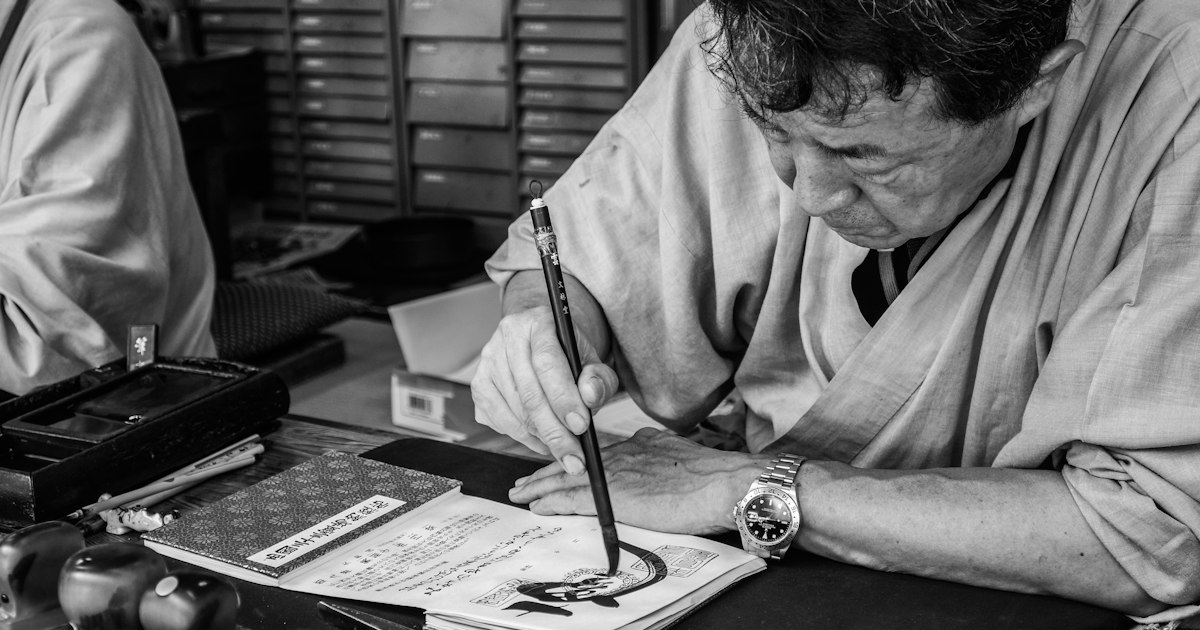
Japanese calligraphy, or shodo (書道), is one of the few souvenirs you can actually practice on the flight home. A proper starter kit is light, inexpensive at the basic level, and genuinely useful — but the shelves at a Japanese stationery store can be overwhelming if you don’t know what you’re looking at. This guide breaks down exactly what goes into a shodo kit, where to buy each piece at different budgets, and the mistakes that trip up most first-time buyers.
What’s Actually in a Starter Kit
A traditional set has six components, and understanding them makes shopping much faster:
- Fude (筆) — the brush. Beginner brushes are usually goat hair or a goat/horse blend; stiffer weasel-hair brushes come later.
- Sumi (墨) — ink, either a solid stick you grind yourself or ready-made liquid ink (bokuju) in a bottle.
- Suzuri (硯) — the ink stone you grind the stick against with a few drops of water.
- Hanshi (半紙) — thin, absorbent practice paper, sold in packs of 100.
- Shitajiki (下敷き) — a black felt underlay that stops ink bleeding through to the table.
- Bunchin (文鎮) — a small metal paperweight to hold the paper flat.
Boxed beginner sets bundle all six, which is the easiest way to start if you don’t want to piece things together yourself.
Budget Option: 100-Yen Shops and Basic Stationery Stores
Daiso and Can Do stock simple shodo sets for roughly ¥300–¥500 for a brush alone, or around ¥1,000–¥1,500 for a boxed starter set with a small suzuri, a short ink stick, and a handful of hanshi. The ink stone is usually resin rather than real stone, and the brush sheds a little at first, but it’s genuinely fine for trying the hobby or for kids. Hanshi paper sold separately runs about ¥200–¥400 for a 100-sheet pack — buy a couple of extra packs, since beginners burn through practice paper fast.
Mid-tier brands like Pentel and Kuretake sell slightly better entry sets (around ¥1,500–¥3,000) at any large stationery section, including bottled liquid ink instead of a stick — a real convenience if you don’t want to deal with grinding.
Mid-Range: Tokyo’s Stationery Flagships
For a noticeably better brush and a real stone suzuri without going into specialist territory, Tokyo has a few reliable stops:
- Sekaido (世界堂) in Shinjuku — a multi-floor art and stationery store with a dedicated calligraphy section; brushes from about ¥800 up to ¥5,000+, solid ink sticks from around ¥500, and natural-stone suzuri starting near ¥2,000. Open daily, roughly 10:00–20:00.
- Itoya (伊東屋) in Ginza — the flagship “G. Itoya” building has a floor devoted to washi paper and traditional writing tools, good for nicer hanshi and gift-worthy sets. Open daily, roughly 10:00–20:00.
- Kyukyodo (鳩居堂) on Ginza’s main street — in business since 1663, selling incense, washi, and calligraphy tools; their sumi ink sticks and brushes run from mid-range to quite fine, and the shop itself is worth a look even if you buy nothing. Roughly 10:00–19:00, closed January 1st.
All three are an easy stop if you’re already riding the subway around central Tokyo — see our breakdown of Tokyo Metro vs. Toei Subway transfers if the fare gates are confusing you, since Ginza and Shinjuku sit on different operators’ lines.
Splurge: Go to the Source
If you want the real thing rather than a generalist stationery store’s selection, two towns are worth building a side trip around:
Nara produces the overwhelming majority of Japan’s solid sumi ink sticks, a craft going back over a thousand years. Workshops like Kobaien (古梅園), founded in 1577, sell handmade sticks aged for years, with pricing anywhere from around ¥2,000 for a modest stick to tens of thousands of yen for aged, fine-soot pieces aimed at serious practitioners. Several Nara workshops also run short ink-making demonstrations if you call ahead.
Kumano-cho, a small town outside Hiroshima, is Japan’s center for handmade brushes — not just for calligraphy but for cosmetics too. Brush shops here sell fude from a few thousand yen up to tens of thousands for a master craftsperson’s work, and the town has a small museum dedicated to the trade.
Less well known: the ink stones themselves have a regional specialty too. Akama suzuri, a designated traditional craft, comes from stone quarried near Ube in Yamaguchi Prefecture, a short hop from Shimonoseki. If pufferfish season is already pulling you that way, see our guide to Shimonoseki and the Kanmon Straits — specialty stationery and craft shops in the area carry locally made suzuri that most Tokyo stores won’t stock.
Best Time to Buy
Shodo sets are sold year-round, but late December is actually a meaningful season for this craft: kakizome, the New Year’s tradition of writing the year’s first calligraphy, means stationery stores stock extra hanshi and gift-boxed sets through December. It’s a good window for selection, though note many traditional shops — including Kyukyodo — close for a few days around January 1st. Outside that, there’s no real off-season; buy whenever you’re passing through.
Common Mistakes First-Time Buyers Make
- Skipping the shitajiki felt mat. Without it, ink soaks straight through hanshi onto whatever’s underneath — hotel desks included.
- Buying only a liquid bokuju bottle and no stick. It’s more convenient, but part of the meditative point of shodo is grinding your own ink; if that’s what draws you to the hobby, get a real suzuri and stick.
- Choosing too stiff a brush. Weasel-hair and other stiff-bristle brushes are for advanced strokes. Beginners should stick to soft goat-hair or goat/horse blends.
- Packing liquid ink in carry-on luggage. Bottled bokuju counts as a liquid under cabin restrictions — pack it in checked baggage, or buy solid ink sticks instead, which travel with no restrictions at all.
- Underestimating paper needs. One pack of 100 hanshi sheets disappears fast once you start practicing; buy at least two or three packs if you’re serious about continuing at home.
If you’re also building a goshuincho shrine stamp book during your trip, it’s worth knowing the two hobbies share some of the same brushwork sensibility — our guide to starting a goshuincho covers how temple and shrine calligraphy actually gets written in your book. And if traditional Japanese tools are turning into a theme of your trip, our rundown of Japanese scissors (hasami) worth buying covers another craft tool category with the same budget-to-splurge range as calligraphy supplies.