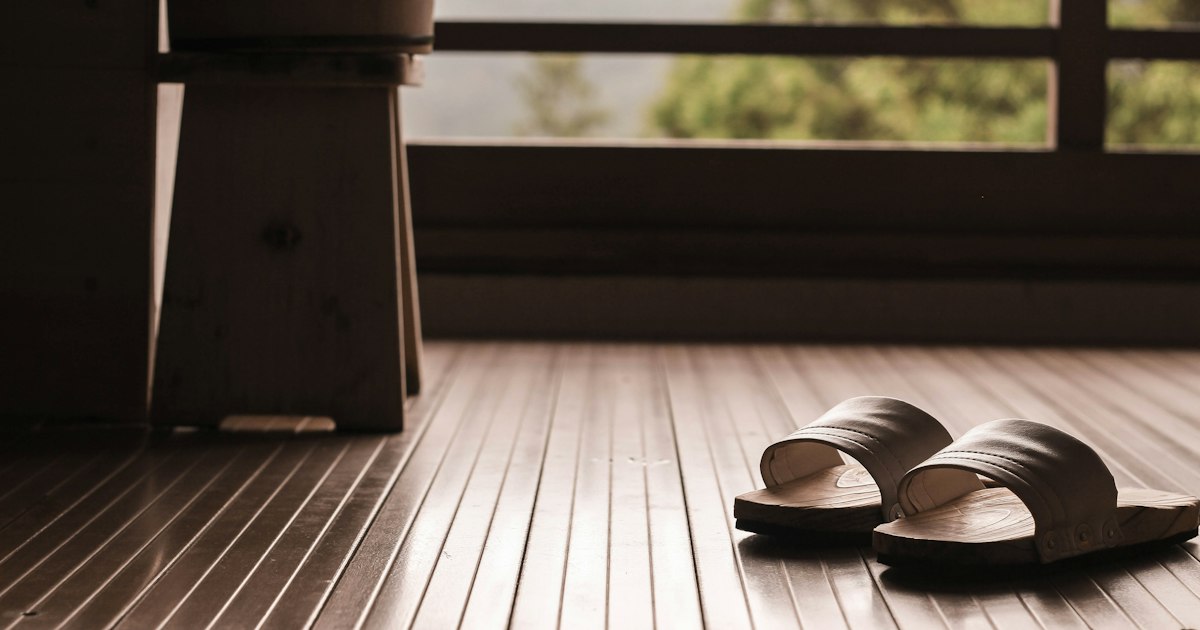
Photo by Roberto Martins on Unsplash
Every souvenir shop in Japan sells a pair of geta or zori, but most of what’s on those racks is vinyl, made for a photo rather than a walk. If you actually want footwear you’ll wear again — with a yukata at a summer festival, with a kimono at a shrine, or just as a conversation piece back home — it helps to know the difference between a tourist trinket and a pair built by someone who makes them for a living, and what a fair price looks like at each level.
Geta vs. zori: what you’re actually choosing between
Geta are the ones with a raised wooden platform and one or two transverse teeth (called ha) underneath, traditionally worn with bare feet or thin tabi socks. The clatter they make on pavement is the sound you associate with festival nights. Zori are flatter, with a woven or synthetic sole shaped more like a modern sandal — they’re the formal pairing for kimono and are what most people wear with a yukata rental today, since they’re quieter and easier to walk in for a full day.
Both use the same basic strap system: a single thong (hanao) that runs between the big toe and second toe and loops to either side of the foot. That strap is also the main thing that makes or breaks comfort, and it’s usually replaceable — a good shop will re-string a worn-out hanao rather than make you buy a whole new pair.
Where to actually buy them
Souvenir strips in Asakusa and Kyoto’s Gion and Higashiyama districts sell cheap pairs aimed at tourists, and they’re fine for a one-off festival night, but specialty footwear shops (geta-ya) and the footwear counters inside kimono shops carry real wood and proper hanao in a range of widths. Kyoto’s Nishiki Market and the backstreets around Gion have several long-running specialty shops; in Tokyo, Asakusa’s side streets off Nakamise-dori and the kimono district around Nihonbashi are the best hunting grounds. Department stores like Takashimaya and Isetan also have kimono floors with a small but good-quality footwear selection, useful if you want air conditioning and a staff member who can measure your foot properly.
If you’re staying in Tokyo, Asakusa is easiest to reach via the Tokyo Metro Ginza Line or the Toei Asakusa Line — worth knowing which is which before you go, since Tokyo’s two subway operators aren’t interchangeable for ticketing and transfers. Most geta-ya open around 10:00 or 11:00 and close by 18:00 or 19:00; small family-run shops often take an irregular weekday off, so it’s worth a quick search or phone check before making a special trip.
Sizing: the part almost every first-timer gets wrong
Geta and zori are sized by length in centimeters, not by shoe size, and the fit convention is the opposite of sneakers: a small overhang of the heel off the back edge (roughly 1–1.5 cm) is normal and considered correct, not a sign you bought the wrong size. Buying a pair with no overhang at all, trying to match your sneaker size exactly, is the single most common mistake — it leaves the sandal too long in the toe box and loose at the strap, which causes the foot to slide and the skin between the toes to blister.
Ask a shop assistant to measure your foot (most will do this for free) and expect sizes roughly in these bands: women’s pairs often run 21.5–24.5 cm, men’s 24.5–28 cm, though exact ranges vary by maker. If you’re buying for someone else, bring their shoe size and a rough sense of foot width — hanao come in narrow and wide fittings, and the wrong width is the second-biggest source of discomfort.
What things cost: budget to splurge
- Budget (¥1,500–3,500): Mass-produced vinyl or synthetic-sole zori and geta from souvenir shops or general stores like Don Quijote. Fine for one summer festival; the hanao isn’t adjustable and the sole won’t hold up to daily wear.
- Mid-range (¥5,000–12,000): Real wood (often kiri/paulownia, which is light and resists warping) or woven-sole zori from a specialty shop, with a properly fitted hanao. This is the sweet spot for most visitors — durable enough for repeat wear, and the shop can usually re-fit or replace the strap later for an extra ¥1,500–3,000.
- Splurge (¥20,000–60,000+): Lacquered geta (kyo-geta style) or zori with silk or chirimen-crepe hanao, made to order and fitted to your exact foot. Custom orders can take anywhere from a few weeks to a couple of months, so this isn’t a same-day purchase — plan ahead if you want a bespoke pair shipped home or picked up before you fly out.
Timing your purchase
Stock and attention from shop staff are both better outside the peak summer festival season. From late June through August, geta and yukata sell fast around hanabi (fireworks festival) dates, and popular sizes and hanao colors can sell out in the cities hosting the biggest shows — if you’re buying specifically to wear at a fireworks festival, shop at least a few days ahead rather than the morning of. If you’re also putting together a yukata outfit for one of these nights, it’s worth reading our guide to buying fireworks sets in Japan, since the same shopping streets often sell both.
Spring and autumn are quieter for footwear shopping and better if you want unhurried help with fitting and strap selection. Winter is fine too, though note that wood sandals can feel cold underfoot — some shops sell fleece-lined tabi socks specifically for this.
Common mistakes beyond sizing
- Wearing thick socks with tabi-style zori: tabi socks are designed to be thin and split at the big toe; bulky regular socks underneath distort the fit and defeat the point.
- Buying “ame-geta” for sun and vice versa: rain geta (ame-geta) have a lacquered or rubber-lined underside and are taller to clear puddles; everyday geta aren’t weatherproofed the same way and the wood can swell if soaked repeatedly.
- Skipping the break-in: new hanao are stiff. Walk short distances first, or ask the shop to pre-soften the strap, rather than wearing a brand-new pair for a full day of sightseeing.
- Treating them like flip-flops on stairs: the elevated sole of geta changes your center of balance; take stairs and slopes slower than you would in sneakers, especially the first few times.
A quick practical note on shrine and temple visits
If part of your reason for wanting geta or zori is dressing up for a shrine visit, remember that most shrine buildings still require shoes off at certain thresholds, and sandals make that far easier than lace-ups. It also pairs naturally with starting a goshuin collection — if you haven’t already, our guide to starting a goshuincho covers how to collect shrine stamps on the same trip where you’re dressed for the part.
Whatever level you buy at, keep the receipt and ask the shop how to care for the wood or weave — a quick wipe-down and keeping them away from direct heaters is usually all that’s needed, and a pair bought from a real craftsman will easily outlast a few festival seasons.