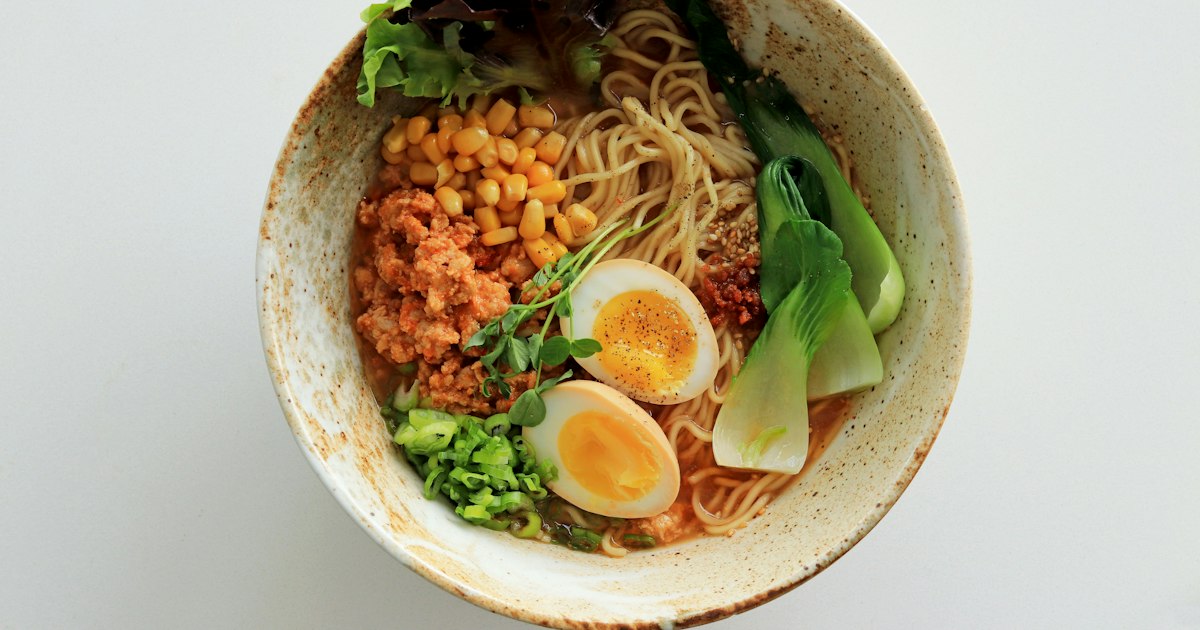
Photo by Cody Chan on Unsplash
If you ask someone from Morioka what to eat in their hometown, jajamen (じゃじゃ麺) usually comes up before anything else — even before the city’s famous wanko soba. It’s a bowl of thick, flat wheat noodles tossed in a dark, savory miso meat sauce, topped with cucumber, scallion, ginger, and a touch of chili oil, and it comes with a built-in second course if you know how to ask for it. It’s cheap, filling, and almost unknown outside Tohoku, which makes it one of the better reasons to build a day around Morioka rather than just passing through on the Shinkansen.
What Is Jajamen, Exactly?
Jajamen is Morioka’s local take on Chinese zhajiangmian (fried sauce noodles), adapted by a Chinese chef who settled in the city after World War II. The noodles are flat and chewy, closer to udon than ramen, and they’re served dry — no broth — under a spoonful of nikumiso (minced pork cooked down with miso, sugar, and soy) along with raw cucumber strips, chopped scallion, grated ginger, and sometimes garlic. A dab of rayu chili oil sits on the side for you to add to taste.
You don’t get a pre-mixed bowl. Part of the experience is tossing everything together yourself with chopsticks until the noodles are evenly coated in sauce — locals mix much more thoroughly than first-timers expect, scraping from the bottom of the bowl, before taking the first bite. The flavor is savory and slightly sweet rather than spicy, so don’t go in expecting a fiery broth.
How to Eat It Like a Local: The Chitantan Finish
The real signature move comes at the end of the meal. Once you’ve eaten most of the noodles, leave a small amount of sauce and a few noodle scraps at the bottom of the bowl and tell the staff “chitantan onegaishimasu” (ちーたんたんお願いします). They’ll crack a raw egg into your bowl, take it to the kitchen, and return it with hot stock stirred in — turning the leftover miso sauce into a light egg-drop soup you drink as a second, separate course. It typically costs about ¥100 extra and is considered the correct way to finish the dish, not an optional extra, so don’t skip it just because no one explains it to you.
Where to Try It in Morioka
The most famous shop is Hakuryu (白龍), locally nicknamed “Pairon,” generally credited as the dish’s originator. The main store sits in the Osawakawara-dori area near Zaimokucho, a short walk or quick taxi from Morioka Station, and there’s also a branch inside the Fezan shopping complex attached to the station itself — the easiest option if you’re short on time between trains. Expect to pay roughly ¥500–650 for a regular bowl, plus the ¥100 chitantan add-on.
- Budget: A bowl of jajamen plus chitantan rarely runs past ¥750 total — it’s one of the cheapest sit-down meals you’ll find in a prefectural capital.
- Mid-range: Pair it with a plate of gyoza or a side of Morioka reimen (chilled noodles in sweet-spicy broth) at the same shokudo for a two-dish lunch around ¥1,200–1,500.
- Splurge: There isn’t really a luxury version of jajamen — it’s a working-class noodle shop dish by design. If you want a bigger food experience in the same city, follow it with a proper wanko soba session, where staff keep refilling tiny bowls of soba until you cap your bowl, usually ¥3,000–4,000 per person.
Lines form quickly around lunchtime (roughly 11:30–13:00), especially on weekends, and popular locations can be closed one day a week — it’s worth confirming current hours before you make a special trip across town.
Getting to Morioka
Morioka is the gateway city to Iwate Prefecture, reached directly from Tokyo on the Tohoku Shinkansen (Hayabusa or Komachi services) in about 2 hours 10 minutes to 2.5 hours, with one-way fares around ¥14,000 for a reserved seat (less with a rail pass that covers the route). From Morioka Station, the jajamen shops around Zaimokucho are about a 15–20 minute walk or a short, inexpensive taxi ride.
If you’re already exploring Tohoku, Morioka pairs naturally with a side trip to Tono, Iwate’s kappa-folklore countryside town, which is about an hour away by local train and makes for an easy day-trip add-on to a Morioka food stop.
Best Time to Go
Jajamen is a year-round comfort dish, so there’s no wrong season, but context changes the experience. Winter in Morioka is genuinely cold and snowy (December–February), and a hot bowl of noodles followed by chitantan soup feels purpose-built for that weather. Early August brings the Morioka Sansa Odori festival, one of Tohoku’s biggest drumming festivals, which fills the city’s noodle shops with a livelier, more festive crowd — book accommodation early if your visit overlaps with it.
Common Mistakes to Avoid
- Not mixing thoroughly: A few stirs isn’t enough — scrape the bottom of the bowl so the sauce coats every noodle before you start eating.
- Skipping the chitantan: It’s the dish’s signature finish, not a random add-on, and most locals order it automatically.
- Expecting heat or broth: Jajamen is dry and mild by default; the rayu on the table is there so you can add spice yourself, in small amounts.
- Assuming cards work everywhere: Many of Morioka’s small noodle shops are cash-only or have low card minimums. Carry enough yen, and if you need to top up, see our guide on using foreign cards at Japan Post Bank ATMs, which are reliably available even in regional cities like Morioka.
- Treating it as a quick snack: Lunch rush lines move fast, but if you’re set on a specific shop at peak hours, build in 15–20 minutes of buffer rather than rushing for a train.
Jajamen won’t show up on most first-time Japan itineraries, which is exactly its appeal — it’s a dish you eat because you went out of your way to a regional city, not because it was on a highlight reel. If you’re already chasing regional specialties elsewhere in Japan, it sits well alongside other single-city dishes like Nagasaki’s champon or Sapporo’s soup curry — proof that some of the best eating in Japan happens well outside Tokyo and Osaka.